















Copyright: ©Author(s) 2026.
World J Clin Pediatr. Dec 9, 2026; 15(4): 121115
Published online Dec 9, 2026. doi: 10.5409/wjcp.121115
Published online Dec 9, 2026. doi: 10.5409/wjcp.121115
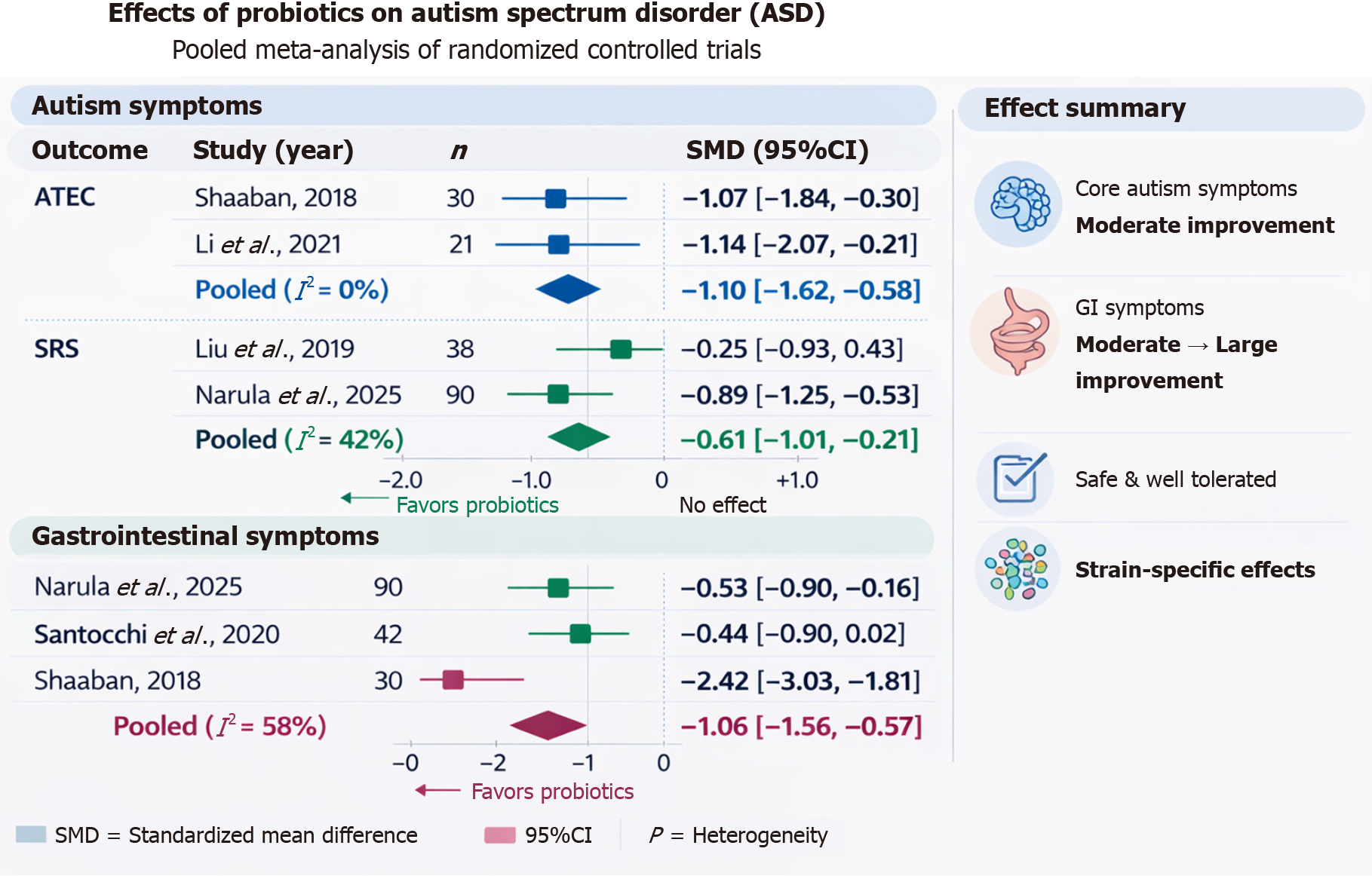
Figure 4 Pooled meta-analysis of randomized controlled trials evaluating the effects of probiotic supplementation on core behavioral and gastrointestinal outcomes in children with autism spectrum disorder.
Forest plots illustrating pooled standardized mean differences (SMD) with 95%CI for randomized controlled trials assessing the effects of probiotic supplementation in children with autism spectrum disorder. The upper panel summarizes effects on core autism symptoms, including autism severity and social responsiveness measured using validated behavioral scales such as the Autism Treatment Evaluation Checklist and Social Responsiveness Scale. The lower panel presents pooled effects on gastrointestinal symptom severity, assessed using structured clinical indices across included studies. Negative SMD values indicate improvement favoring probiotic intervention compared with control conditions. Diamonds represent pooled effect estimates derived using a random-effects model, while horizontal lines indicate study-specific confidence intervals. Statistical heterogeneity across studies is expressed using the I² statistic. Overall, probiotic supplementation was associated with small-to-moderate improvements in core behavioral symptoms and moderate improvements in gastrointestinal outcomes, although variability in probiotic strains, treatment duration, and participant characteristics contributed to between-study heterogeneity. SRS: Social Responsiveness Scale; SMD: Standardized mean differences; ATEC: Autism Treatment Evaluation Checklist; GI: Gastrointestinal; ASD: Autism spectrum disorder.
- Citation: Al-Beltagi M, Saeed NK, Elbeltagi YM. Psychobiotics in pediatric autism spectrum disorder: A systematic review of efficacy, mechanisms, and clinical translation. World J Clin Pediatr 2026; 15(4): 121115
- URL: https://www.wjgnet.com/2219-2808/full/v15/i4/121115.htm
- DOI: https://dx.doi.org/10.5409/wjcp.121115