
















Copyright: ©Author(s) 2026.
World J Clin Pediatr. Dec 9, 2026; 15(4): 120921
Published online Dec 9, 2026. doi: 10.5409/wjcp.120921
Published online Dec 9, 2026. doi: 10.5409/wjcp.120921
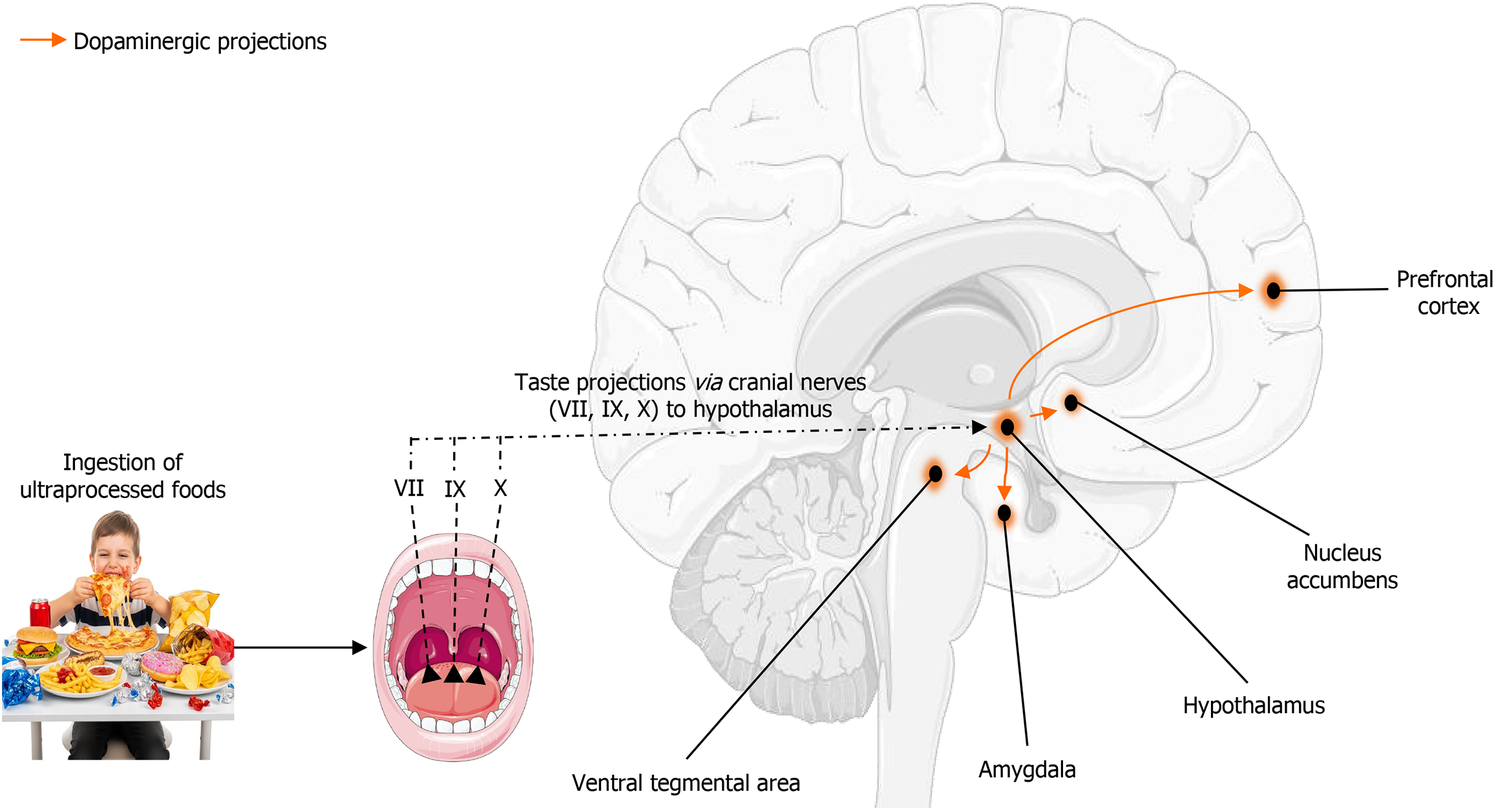
Figure 1 Schematic representation of reward circuitry activation induced by ultra-processed foods.
Ingestion of ultra-processed foods (UPFs), stimulates gustatory receptors in the oral cavity. Sensory signals are transmitted primarily via the facial (VII), glossopharyngeal (IX), and vagus (X) cranial nerves. These gustatory afferents converge in the hypothalamus (dotted lines), from where the pathway activates dopaminergic neurons in the ventral tegmental area. Dopaminergic projections (orange arrows) subsequently release dopamine in the nucleus accumbens (mediating immediate hedonic pleasure), the amygdala (encoding emotional valence), and the prefrontal cortex (supporting executive control and value-based decision-making). This neurocircuitry underlies the potent motivational and reinforcing effects of UPFs.
- Citation: Vargas-Vargas MA, González-Montoya M, Torres-Isidro O, Martínez-González AP, Cuiniche-Méndez MG, García-Romero DP, Reyes-Orozco MA, Calderón-Cortés E, Rodríguez-Orozco AR, Cortés-Rojo C. Prefrontal cortex immaturity and reward circuit hijacking: Why anti-obesity policies fail to protect children from ultra-processed food overconsumption. World J Clin Pediatr 2026; 15(4): 120921
- URL: https://www.wjgnet.com/2219-2808/full/v15/i4/120921.htm
- DOI: https://dx.doi.org/10.5409/wjcp.120921