
















Copyright: ©Author(s) 2026.
World J Clin Pediatr. Dec 9, 2026; 15(4): 120203
Published online Dec 9, 2026. doi: 10.5409/wjcp.120203
Published online Dec 9, 2026. doi: 10.5409/wjcp.120203
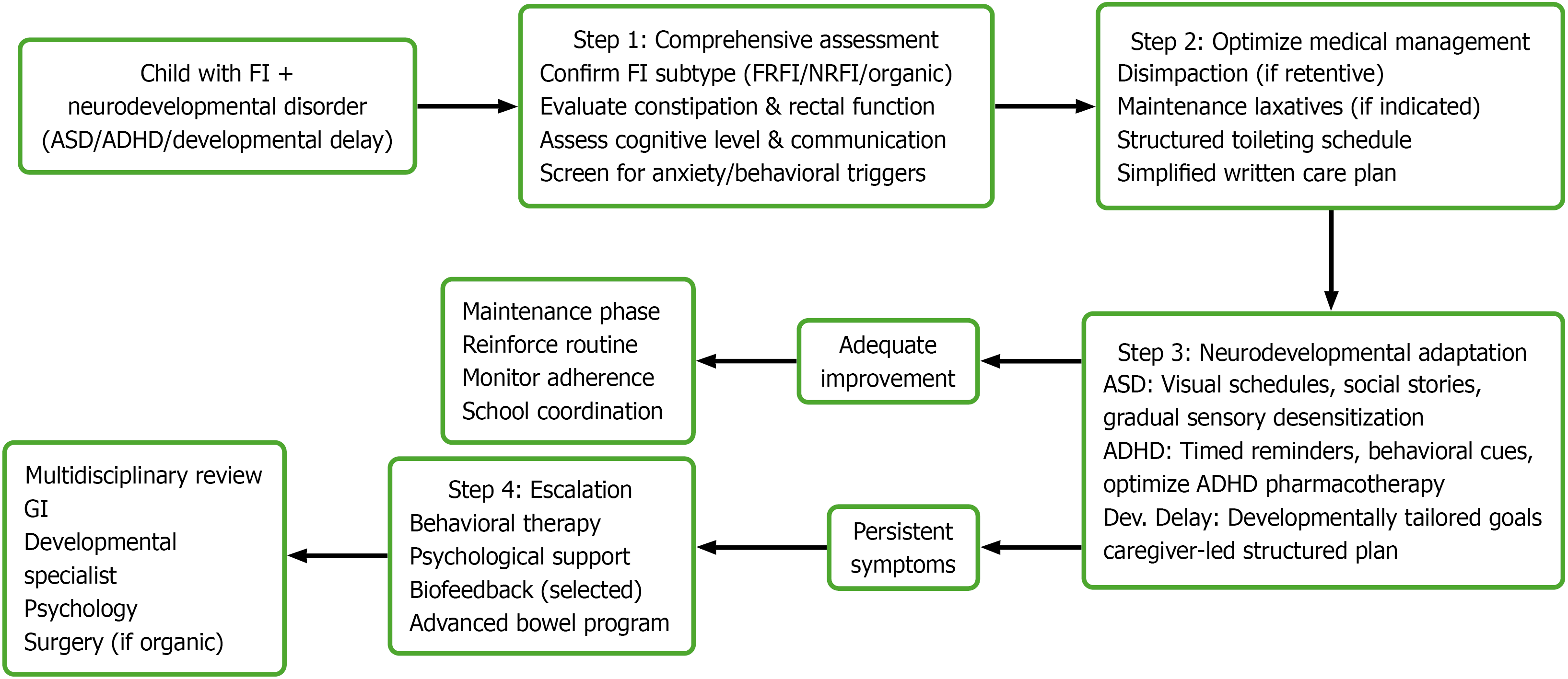
Figure 8 Tailored management algorithm for fecal incontinence in children with neurodevelopmental disorders.
Management begins with confirmation of fecal incontinence subtype and assessment of cognitive and behavioral factors. Standard medical therapy is optimized according to pathophysiology, followed by neurodevelopmentally adapted behavioral strategies. Children with autism spectrum disorder benefit from visual supports and sensory desensitization, whereas those with attention-deficit/hyperactivity disorder (ADHD) require structured reminders and optimization of ADHD treatment. Developmental delay necessitates individualized, caregiver-led programs. Persistent symptoms warrant escalation to behavioral therapy, psychological support, or advanced bowel management within a multidisciplinary framework. FI: Fecal incontinence; ASD: Autism spectrum disorder; ADHD: Attention-deficit/hyperactivity disorder; FRFI: Functional retentive fecal incontinence; NRFI: Non-retentive fecal incontinence; GI: Gastroenterology.
- Citation: Al-Beltagi M. Clinical guidelines for the diagnosis and management of pediatric fecal incontinence: A comprehensive review and treatment algorithm. World J Clin Pediatr 2026; 15(4): 120203
- URL: https://www.wjgnet.com/2219-2808/full/v15/i4/120203.htm
- DOI: https://dx.doi.org/10.5409/wjcp.120203