
















Copyright: ©Author(s) 2026.
World J Clin Pediatr. Dec 9, 2026; 15(4): 120203
Published online Dec 9, 2026. doi: 10.5409/wjcp.120203
Published online Dec 9, 2026. doi: 10.5409/wjcp.120203
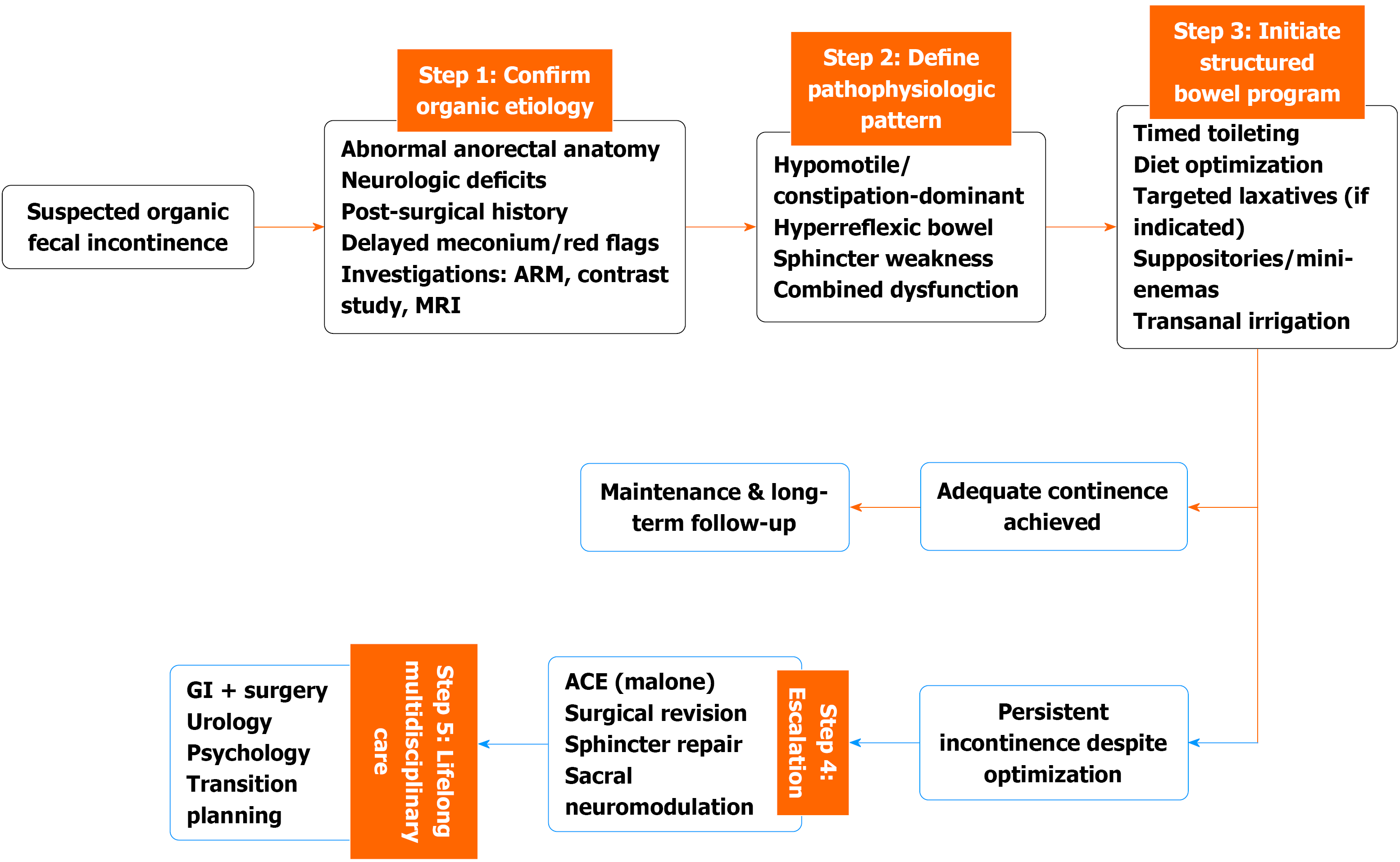
Figure 5 Management algorithm for organic fecal incontinence in children.
The algorithm begins with confirmation of an organic etiology through clinical evaluation and targeted investigations. Management is guided by the dominant pathophysiologic pattern and initiated with a structured bowel program. If continence is achieved, maintenance therapy and longitudinal follow-up are recommended. Persistent incontinence warrants escalation to advanced interventions, including antegrade continence enema, surgical revision, sphincter reconstruction, or neuromodulation. Most patients require coordinated multidisciplinary care and long-term follow-up. ACE: Antegrade continence enema; ARM: Anorectal malformation; MRI: Magnetic resonance imaging; GI: Gastroenterology.
- Citation: Al-Beltagi M. Clinical guidelines for the diagnosis and management of pediatric fecal incontinence: A comprehensive review and treatment algorithm. World J Clin Pediatr 2026; 15(4): 120203
- URL: https://www.wjgnet.com/2219-2808/full/v15/i4/120203.htm
- DOI: https://dx.doi.org/10.5409/wjcp.120203