
















Copyright: ©Author(s) 2026.
World J Clin Pediatr. Dec 9, 2026; 15(4): 120203
Published online Dec 9, 2026. doi: 10.5409/wjcp.120203
Published online Dec 9, 2026. doi: 10.5409/wjcp.120203
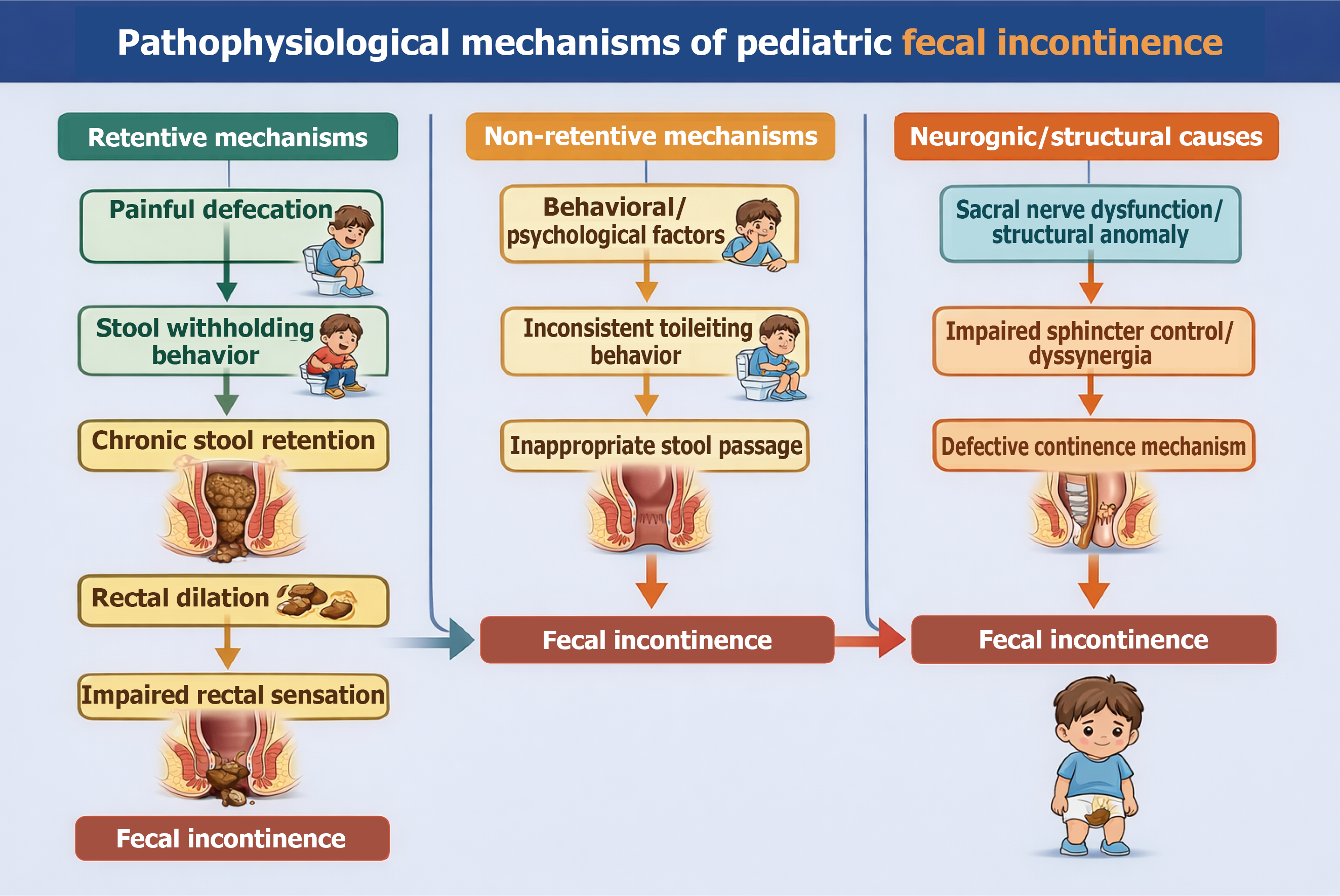
Figure 2 Pathophysiological mechanisms of pediatric fecal incontinence.
This schematic diagram illustrates the principal pathophysiological pathways leading to pediatric fecal incontinence (FI). Retentive mechanisms begin with painful defecation, leading to stool withholding, chronic fecal retention, rectal dilation (megarectum), impaired rectal sensation, and ultimately overflow incontinence. Non-retentive mechanisms are primarily related to behavioral and psychological factors that result in inconsistent toileting behavior and inappropriate stool passage in the absence of fecal retention. Neurogenic and structural causes involve sacral nerve dysfunction, sphincter impairment, or pelvic floor dyssynergia, leading to defective continence mechanisms. The figure emphasizes that although distinct mechanisms exist, all pathways converge on the final clinical manifestation of FI.
- Citation: Al-Beltagi M. Clinical guidelines for the diagnosis and management of pediatric fecal incontinence: A comprehensive review and treatment algorithm. World J Clin Pediatr 2026; 15(4): 120203
- URL: https://www.wjgnet.com/2219-2808/full/v15/i4/120203.htm
- DOI: https://dx.doi.org/10.5409/wjcp.120203