
















Copyright: ©Author(s) 2026.
World J Clin Pediatr. Dec 9, 2026; 15(4): 120091
Published online Dec 9, 2026. doi: 10.5409/wjcp.120091
Published online Dec 9, 2026. doi: 10.5409/wjcp.120091
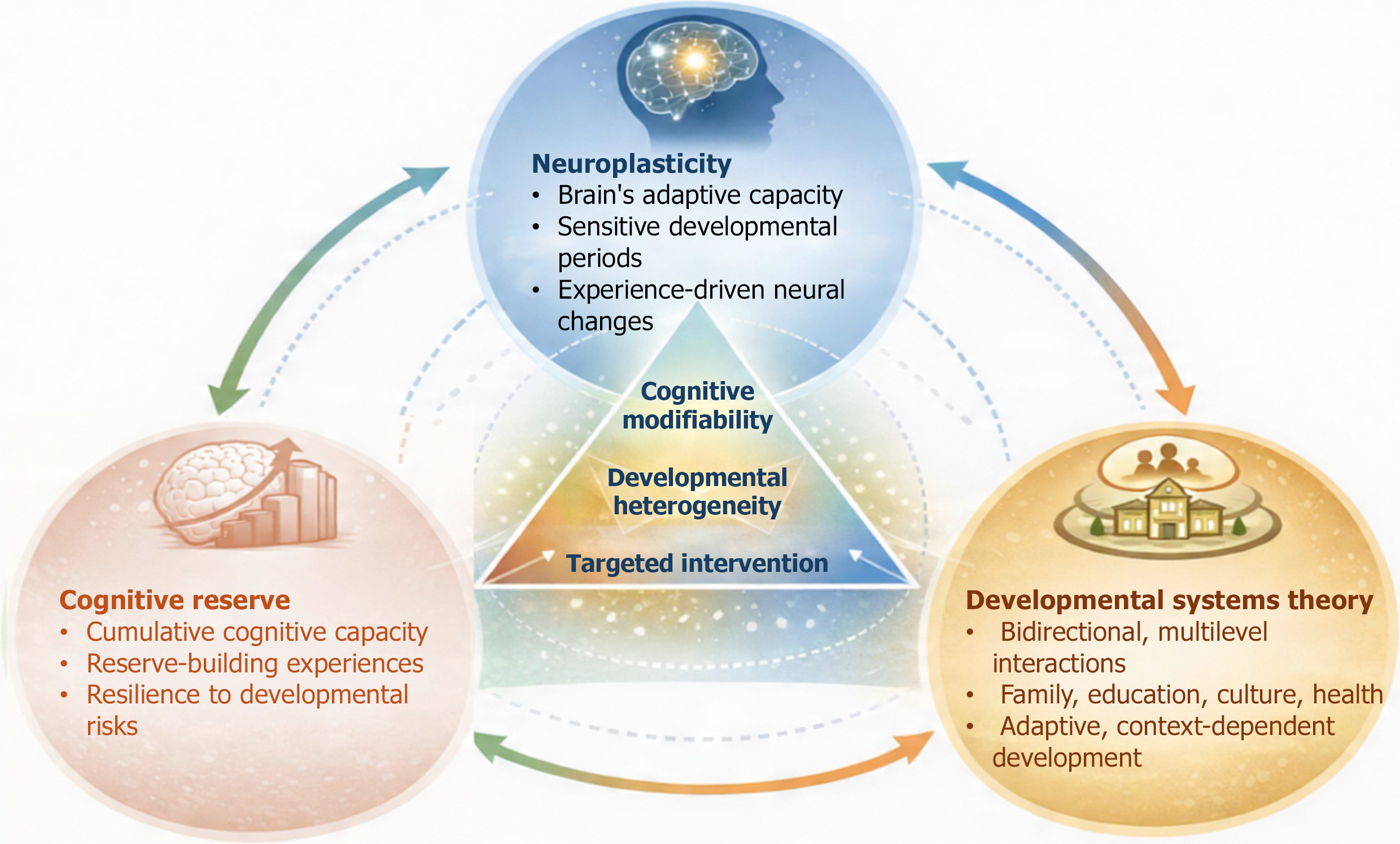
Figure 2 Integrated conceptual framework linking neuroplasticity, cognitive reserve, and developmental systems theory.
It illustrates the dynamic, bidirectional relationships among neuroplasticity, cognitive reserve, and developmental systems theory, as complementary mechanisms underlying cognitive development across childhood. Neuroplasticity is a foundational biological process that enables experience-dependent structural and functional changes in the brain, particularly during developmentally sensitive periods. Cognitive reserve is represented as an emergent, cumulative capacity arising from repeated cognitive engagement, environmental enrichment, and adaptive neural network utilization, conferring resilience against developmental risk and variability in cognitive outcomes. Developmental systems theory encompasses and contextualizes both constructs, highlighting the continuous interactions among neural maturation, behavior, and multilevel environmental influences (e.g., family, education, culture, and health). Together, these interconnected processes support cognitive modifiability, developmental heterogeneity, and differential responsiveness to intervention across cognitive domains and developmental stages.
- Citation: Al-Beltagi M. Unleashing children’s potential: An evidence-based narrative review of strategies to enhance cognitive function and intelligence in school-age children. World J Clin Pediatr 2026; 15(4): 120091
- URL: https://www.wjgnet.com/2219-2808/full/v15/i4/120091.htm
- DOI: https://dx.doi.org/10.5409/wjcp.120091