
















Copyright: ©Author(s) 2026.
World J Clin Pediatr. Dec 9, 2026; 15(4): 120091
Published online Dec 9, 2026. doi: 10.5409/wjcp.120091
Published online Dec 9, 2026. doi: 10.5409/wjcp.120091
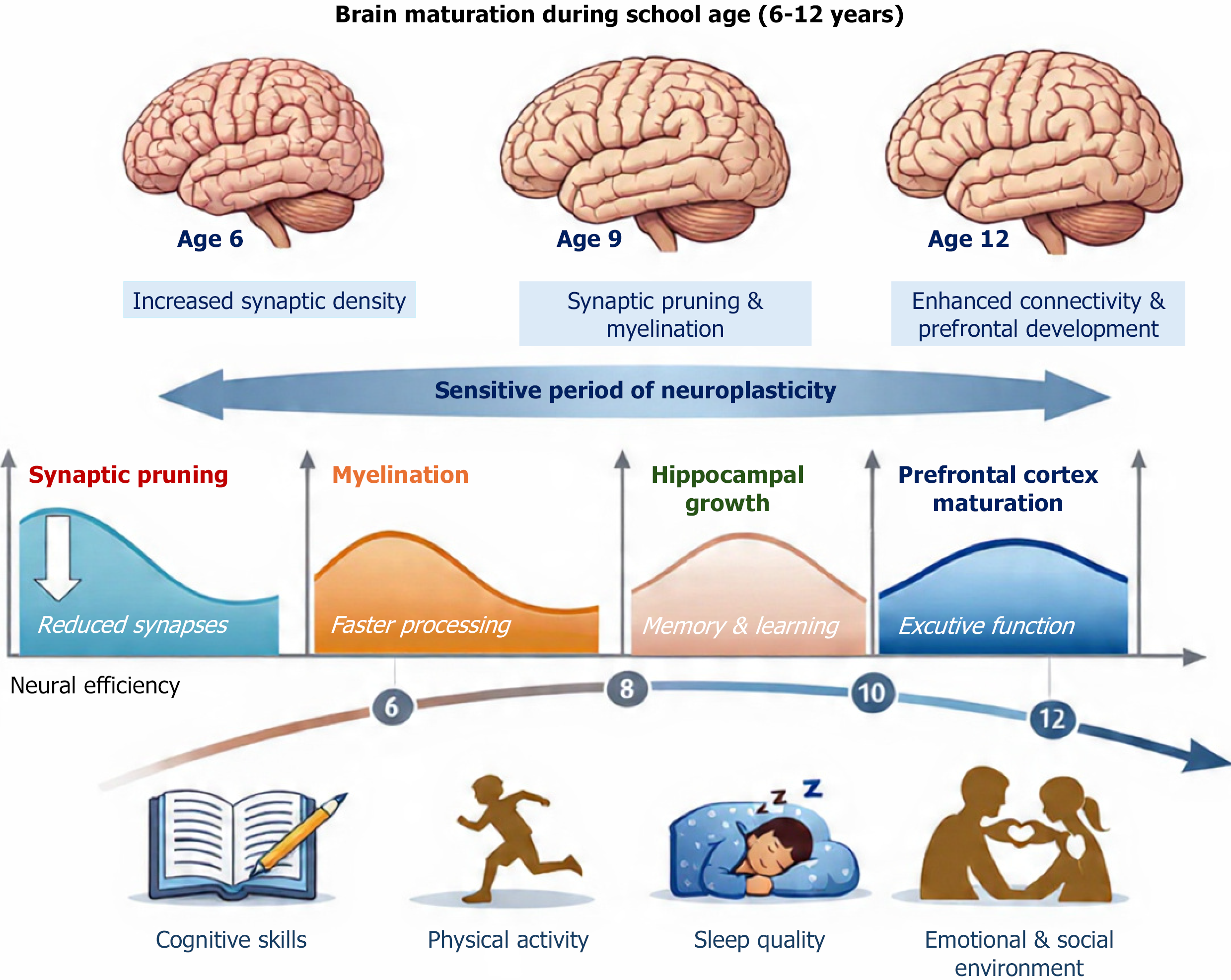
Figure 1 Neurodevelopmental trajectories and brain maturation during the school-age period (6-12 years).
It illustrates key neurodevelopmental processes occurring during the school-age period (6-12 years), a sensitive window of heightened brain plasticity. Progressive maturation is depicted across three representative ages (6 years, 9 years, and 12 years), highlighting dynamic changes in brain structure and function. Early school-age is characterized by high synaptic density, followed by activity-dependent synaptic pruning that enhances neural efficiency. Concurrently, ongoing myelination of frontoparietal and frontostriatal pathways supports faster information processing and improved executive control. Refinement of hippocampal circuitry underpins advances in learning and memory, while prolonged maturation of the prefrontal cortex facilitates the development of higher-order cognitive functions, including working memory, inhibitory control, and cognitive flexibility. It also emphasizes the influence of modifiable environmental factors – such as cognitive stimulation, physical activity, sleep quality, and emotional and social support – on shaping neurodevelopmental trajectories during this period. Collectively, these processes underscore the school years as a critical window for targeted, evidence-based interventions to optimize cognitive function and intelligence.
- Citation: Al-Beltagi M. Unleashing children’s potential: An evidence-based narrative review of strategies to enhance cognitive function and intelligence in school-age children. World J Clin Pediatr 2026; 15(4): 120091
- URL: https://www.wjgnet.com/2219-2808/full/v15/i4/120091.htm
- DOI: https://dx.doi.org/10.5409/wjcp.120091