
















Copyright: ©Author(s) 2026.
World J Clin Pediatr. Sep 9, 2026; 15(3): 120485
Published online Sep 9, 2026. doi: 10.5409/wjcp.120485
Published online Sep 9, 2026. doi: 10.5409/wjcp.120485
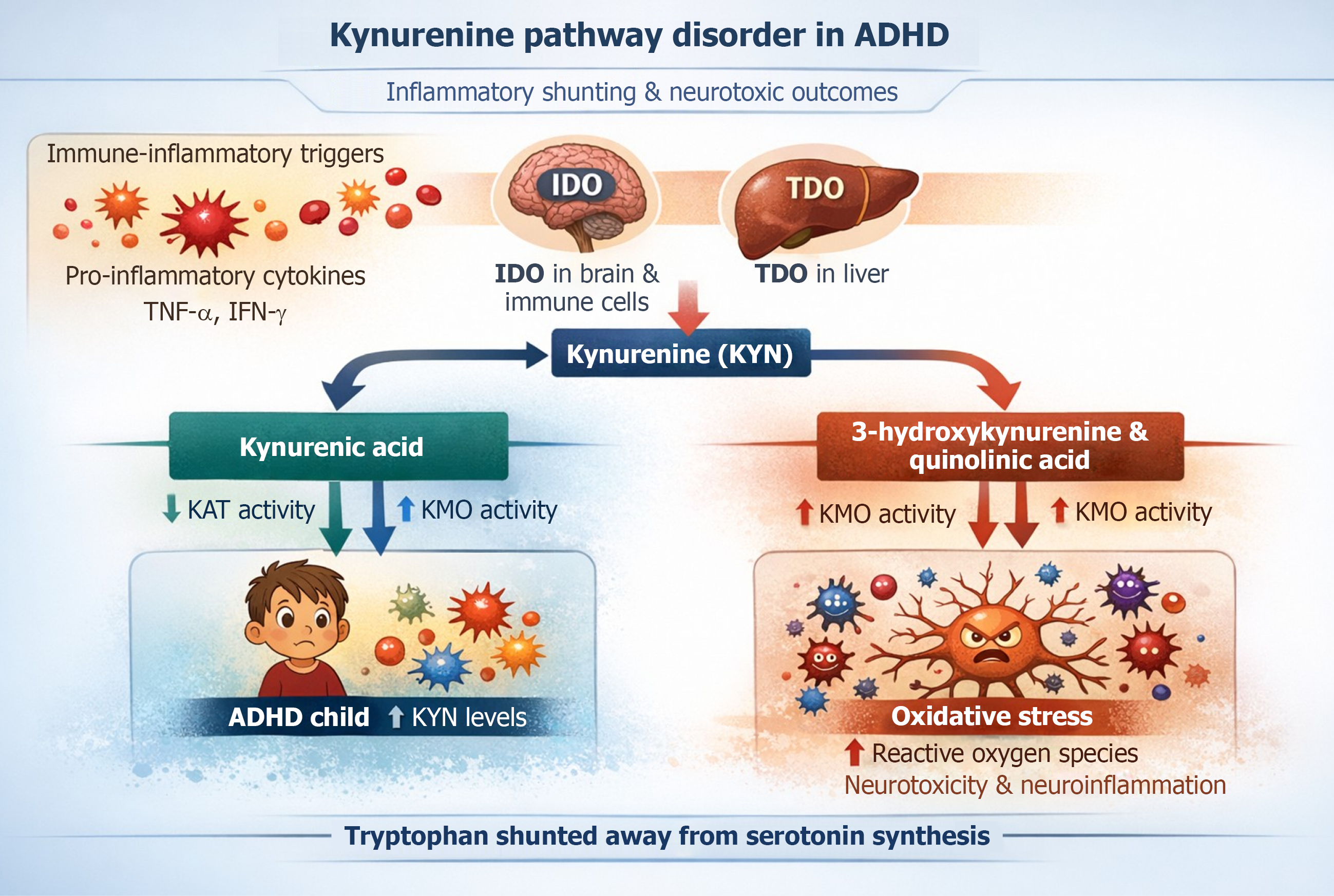
Figure 1 Neuroinflammation and tryptophan shunting in attention-deficit/hyperactivity disorder pathophysiology.
This diagram outlines how immune-inflammatory triggers redirect tryptophan metabolism. In attention-deficit/hyperactivity disorder, increased enzymatic activity “shunts” tryptophan away from serotonin, favoring the production of neurotoxic compounds like quinolinic acid. The failure of the kynurenine aminotransferase branch to produce sufficient neuroprotective kynurenic acid creates an imbalance that contributes to neuronal oxidative stress and glutamate dysregulation. ADHD: Attention-deficit/hyperactivity disorder; IDO: Indoleamine 2,3-dioxygenase; IFN-γ: Interferon-gamma; KAT: Kynurenine aminotransferase; KMO: Kynurenine 3-monooxygenase; KYN: Kynurenine; TDO: Tryptophan dioxygenase; TNF-α: Tumor necrosis factor-alpha; ROS: Reactive oxygen species.
- Citation: Nagamine T. Kynurenine pathway dysregulation in attention-deficit hyperactivity disorder: Impact on N-methyl-D-aspartate receptors and phasic dopamine maturation. World J Clin Pediatr 2026; 15(3): 120485
- URL: https://www.wjgnet.com/2219-2808/full/v15/i3/120485.htm
- DOI: https://dx.doi.org/10.5409/wjcp.120485