
















Copyright: ©Author(s) 2026.
World J Clin Pediatr. Sep 9, 2026; 15(3): 120066
Published online Sep 9, 2026. doi: 10.5409/wjcp.120066
Published online Sep 9, 2026. doi: 10.5409/wjcp.120066
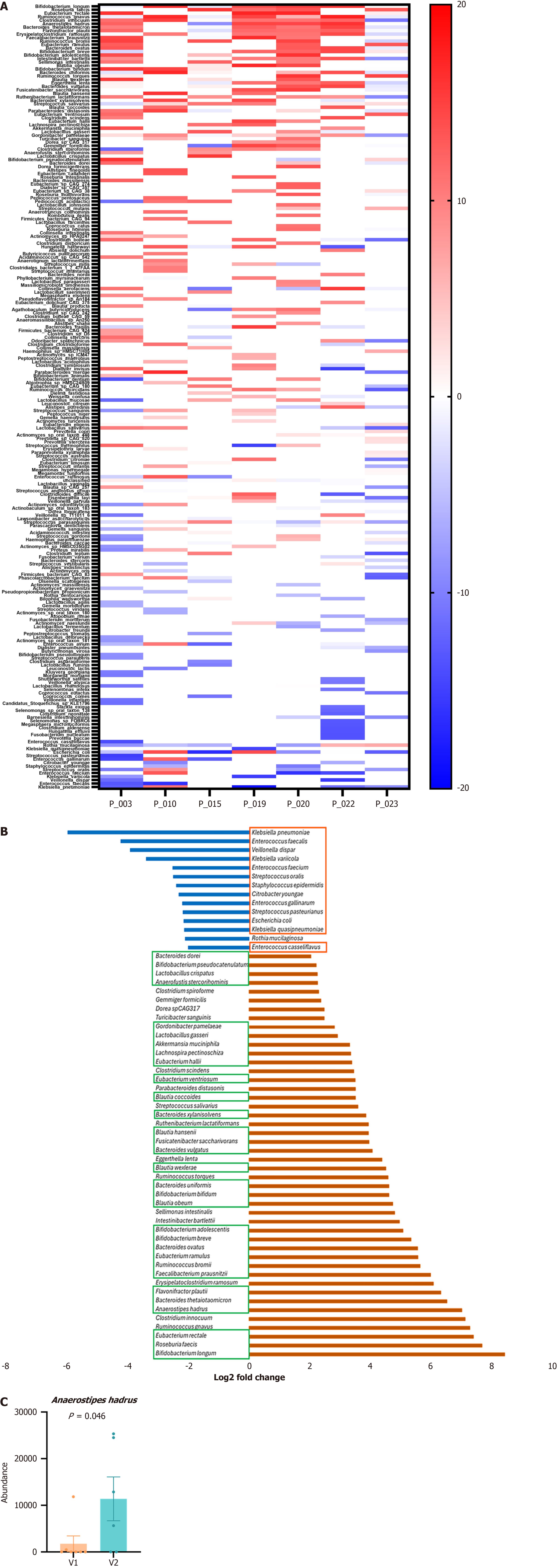
Figure 3 Differentially abundant gut microbes in remission (visit 2) compared with flare (visit 1) states of inflammatory bowel disease.
A: Heatmap showing gut microbes exhibiting significant differential abundance (2-fold change) in remission (visit 2) compared with flare (visit 1) for each individual participant; B: Log2 fold change of gut microbes that are significantly upregulated or downregulated (2-fold change) in remission (visit 2) compared with flare (visit 1). Red box indicates pathogenic microbes associated with inflammatory bowel disease and green box indicates beneficial microbes associated with inflammatory bowel disease; C: Individual gut microbe showing statistically significant differential abundance (2-fold change) in remission (visit 2) compared with flare (visit 1). V1: Visit 1; V2: Visit 2.
- Citation: Huang JG, Tay CJX, Aw MM, Lee YS, Ooi DSQ. Microbial and functional shifts between flare and remission in a single-center cohort of children with inflammatory bowel disease. World J Clin Pediatr 2026; 15(3): 120066
- URL: https://www.wjgnet.com/2219-2808/full/v15/i3/120066.htm
- DOI: https://dx.doi.org/10.5409/wjcp.120066