
















Copyright: ©Author(s) 2026.
World J Clin Pediatr. Sep 9, 2026; 15(3): 119985
Published online Sep 9, 2026. doi: 10.5409/wjcp.119985
Published online Sep 9, 2026. doi: 10.5409/wjcp.119985
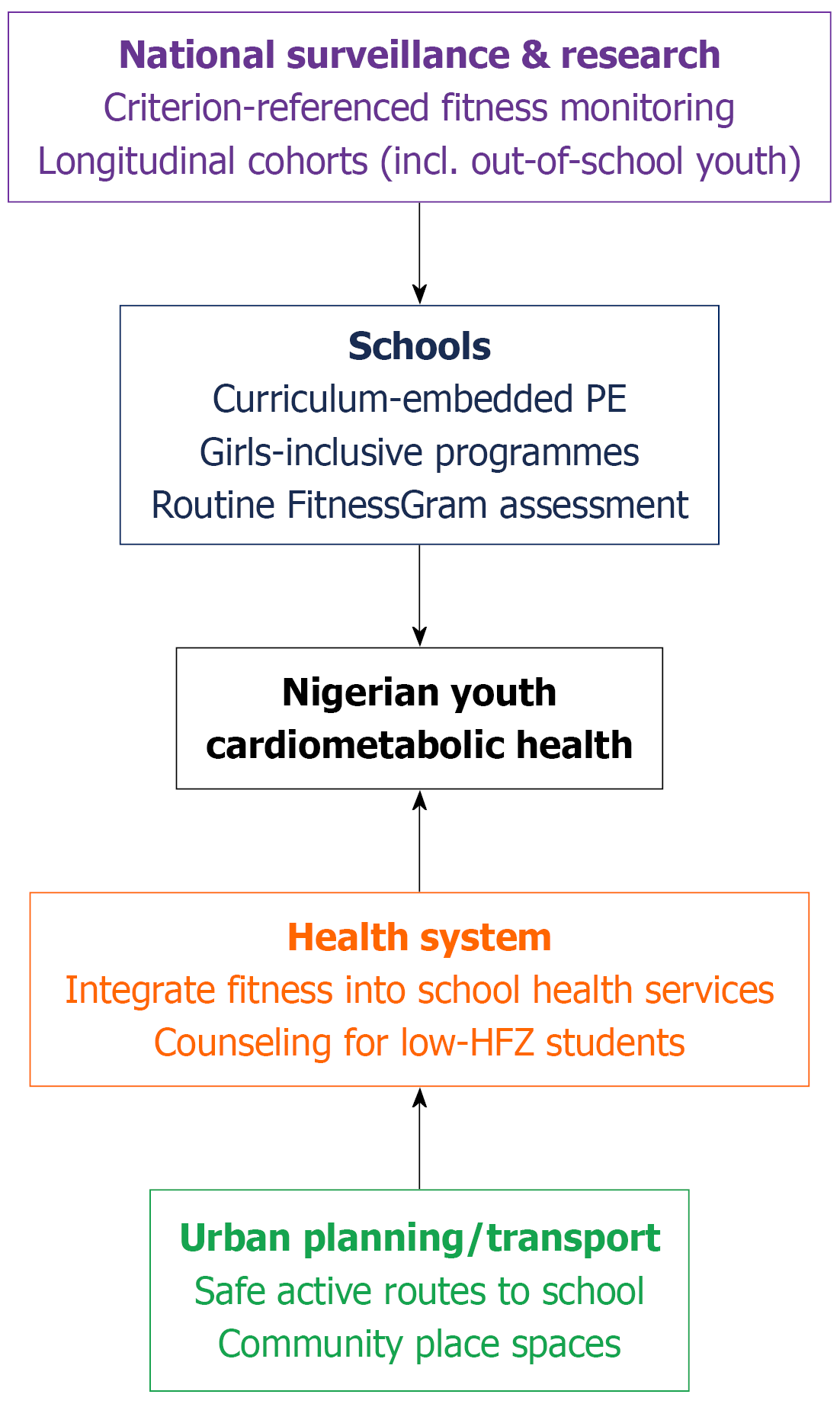
Figure 3 Multi-sectoral policy framework to preserve and enhance Nigerian youth cardiometabolic fitness, integrating education, health systems, built environment, and national surveillance.
The schematic depicts Nigerian youth cardiometabolic health at the centre, influenced by coordinated action across four sectors. National surveillance and research (top) provide criterion-referenced fitness monitoring and longitudinal cohorts, including out-of-school youth, to track trends and inform policy. Schools (upper middle) implement curriculum-embedded physical education, girls-inclusive programmes, and routine FitnessGram assessment to sustain high fitness levels. The health system (lower middle) integrates fitness into school health services and offers counselling for students who fall below healthy fitness zone thresholds. Urban planning and transport (bottom) support safe active routes to school and accessible community play spaces, reinforcing daily incidental physical activity. Together, these sectors form an integrated framework to maintain Nigeria’s current FitnessGram advantage and prevent deterioration with ongoing urbanization. HFZ: Healthy fitness zone; PE: Physical education.
- Citation: Bodiga VL, Vemuri PK, Bodiga S. Nigerian youth FitnessGram edge: A bright signal with important caveats. World J Clin Pediatr 2026; 15(3): 119985
- URL: https://www.wjgnet.com/2219-2808/full/v15/i3/119985.htm
- DOI: https://dx.doi.org/10.5409/wjcp.119985