
















Copyright: ©Author(s) 2026.
World J Clin Pediatr. Sep 9, 2026; 15(3): 119985
Published online Sep 9, 2026. doi: 10.5409/wjcp.119985
Published online Sep 9, 2026. doi: 10.5409/wjcp.119985
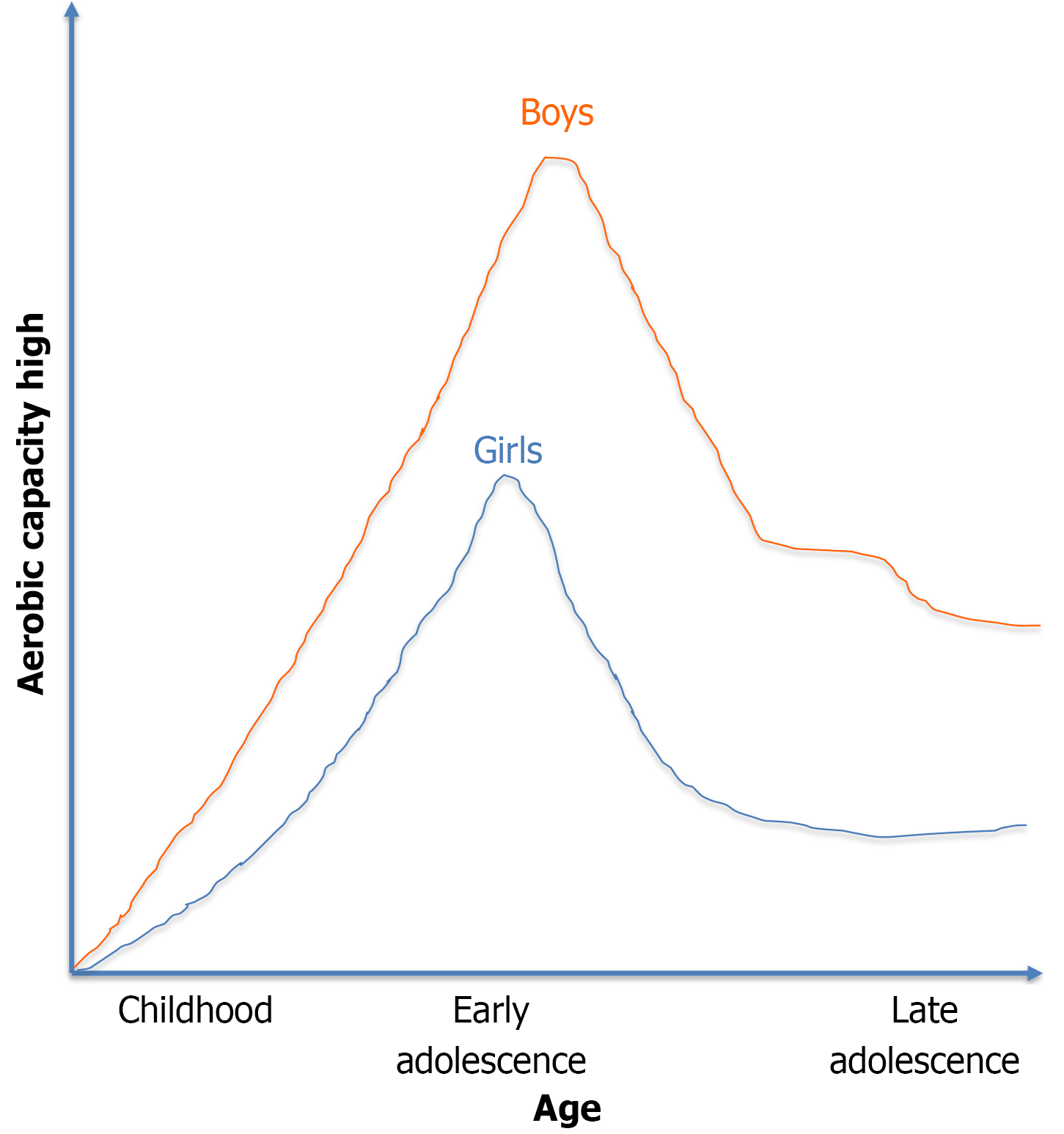
Figure 2 Age- and sex-specific gaps in aerobic capacity among Nigerian youth.
Conceptual trajectories illustrate relative aerobic capacity across childhood, early adolescence, and late adolescence, with the vertical axis representing aerobic capacity and the horizontal axis representing age. The orange curve shows boys achieving high aerobic capacity in early adolescence followed by a gradual decline, whereas the blue curve shows girls reaching a lower peak earlier and then plateauing at a comparatively reduced level. This pattern highlights emerging vulnerabilities in older boys and particularly in adolescent girls, underscoring the need for age- and gender-sensitive strategies to maintain FitnessGram healthy fitness zone achievement during the transition to late adolescence.
- Citation: Bodiga VL, Vemuri PK, Bodiga S. Nigerian youth FitnessGram edge: A bright signal with important caveats. World J Clin Pediatr 2026; 15(3): 119985
- URL: https://www.wjgnet.com/2219-2808/full/v15/i3/119985.htm
- DOI: https://dx.doi.org/10.5409/wjcp.119985