
















Copyright: ©Author(s) 2026.
World J Clin Pediatr. Sep 9, 2026; 15(3): 119985
Published online Sep 9, 2026. doi: 10.5409/wjcp.119985
Published online Sep 9, 2026. doi: 10.5409/wjcp.119985
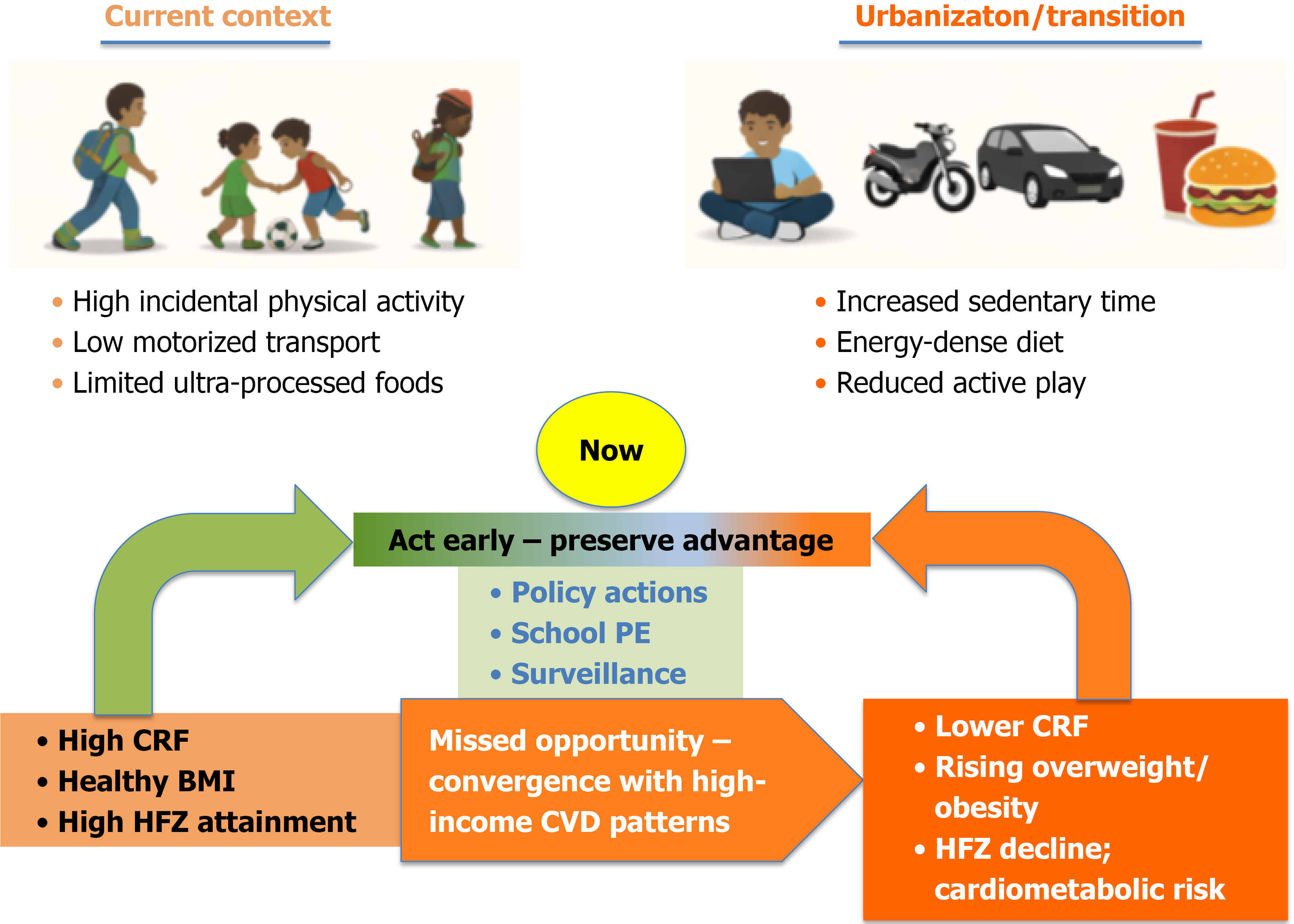
Figure 1 Schematic of cardiometabolic trajectories in Nigerian youth under lifestyle transition.
The left panel illustrates the current context in many regions of Nigeria, where active daily living-walking to school, informal outdoor play, and household chores-supports high cardiorespiratory fitness, healthy body mass index, and a high prevalence of FitnessGram healthy fitness zone achievement. The right panel depicts an increasingly urbanized, sedentary environment characterized by motorized transport, screen-based leisure, and energy-dense diets, which is associated with declining fitness, rising overweight/obesity, and elevated cardiometabolic risk. A central branching pathway highlights the present moment as a window of opportunity: Proactive policies and school- and community-based interventions can preserve and enhance the favourable trajectory, whereas inaction may lead Nigerian youth to converge toward the adverse cardiometabolic profiles already seen in many high-income countries. CRF: Cardiorespiratory fitness; HFZ: Healthy fitness zone; CVD: Cardiovascular disease; BMI: Body mass index; PE: Physical education.
- Citation: Bodiga VL, Vemuri PK, Bodiga S. Nigerian youth FitnessGram edge: A bright signal with important caveats. World J Clin Pediatr 2026; 15(3): 119985
- URL: https://www.wjgnet.com/2219-2808/full/v15/i3/119985.htm
- DOI: https://dx.doi.org/10.5409/wjcp.119985