
















Copyright: ©Author(s) 2026.
World J Clin Pediatr. Sep 9, 2026; 15(3): 117421
Published online Sep 9, 2026. doi: 10.5409/wjcp.117421
Published online Sep 9, 2026. doi: 10.5409/wjcp.117421
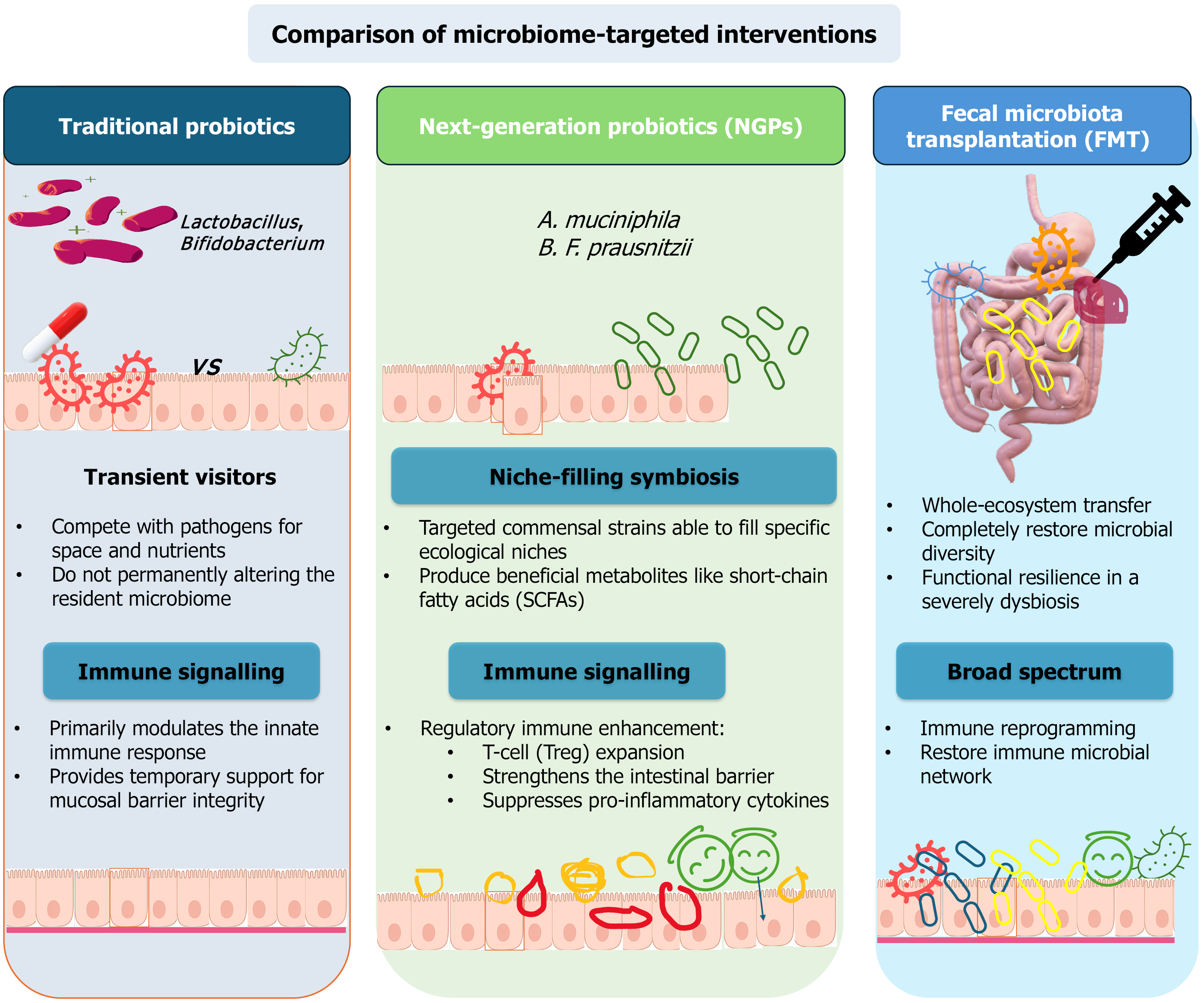
Figure 9 Comparative mechanisms of microbiome-targeted interventions in pediatric autoimmunity.
This schematic illustrates the distinct pathways through which different microbiome therapeutics influence the gut environment and systemic immune signaling. Traditional probiotics: Utilize exogenous strains (e.g., Lactobacillus) to provide transient competitive inhibition of pathogens and general immune support. Next-generation probiotics: Employ rationally selected commensal bacteria (e.g., Akkermansia muciniphila) that target specific metabolic pathways, such as short-chain fatty acids production, to enhance gut barrier function and induce regulatory T cells-mediated tolerance. Fecal microbiota transplantation: Involves the transfer of a complete, diverse microbial ecosystem to achieve broad-scale restoration of the gut-immune axis. The diagram highlights how these interventions move from transient modulation (probiotics) to targeted functional restoration (next-generation probiotics) and finally to complete ecological reconstruction (fecal microbiota transplantation). NGPs: Next-generation probiotics; FMT: Fecal microbiota transplantation; SCFA: Short-chain fatty acids.
- Citation: Al-Beltagi M, Saeed NK, Bediwy AS, Bediwy EA, Elbeltagi R. From genes to environment: A life-course approach to prevent pediatric autoimmune diseases. World J Clin Pediatr 2026; 15(3): 117421
- URL: https://www.wjgnet.com/2219-2808/full/v15/i3/117421.htm
- DOI: https://dx.doi.org/10.5409/wjcp.117421