
















Copyright: ©Author(s) 2026.
World J Clin Pediatr. Sep 9, 2026; 15(3): 117421
Published online Sep 9, 2026. doi: 10.5409/wjcp.117421
Published online Sep 9, 2026. doi: 10.5409/wjcp.117421
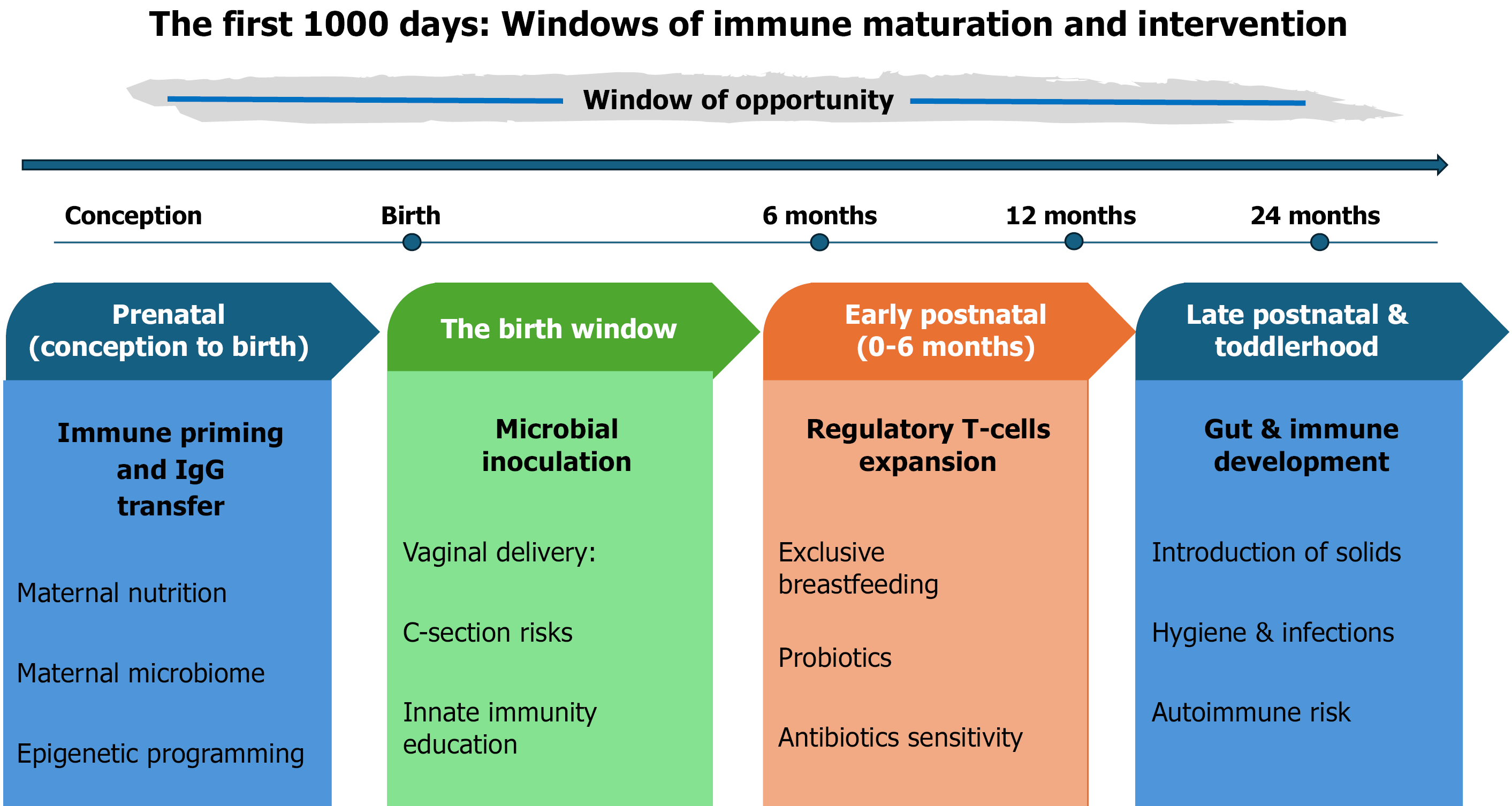
Figure 2 The first 1000 days: Critical windows for immune education and autoimmune prevention.
This schematic figure maps the temporal sequence of immune system maturation and microbiome colonization from conception through the second year of life. Prenatal phase: Highlights the role of maternal health and nutrition (e.g., vitamin D, omega-3) in epigenetic programming. Birth window: Illustrates the “microbial inoculation” phase, where delivery mode determines the initial pioneer species (e.g., Lactobacillus vs Staphylococcus). 0-6 months: Focuses on the role of human milk oligosaccharides and secretory immunoglobulin A in promoting regulatory T cells expansion. 6-24 months: Depicts the transition to an adult-like microbiome through complementary feeding and the development of oral tolerance. The shaded areas represent “windows of vulnerability” where environmental disruptions (e.g., antibiotics, dysbiosis) may shift the trajectory toward preclinical autoimmunity. Ig: Immunoglobulin.
- Citation: Al-Beltagi M, Saeed NK, Bediwy AS, Bediwy EA, Elbeltagi R. From genes to environment: A life-course approach to prevent pediatric autoimmune diseases. World J Clin Pediatr 2026; 15(3): 117421
- URL: https://www.wjgnet.com/2219-2808/full/v15/i3/117421.htm
- DOI: https://dx.doi.org/10.5409/wjcp.117421