
















Copyright: ©Author(s) 2026.
World J Clin Pediatr. Sep 9, 2026; 15(3): 117421
Published online Sep 9, 2026. doi: 10.5409/wjcp.117421
Published online Sep 9, 2026. doi: 10.5409/wjcp.117421
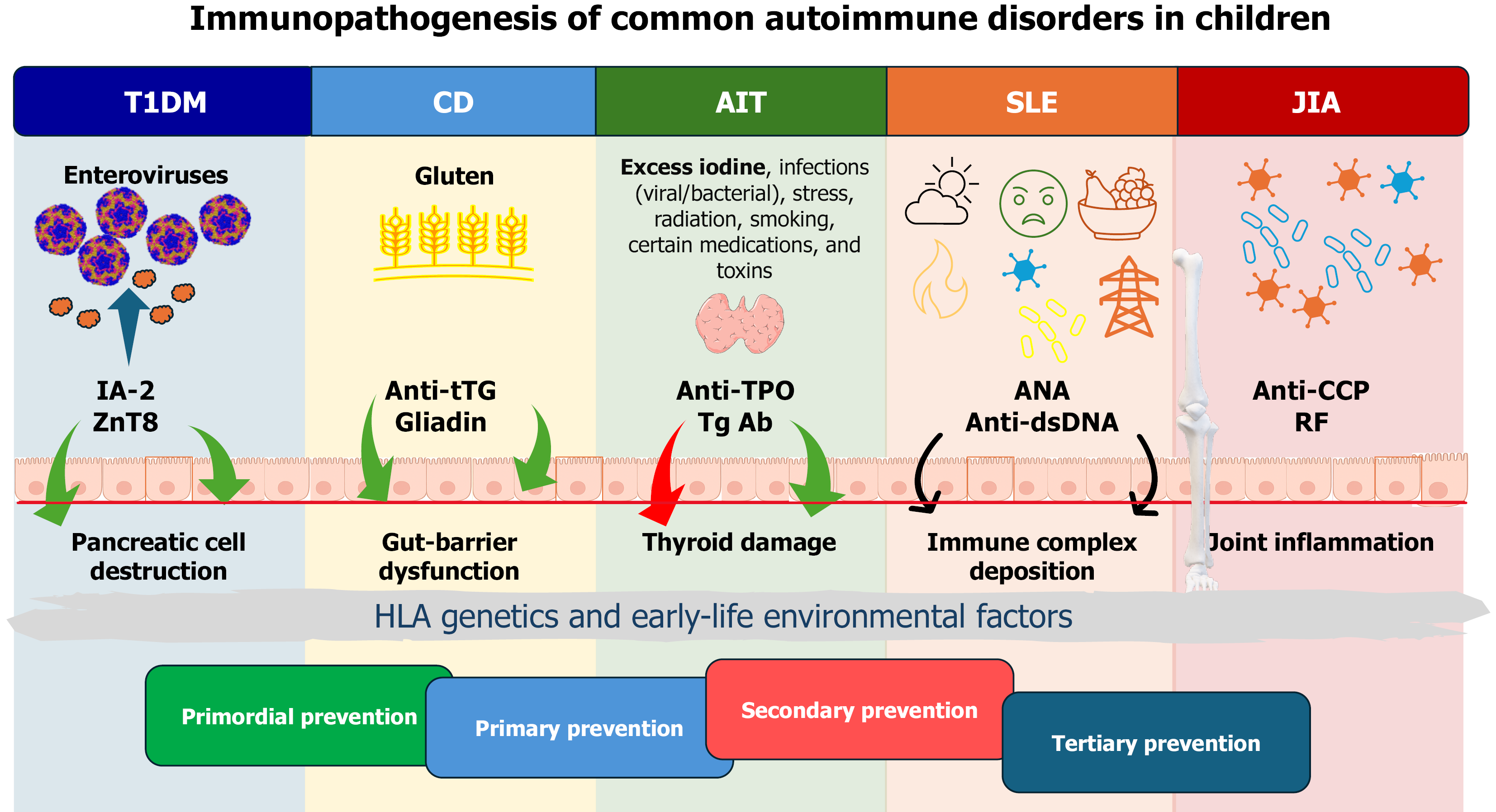
Figure 1 Comparative pathophysiological cascades and intervention windows in major pediatric autoimmune diseases.
This schematic compares the pathophysiological progression of five major pediatric autoimmune diseases. Shared mechanisms: All conditions share a common foundation of genetic susceptibility (primarily human leukocyte antigen and early-life environmental factors that promote systemic inflammation and gut barrier dysfunction. Disease-specific cascades: The transition to clinical disease is dictated by specific antigens (e.g., gluten in celiac) or infectious triggers (e.g., enteroviruses in type 1 diabetes mellitus) that drive organ-specific immune responses. Prevention rationale: The figure illustrates why primordial prevention (targeting the shared foundation) can be universal, whereas secondary prevention (targeting specific autoantibodies and biomarkers) must be tailored to the individual disease’s unique “immunological signature”. T1DM: Type 1 diabetes mellitus; CD: Celiac disease; AIT: Autoimmune thyroiditis; SLE: Systemic lupus erythematosus; JIA: Juvenile idiopathic arthritis; IA-2: Insulinoma-associated antigen 2; ZnT8: Zinc transporter 8; tTG: Tissue transglutaminase; TPO: Thyroid peroxidase; Tg: Thyroglobulin; Ab: Antibody; ANA: Anti
- Citation: Al-Beltagi M, Saeed NK, Bediwy AS, Bediwy EA, Elbeltagi R. From genes to environment: A life-course approach to prevent pediatric autoimmune diseases. World J Clin Pediatr 2026; 15(3): 117421
- URL: https://www.wjgnet.com/2219-2808/full/v15/i3/117421.htm
- DOI: https://dx.doi.org/10.5409/wjcp.117421