















Copyright: ©Author(s) 2026.
World J Clin Pediatr. Jun 9, 2026; 15(2): 119843
Published online Jun 9, 2026. doi: 10.5409/wjcp.v15.i2.119843
Published online Jun 9, 2026. doi: 10.5409/wjcp.v15.i2.119843
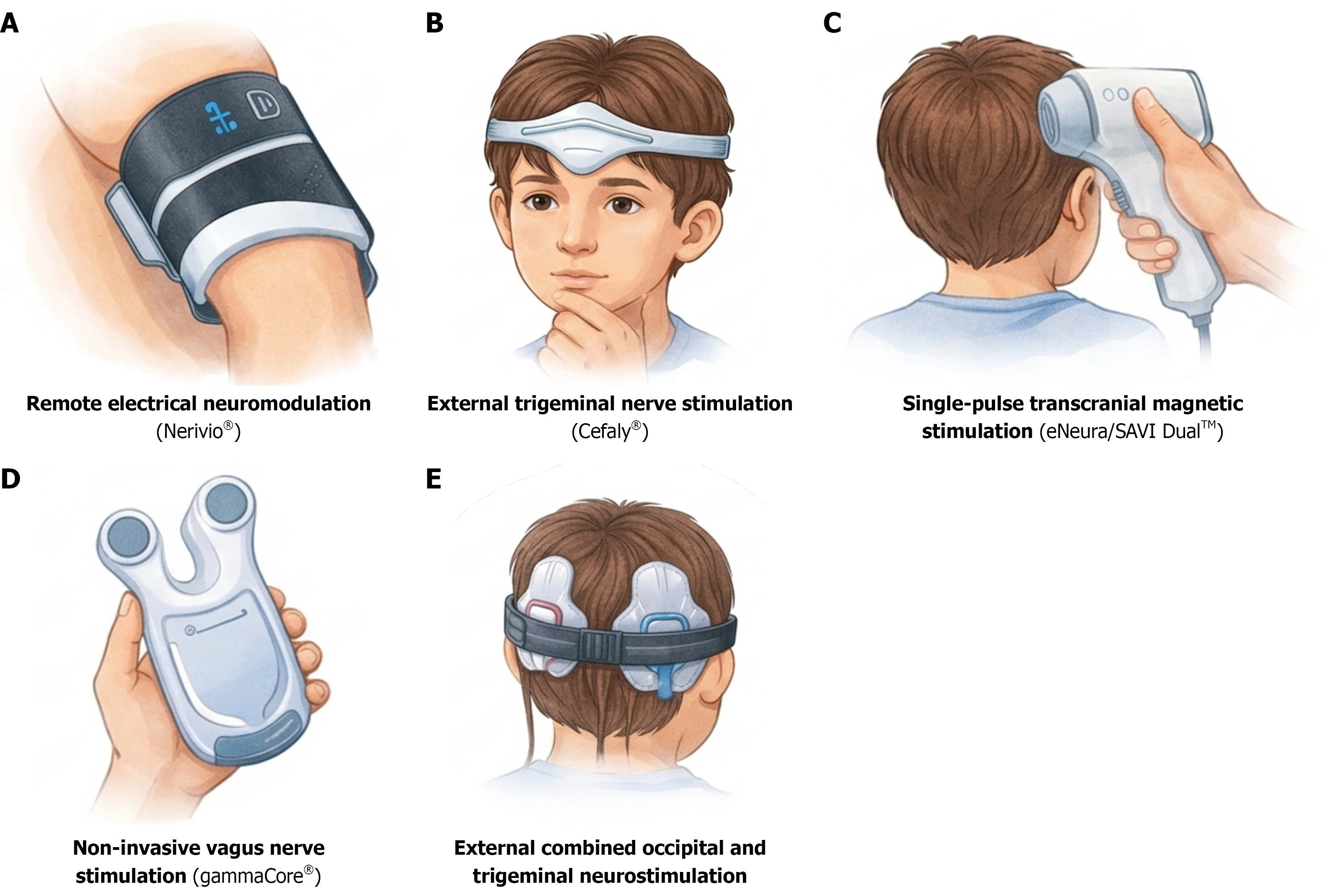
Figure 8 Non-invasive neuromodulation devices used in the management of pediatric migraine.
This schematic illustrates currently available non-pharmacological neuromodulation modalities for pediatric and adolescent migraine, highlighting their sites of application and therapeutic concepts. A: Remote electrical neuromodulation (Nerivio®), a wearable upper-arm device that delivers conditioned pain modulation via peripheral nociceptive stimulation, remotely modulating central pain pathways; B: External trigeminal nerve stimulation (Cefaly®), a forehead-mounted device that stimulates the supraorbital branches of the trigeminal nerve to reduce trigeminovascular excitability; C: Single-pulse transcranial magnetic stimulation (eNeura/SAVI Dual™), a handheld device applied to the occipital cortex, delivering brief magnetic pulses that interrupt cortical spreading depression and modulate cortical excitability; D: Non-invasive vagus nerve stimulation (gammaCore®), a cervical device that stimulates the vagus nerve to engage brainstem pain-inhibitory and autonomic regulatory circuits; E: External combined occipital and trigeminal neurostimulation, a head-mounted system targeting both occipital and trigeminal nerve territories, aiming to simultaneously modulate cortical and trigeminovascular networks involved in migraine pathophysiology. Together, these devices represent a growing class of mechanism-based, drug-free therapeutic options particularly suited for pediatric patients who have contraindications to pharmacotherapy, poor tolerability, or preference for non-medication approaches.
- Citation: Al-Beltagi M. Pediatric migraine: Neurodevelopmental mechanisms, clinical phenotypes, and modern therapeutics. World J Clin Pediatr 2026; 15(2): 119843
- URL: https://www.wjgnet.com/2219-2808/full/v15/i2/119843.htm
- DOI: https://dx.doi.org/10.5409/wjcp.v15.i2.119843