
















Copyright: ©Author(s) 2026.
World J Clin Pediatr. Jun 9, 2026; 15(2): 119843
Published online Jun 9, 2026. doi: 10.5409/wjcp.v15.i2.119843
Published online Jun 9, 2026. doi: 10.5409/wjcp.v15.i2.119843
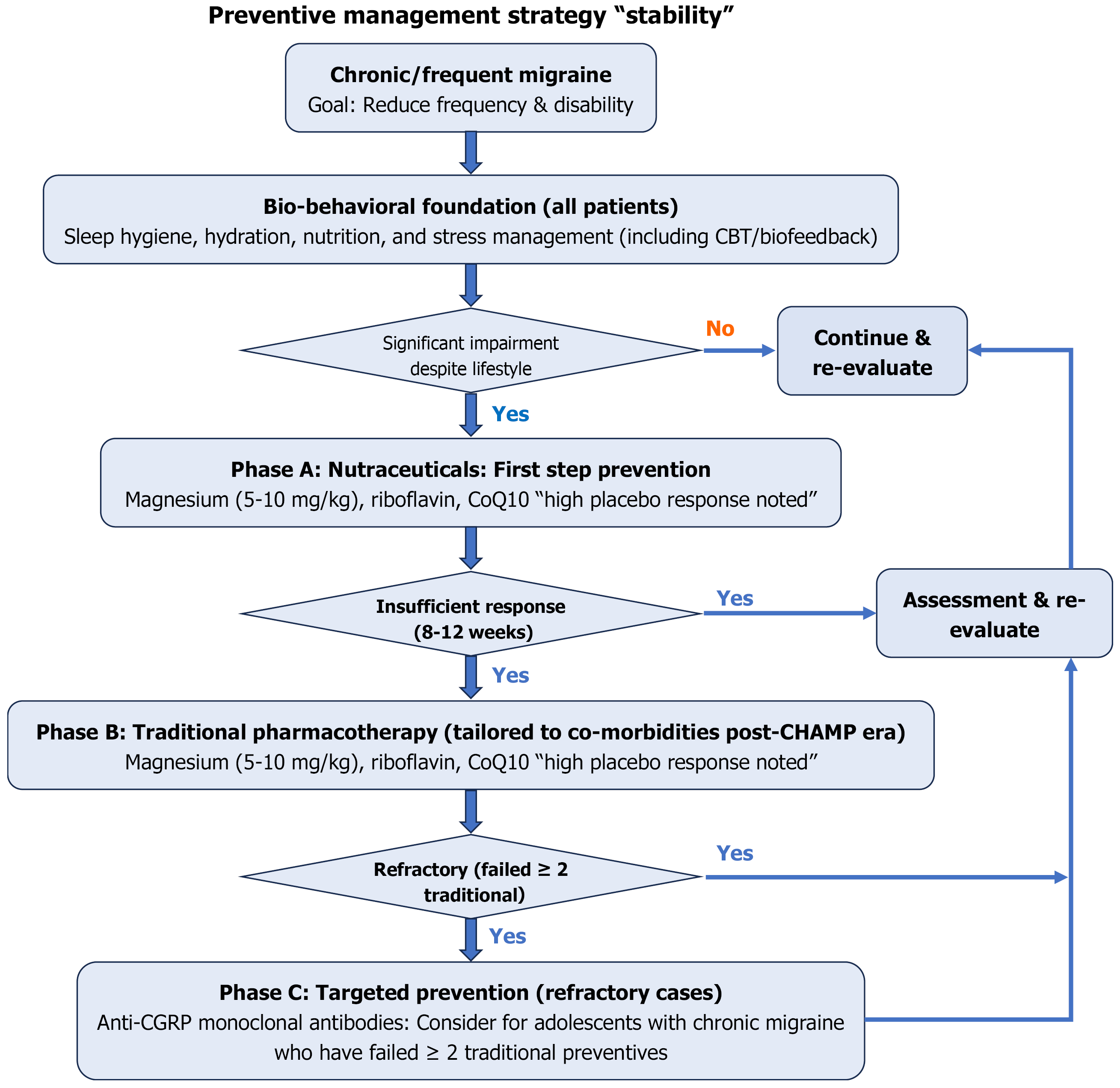
Figure 7 A bio-behavioral and stepped preventive strategy for pediatric chronic or frequent migraine.
This flow chart outlines a developmentally appropriate, stepped-care model for reducing attack frequency and disability in children with frequent episodic or chronic migraine. The bio-behavioral foundation represents the non-negotiable first step for all patients, regardless of disease severity. It addresses modifiable triggers through sleep hygiene, hydration, nutrition, and stress management (including cognitive behavioral therapy/biofeedback), acknowledging the high susceptibility of the pediatric brain to environmental stabilization. Decision threshold (“significant impairment”): Pharmacologic or nutraceutical escalation is only indicated if the bio-behavioral foundation fails to reduce functional impairment (e.g., continued school absenteeism). Stepped pharmacotherapy, phase A (nutraceuticals): The preferred first line of medical prevention due to a favorable safety profile. Options include magnesium, riboflavin, and coenzyme Q10. High placebo response rates in this category are noted as a therapeutic leverage point. Phase B (traditional pharmacotherapy): Reflects the post-CHAMP trial paradigm where traditional agents (topiramate, amitriptyline, propranolol) are chosen specifically to address comorbidities (e.g., anxiety, insomnia, obesity) rather than as reflexive first-line agents, given their equivalence to placebo in recent major trials. Phase C (targeted prevention): Reserves novel anti-calcitonin gene-related peptide monoclonal antibodies for adolescents meeting definitions of refractory chronic migraine (failure of traditional preventives). Assessment loop: Emphasizes that prevention is dynamic. Adequate therapeutic trials require 8-12 weeks before re-evaluation, at which point therapy is continued, adjusted, or tapered based on response. CoQ10: Coenzyme Q10; CBT: Cognitive behavioral therapy; CGRP: Calcitonin gene-related peptide.
- Citation: Al-Beltagi M. Pediatric migraine: Neurodevelopmental mechanisms, clinical phenotypes, and modern therapeutics. World J Clin Pediatr 2026; 15(2): 119843
- URL: https://www.wjgnet.com/2219-2808/full/v15/i2/119843.htm
- DOI: https://dx.doi.org/10.5409/wjcp.v15.i2.119843