
















Copyright: ©Author(s) 2026.
World J Clin Pediatr. Jun 9, 2026; 15(2): 119843
Published online Jun 9, 2026. doi: 10.5409/wjcp.v15.i2.119843
Published online Jun 9, 2026. doi: 10.5409/wjcp.v15.i2.119843
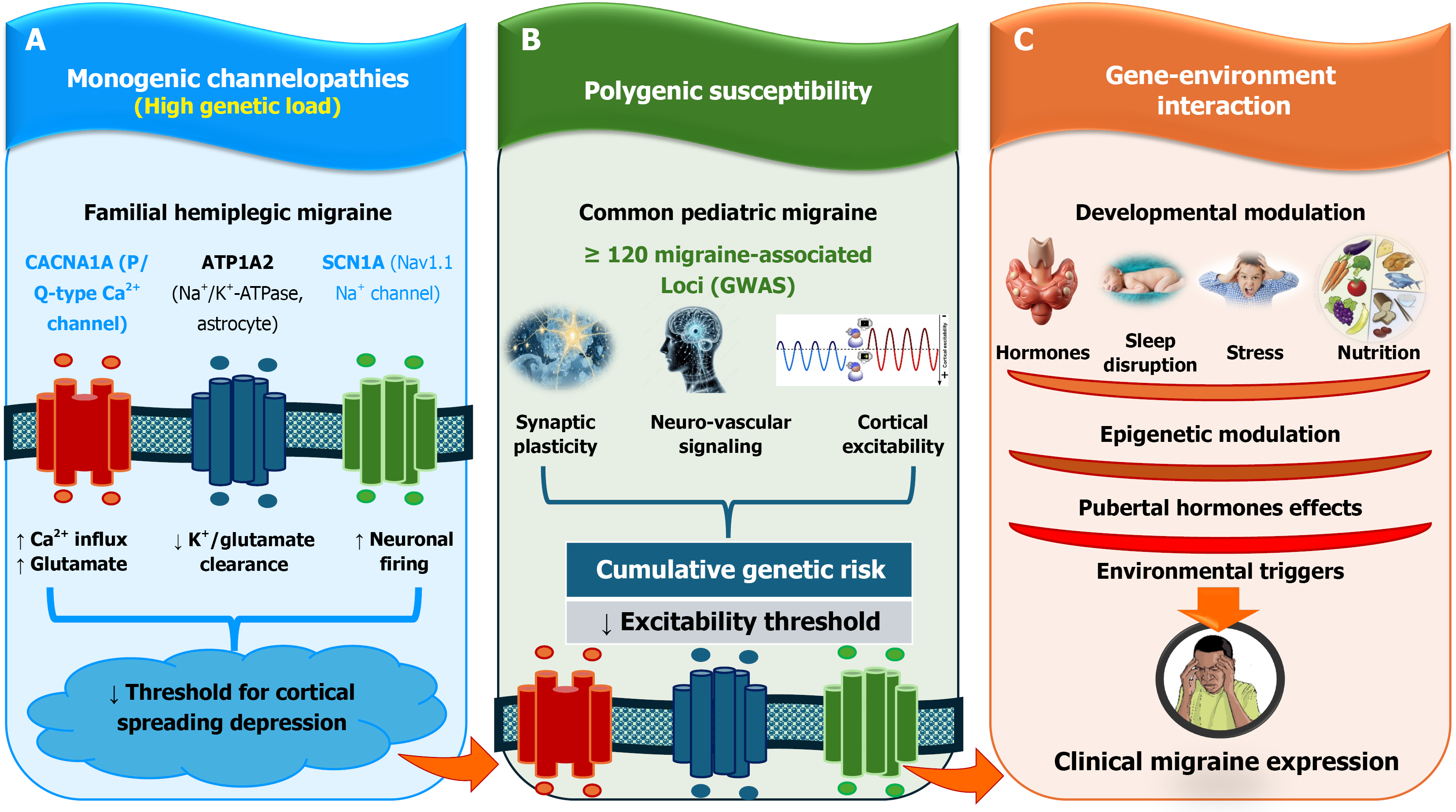
Figure 1 Genetic susceptibility and developmental modulation in pediatric migraine.
Pediatric migraine arises from a spectrum of genetic mechanisms that interact dynamically with brain development. A: Rare monogenic forms, such as familial hemiplegic migraine, demonstrate how ion channel and transporter dysfunction (CACNA1A, ATP1A2, SCN1A) lead to neuronal hyperexcitability and a reduced threshold for cortical spreading depression; B: In most children, migraine reflects a polygenic architecture, with multiple common variants collectively influencing synaptic transmission, neurovascular signaling, and cortical excitability; C: Developmental and environmental modifiers, including pubertal hormonal changes, epigenetic regulation, sleep disruption, and psychosocial stress, interact with genetic vulnerability to trigger clinical migraine expression across childhood and adolescence.
- Citation: Al-Beltagi M. Pediatric migraine: Neurodevelopmental mechanisms, clinical phenotypes, and modern therapeutics. World J Clin Pediatr 2026; 15(2): 119843
- URL: https://www.wjgnet.com/2219-2808/full/v15/i2/119843.htm
- DOI: https://dx.doi.org/10.5409/wjcp.v15.i2.119843