
















Copyright: ©Author(s) 2026.
World J Clin Pediatr. Jun 9, 2026; 15(2): 117843
Published online Jun 9, 2026. doi: 10.5409/wjcp.v15.i2.117843
Published online Jun 9, 2026. doi: 10.5409/wjcp.v15.i2.117843
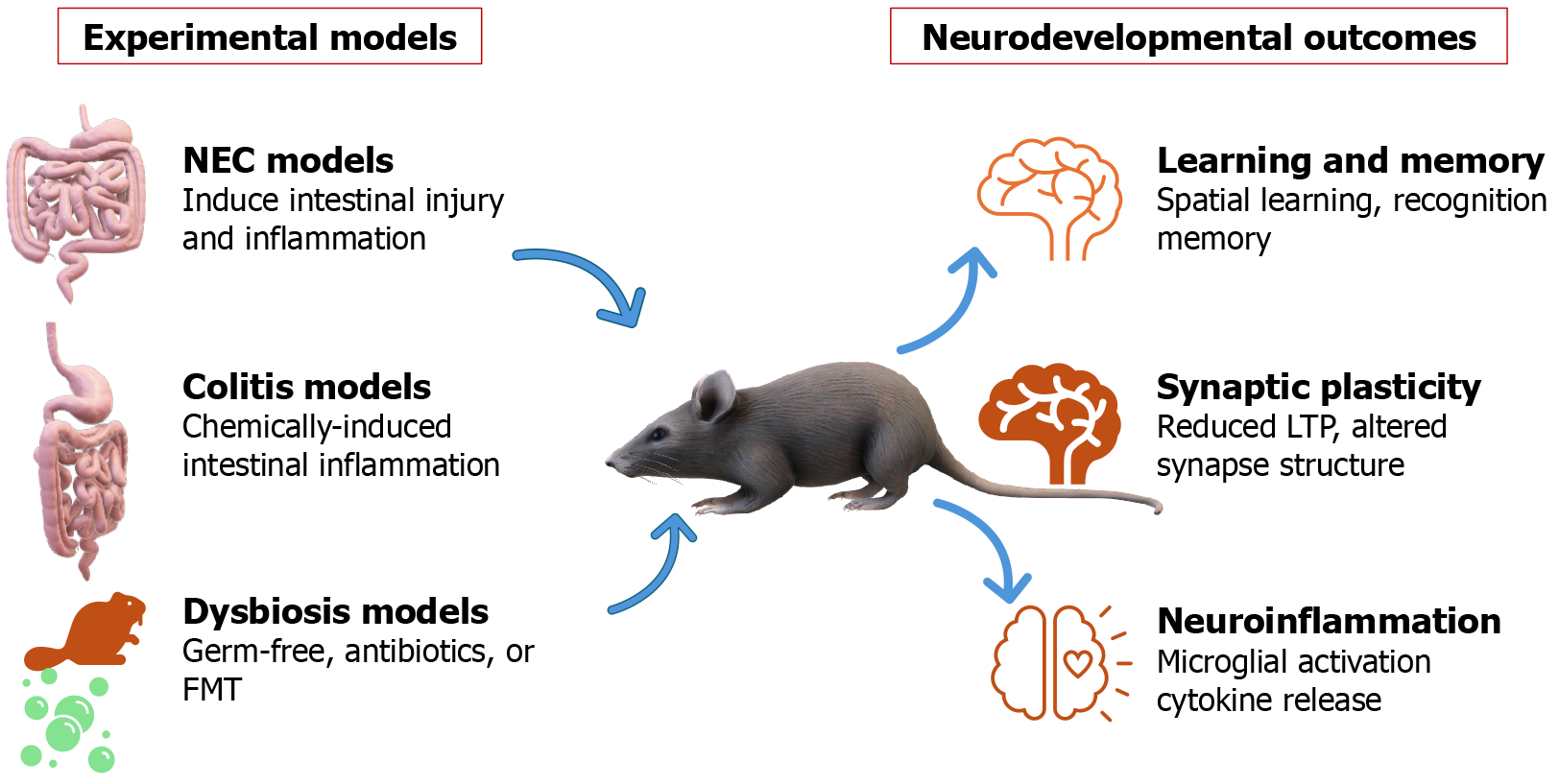
Figure 5 How early gut injury impairs brain development: Insights from animal models.
It summarizes key findings from animal models demonstrating how early gastrointestinal injury disrupts neurodevelopment. Experimental paradigms – including necrotizing enterocolitis models, chemically induced colitis, and dysbiosis models (germ-free rearing, antibiotic exposure, or fecal microbiota transfer) – produce intestinal inflammation, barrier disruption, and microbial imbalance during critical developmental windows. These gut insults lead to measurable neurodevelopmental consequences, including impaired learning and memory (e.g., deficits in spatial navigation and recognition tasks), altered synaptic plasticity (reduced long-term potentiation, changes in dendritic spine morphology), and increased neuroinflammation characterized by microglial activation and elevated cytokine signaling in the brain. Together, these animal data provide mechanistic evidence for a causal pathway linking early-life gut injury to long-term cognitive and neural dysfunction. FMT: Fecal microbiota transplantation; LTP: Long-term potentiation.
- Citation: Al-Beltagi M, Saeed NK, El-Sawaf Y, Bediwy AS, Elbeltagi R. Early-life gastrointestinal inflammation and the developing brain: Unravelling the pathways to long-term cognitive dysfunction. World J Clin Pediatr 2026; 15(2): 117843
- URL: https://www.wjgnet.com/2219-2808/full/v15/i2/117843.htm
- DOI: https://dx.doi.org/10.5409/wjcp.v15.i2.117843