
















Copyright: ©Author(s) 2026.
World J Clin Pediatr. Jun 9, 2026; 15(2): 117843
Published online Jun 9, 2026. doi: 10.5409/wjcp.v15.i2.117843
Published online Jun 9, 2026. doi: 10.5409/wjcp.v15.i2.117843
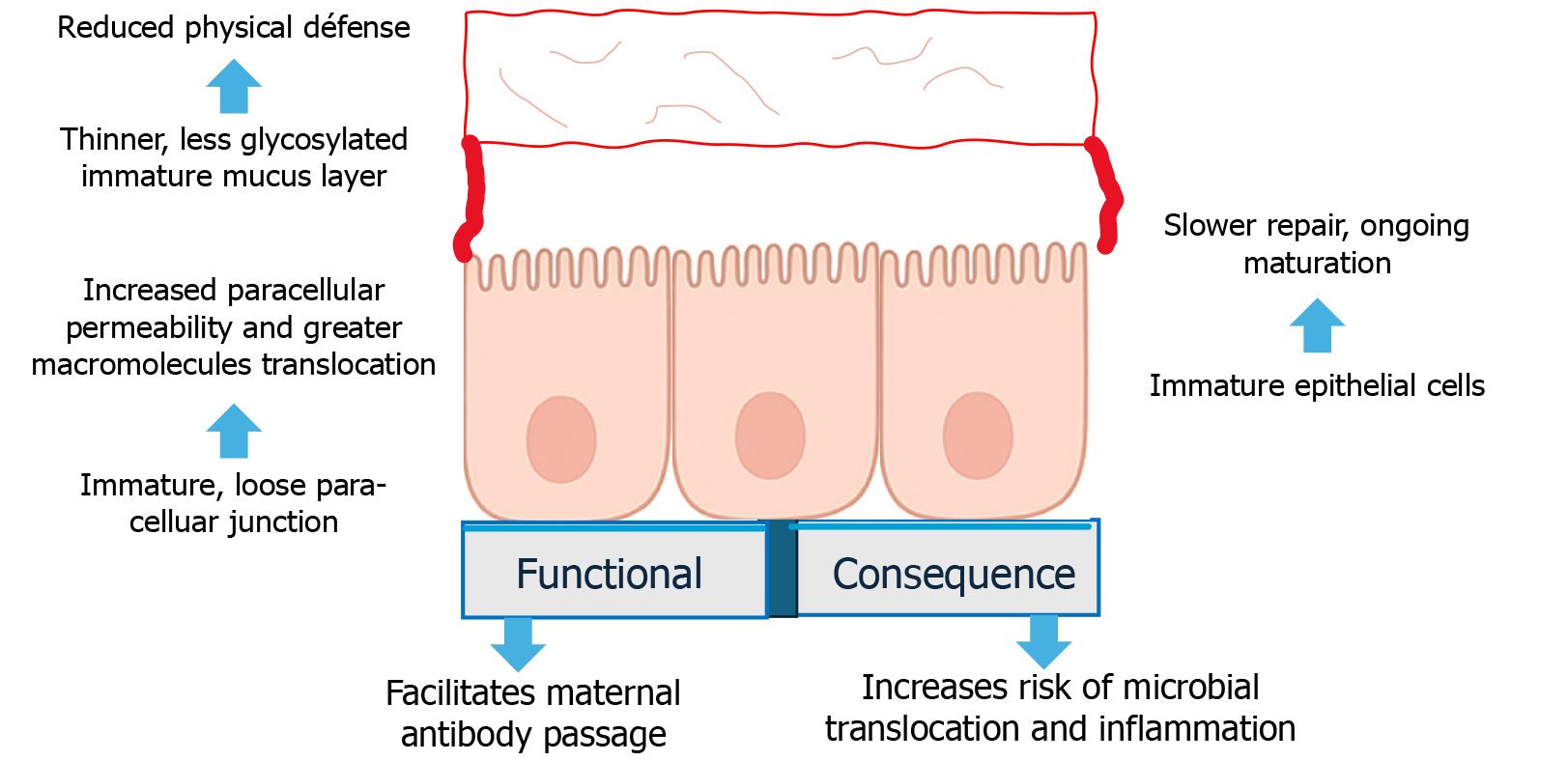
Figure 3 Developmental factors contributing to intestinal mucosal barrier vulnerability in neonates and infants.
It illustrates the key developmental features that make the intestinal mucosal barrier more permeable and vulnerable in neonates and young infants. The mucus layer is thin and less glycosylated, providing weaker physical protection against microbes and inflammatory injury. The intestinal epithelial cells are still undergoing maturation, with slower turnover and less efficient repair responses following injury. The tight junctions between adjacent epithelial cells are structurally immature and more permissive, allowing greater paracellular movement of macromolecules. While this increased permeability facilitates the passive transfer of maternal antibodies, it also heightens susceptibility to microbial translocation and inflammation, creating a critical window of vulnerability early in life.
- Citation: Al-Beltagi M, Saeed NK, El-Sawaf Y, Bediwy AS, Elbeltagi R. Early-life gastrointestinal inflammation and the developing brain: Unravelling the pathways to long-term cognitive dysfunction. World J Clin Pediatr 2026; 15(2): 117843
- URL: https://www.wjgnet.com/2219-2808/full/v15/i2/117843.htm
- DOI: https://dx.doi.org/10.5409/wjcp.v15.i2.117843