
















Copyright: ©Author(s) 2026.
World J Clin Pediatr. Jun 9, 2026; 15(2): 117841
Published online Jun 9, 2026. doi: 10.5409/wjcp.v15.i2.117841
Published online Jun 9, 2026. doi: 10.5409/wjcp.v15.i2.117841
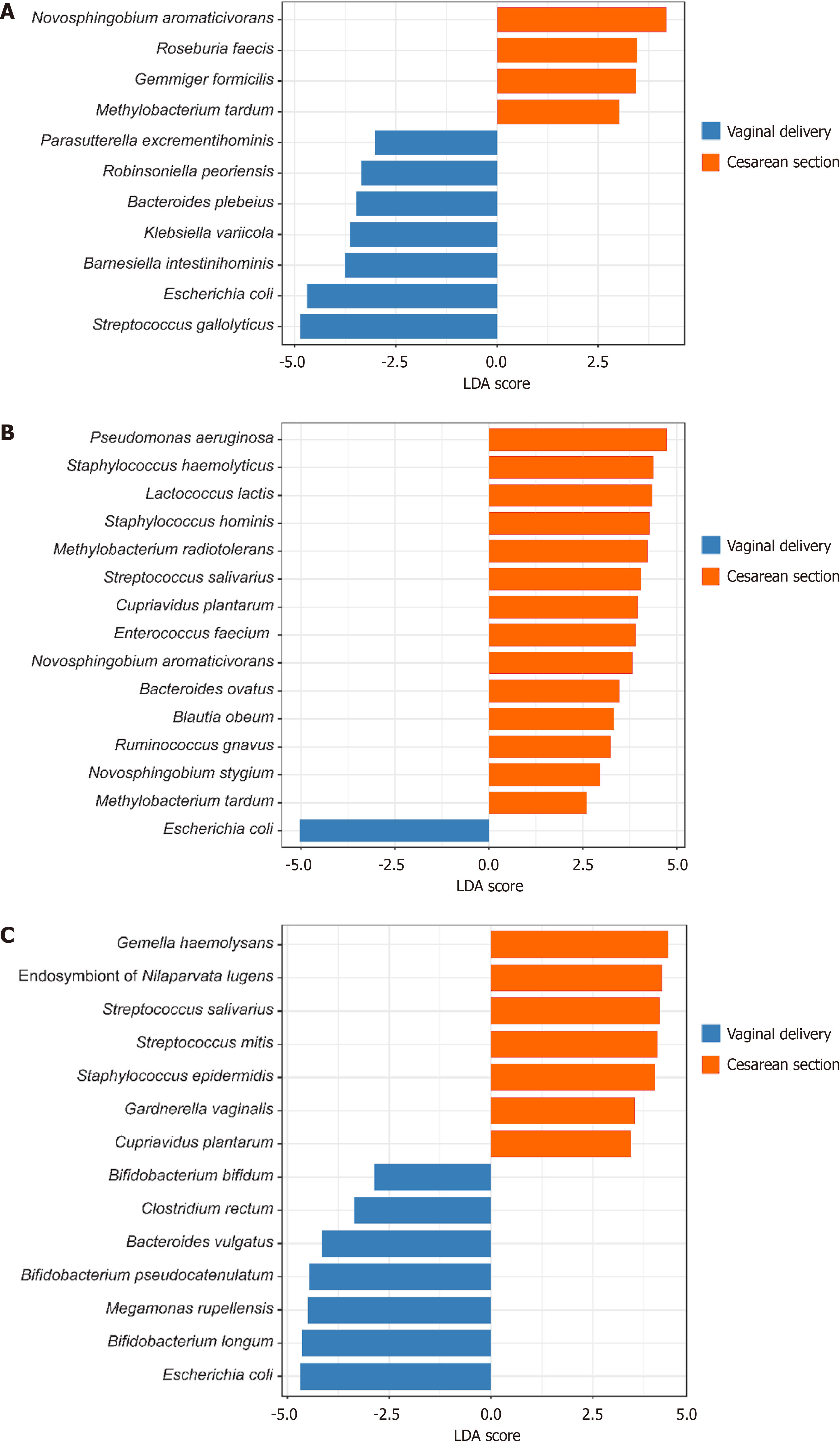
Figure 3 Differentially abundant bacterial taxa identified by linear discriminant analysis effect size analysis according to mode of delivery and time of stool collection.
Linear discriminant analysis effect size was used to identify bacterial taxa with LDA scores > 2.0 and P < 0.05 (Kruskal–Wallis test) between delivery modes. A total of 140 samples were included (cesarean section < 24 hours, n = 31; cesarean section 24-48 hours, n = 18; cesarean section > 48 hours, n = 25; vaginal delivery < 24 hours, n = 23; vaginal delivery 24-48 hours, n = 30; vaginal delivery > 48 hours, n = 13). Analyses were performed separately for samples collected at: A: < 24 hours; B: 24-48 hours; C: > 48 hours after birth.
- Citation: Sintusek P, Klomkliew P, Visedthorn S, Phutthawong K, Noicharoen T, Soontornsook A, Tran DL, Payungporn S. Distinct early gut microbiota patterns by delivery mode within 100 hours of birth. World J Clin Pediatr 2026; 15(2): 117841
- URL: https://www.wjgnet.com/2219-2808/full/v15/i2/117841.htm
- DOI: https://dx.doi.org/10.5409/wjcp.v15.i2.117841