
















Copyright: ©Author(s) 2026.
World J Clin Pediatr. Jun 9, 2026; 15(2): 117841
Published online Jun 9, 2026. doi: 10.5409/wjcp.v15.i2.117841
Published online Jun 9, 2026. doi: 10.5409/wjcp.v15.i2.117841
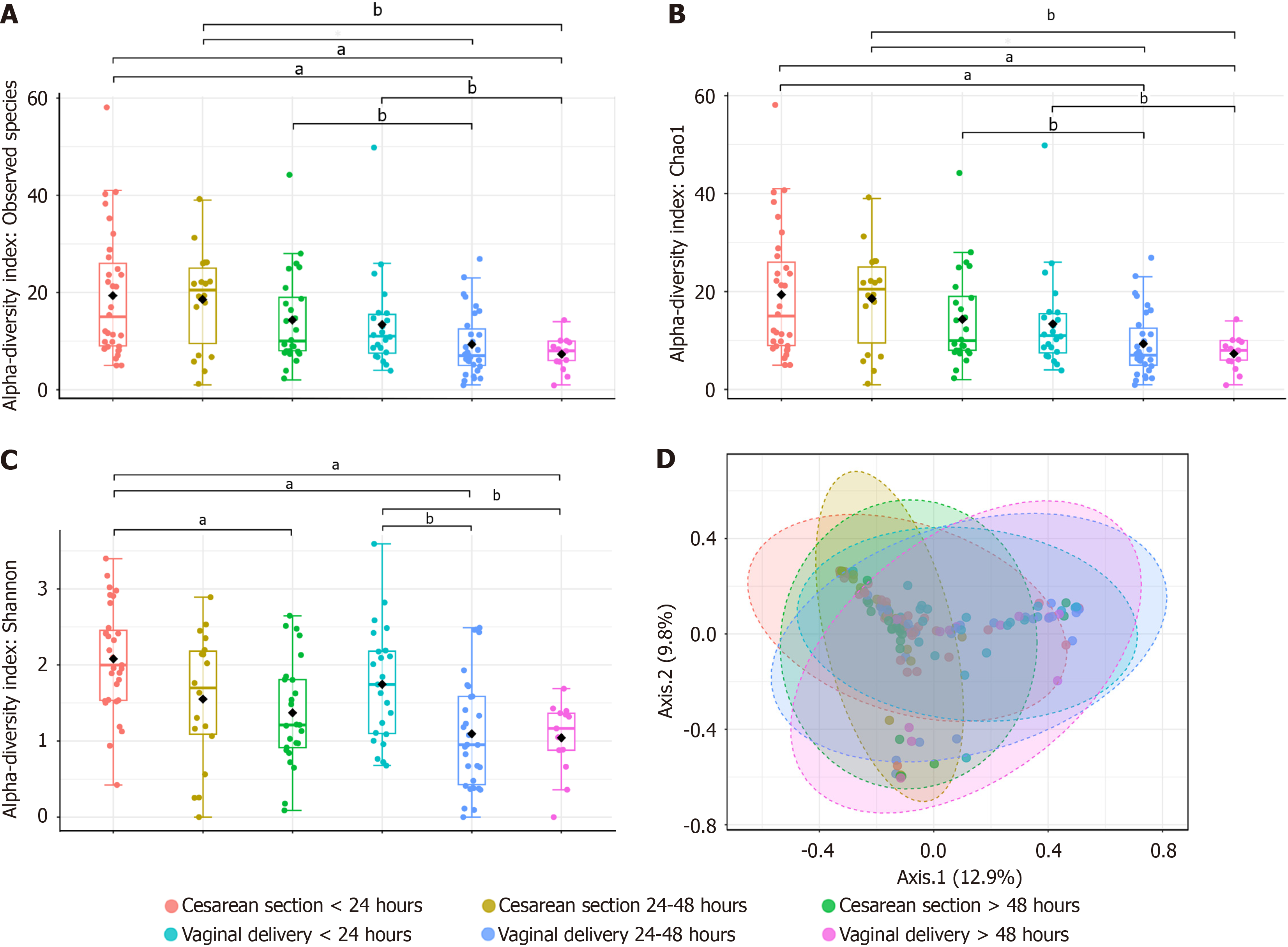
Figure 1 Bacterial diversities in the stool of predominant breastfed neonates according to mode of delivery and time of stool collection.
A total of 140 samples were analyzed (cesarean section < 24 hours, n = 31; cesarean section 24-48 hours, n = 18; cesarean section > 48 hours, n = 25; vaginal delivery < 24 hours, n = 23; vaginal delivery 24-48 hours, n = 30; vaginal delivery > 48 hours, n = 13). A: Observed species; B: Alpha diversity based on species richness (Chao1 index); C: Alpha diversity based on species richness and evenness (Shannon index) were used to assess within-sample diversity; D: Beta diversity between samples was assessed using Bray-Curtis dissimilarity and visualized by principal coordinate analysis. Statistical differences in alpha diversity were evaluated using the Kruskal–Wallis test, while differences in beta diversity were assessed using PERMANOVA, aP < 0.001; bP < 0.05.
- Citation: Sintusek P, Klomkliew P, Visedthorn S, Phutthawong K, Noicharoen T, Soontornsook A, Tran DL, Payungporn S. Distinct early gut microbiota patterns by delivery mode within 100 hours of birth. World J Clin Pediatr 2026; 15(2): 117841
- URL: https://www.wjgnet.com/2219-2808/full/v15/i2/117841.htm
- DOI: https://dx.doi.org/10.5409/wjcp.v15.i2.117841