
















Copyright: ©Author(s) 2026.
World J Clin Pediatr. Jun 9, 2026; 15(2): 114189
Published online Jun 9, 2026. doi: 10.5409/wjcp.v15.i2.114189
Published online Jun 9, 2026. doi: 10.5409/wjcp.v15.i2.114189
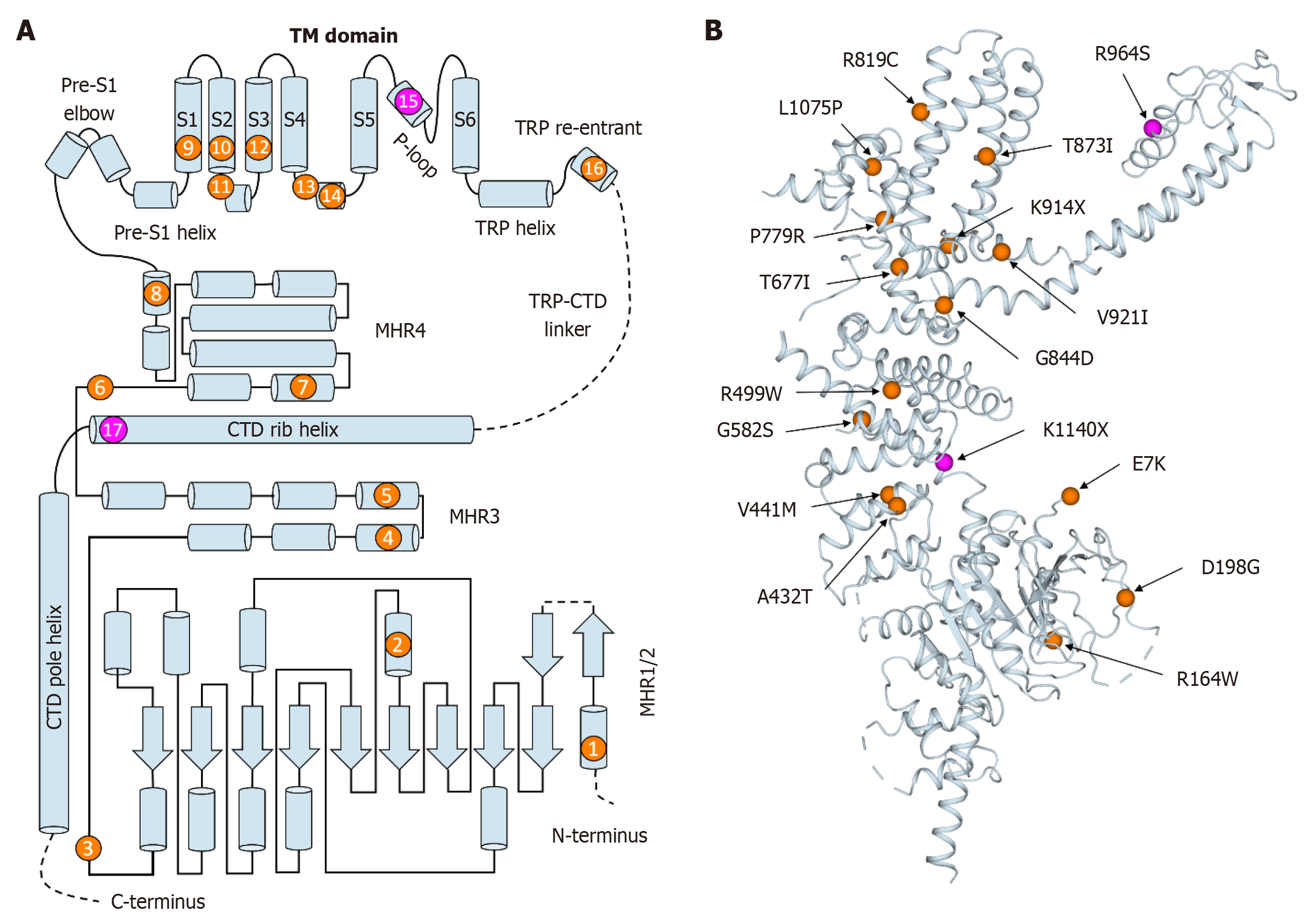
Figure 1 Overall architecture of the hTRPM4 subunit.
A: A schematic representation of the major structural components in hTRPM4; the N-terminus has four melastatin regions and Pre-S1 region; the transmembrane domain contains six helices (S1-S6); helices S5, S6 and P-loop form pore module; the C-terminus contains transient receptor potential and C-terminal domain helices; alpha-helices are represented by cylinders and beta-strands are indicated by arrows; variants are numbered: 1-E7K; 2-R164W; 3-D198G; 4-A432T; 5-V441M; 6-R499W; 7-G582S; 8-T677I; 9-P779R; 10-R819C; 11-G844D; 12-T873I; 13-K914X; 14-V921I; 15-R964S; 16-L1075P; 17-K1140X; B: 3D model of the hTRPM4 subunit (PDB ID: 5WP6). MHR1-4: Four melastatin regions; TM: Transmembrane; TRP: Transient receptor potential; CTD: C-terminal domain.
- Citation: Melnik OV, Kulichik OE, Zaytseva AK, Kofeynikova OA, Fetisova SG, Tarnovskaya SI, Fomicheva YV, Vasichkina ES, Zhorov BS, Kalinina OV, Kostareva AA. Role of TRPM4 ion channel in pediatric arrhythmic syndromes. World J Clin Pediatr 2026; 15(2): 114189
- URL: https://www.wjgnet.com/2219-2808/full/v15/i2/114189.htm
- DOI: https://dx.doi.org/10.5409/wjcp.v15.i2.114189