
















©The Author(s) 2023.
World J Otorhinolaryngol. May 9, 2023; 10(2): 4-22
Published online May 9, 2023. doi: 10.5319/wjo.v10.i2.4
Published online May 9, 2023. doi: 10.5319/wjo.v10.i2.4
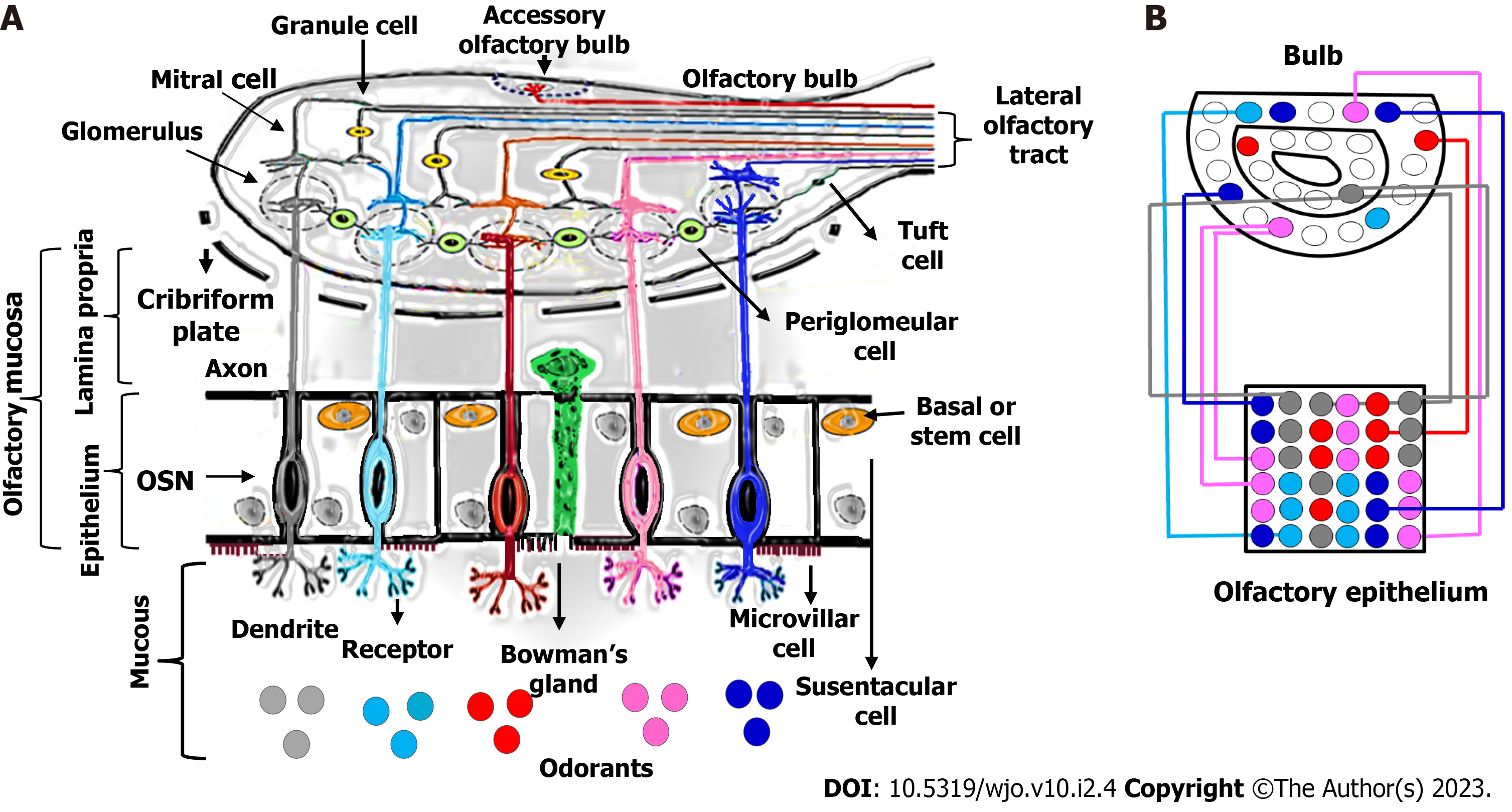
Figure 2 Structure of the olfactory mucosa and topographical mapping of the olfactory sensory neurons and their connections.
A: The olfactory mucosa is composed of the olfactory epithelium and the lamina propria. The epithelium is composed of olfactory sensory neurons and non-neuronal cells (the susentacular, microvillar, and Bowman’s gland and basal cells). A bipolar cell has dendrites at one end extending to the mucus and a single axon which projects to the glomerulus. Within a glomerulus, the axon of the bipolar neuron synapses with the mitral and tufted cells along with periglomerular cells; B: The olfactory neurons which express the same type of receptors converge onto the same glomerulus maintaining a topographical mapping of odorant receptors where they synapse with sensory neurons of the olfactory tract. The same topographical mapping is maintained in the glomeruli and bulb.
- Citation: Hamed SA. Post-COVID-19 persistent olfactory, gustatory, and trigeminal chemosensory disorders: Definitions, mechanisms, and potential treatments. World J Otorhinolaryngol 2023; 10(2): 4-22
- URL: https://www.wjgnet.com/2218-6247/full/v10/i2/4.htm
- DOI: https://dx.doi.org/10.5319/wjo.v10.i2.4