
















©The Author(s) 2025.
World J Obstet Gynecol. Dec 18, 2025; 14(3): 112710
Published online Dec 18, 2025. doi: 10.5317/wjog.v14.i3.112710
Published online Dec 18, 2025. doi: 10.5317/wjog.v14.i3.112710
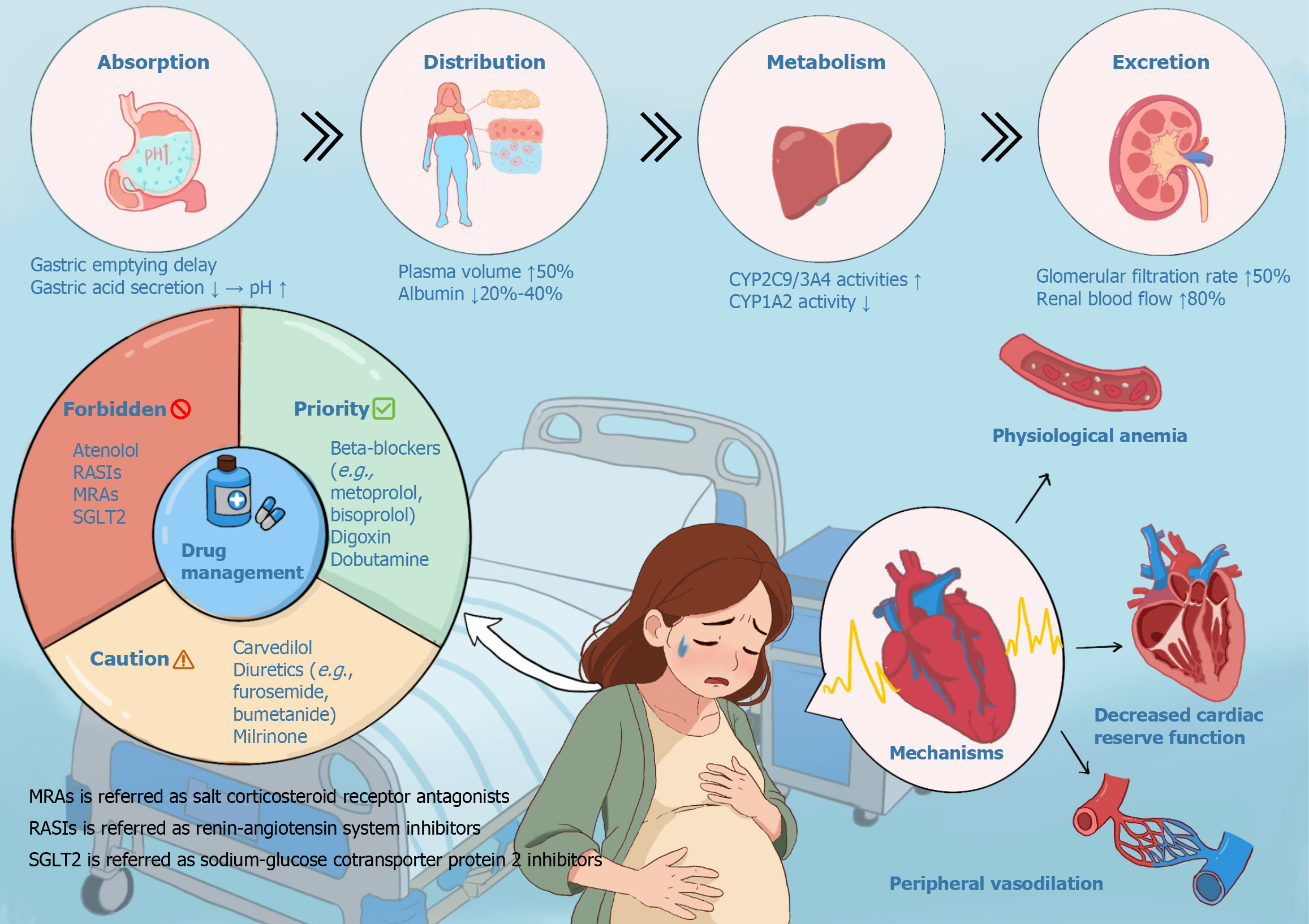
Figure 1 Graphical Abstract.
It summarizes the complex interplay between profound physiological changes during pregnancy, their impact on pharmacokinetics (PK), subsequent medication safety classifications, and the pathophysiology of peripartum heart failure (HF). Key maternal adaptations include altered gastric absorption, significantly increased renal elimination, and modulated hepatic enzyme activity. The underlying pathophysiology for HF during pregnancy involves physiological anemia, decreased cardiac reserve function, and peripheral vasodilation, which collectively increase cardiovascular strain. These shifts necessitate a stringent drug classification system: "Forbidden" denotes agents with high fetal risk, while "Caution" requires vigilant monitoring. Understanding this triad – physiology, PK, and risk categorization – is essential for safe pharmacotherapy in pregnant patients, particularly those with or at risk of cardiac dysfunction. MRAs: Mineralocorticoid receptor antagonists; RASIs: Renin-angiotensin system inhibitors; SGLT2: Sodium-glucose cotransporter 2.
- Citation: Cheng X, Yin XL, Shan YQ, Wang SY, Xia YB, Xu B, Xu TC. Navigating heart failure medications in obstetric practice. World J Obstet Gynecol 2025; 14(3): 112710
- URL: https://www.wjgnet.com/2218-6220/full/v14/i3/112710.htm
- DOI: https://dx.doi.org/10.5317/wjog.v14.i3.112710