
















Copyright: ©Author(s) 2026.
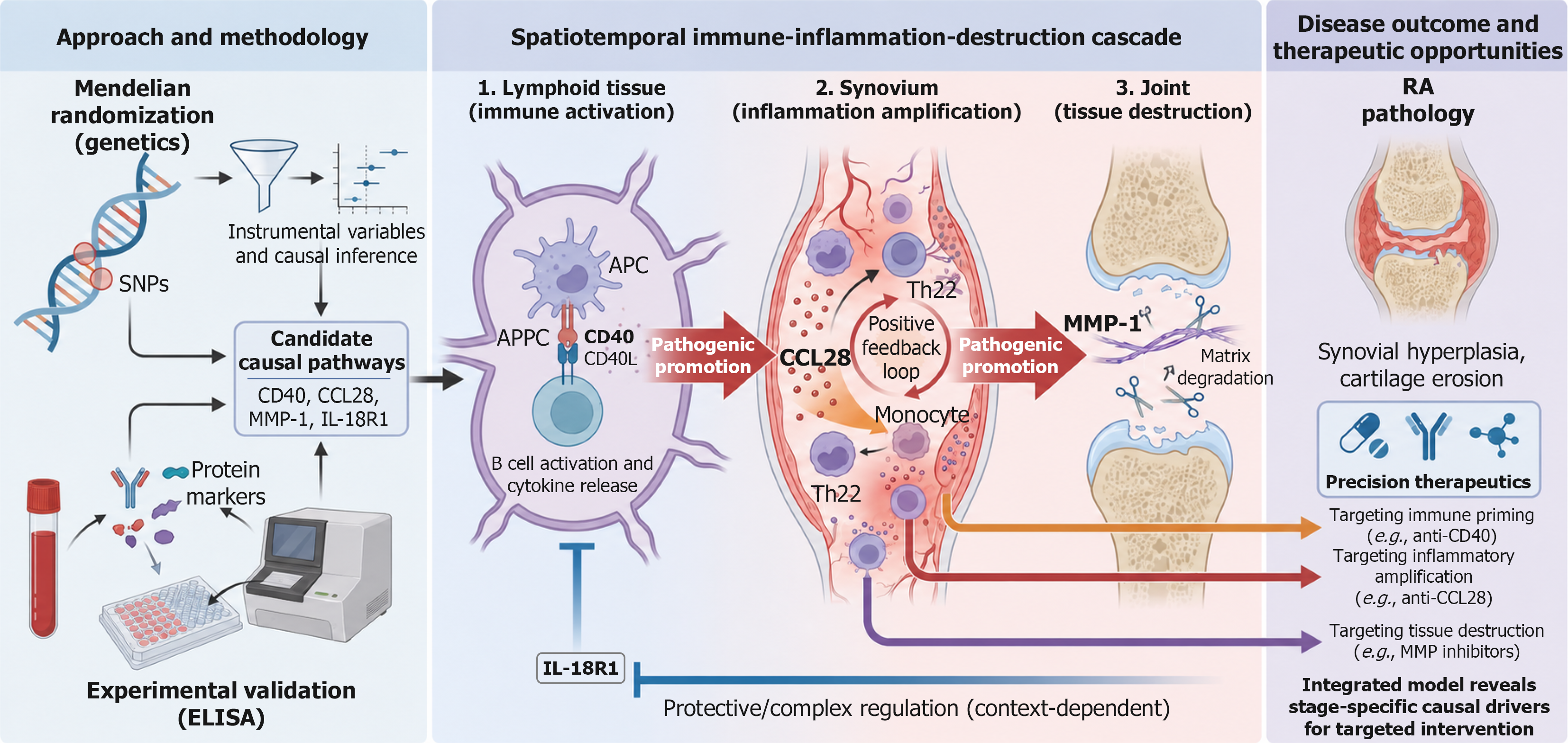
Figure 5 Proposed integrated spatiotemporal model of inflammatory mediator pathways potentially involved in rheumatoid arthritis.
Combining Mendelian randomization (MR) analysis (which supports causal inference only under its core assumptions) with clinical enzyme-linked immunosorbent assay (ELISA) validation suggests CD40, C-C motif chemokine ligand 28 (CCL28), and matrix metalloproteinase-1 (MMP-1) as candidate mediators, and interleukin-18 receptor 1 (IL-18R1) as a context-dependent factor. These molecules are hypothesized to drive a compartmentalized 3-stage cascade: (1) CD40 may contribute to adaptive immune activation in lymphoid tissues, (2) CCL28 may amplify local synovial inflammation by recruiting immune effectors (e.g., monocytes, Th22 cells), and (3) MMP-1 may mediate cartilage matrix degradation and erosion. IL-18R1 may exert context-dependent modulatory effects. This proposed “immune-inflammation-tissue destruction” axis offers a hypothesis-generating framework for exploring stage- and tissue-associated biological mechanisms. As with all MR-based inferences, these findings should be considered supportive, and the experimental validation demonstrates consistency with, rather than proof of, the candidate relationships. APC: Antigen-presenting cell; APPC: Activated antigen-presenting cell; RA: Rheumatoid arthritis; SNPs: Single-nucleotide polymorphisms.
- Citation: Song YS, Luo JL, Zheng XF, Chen YP, Li ZM, Yao J. Integrating Mendelian randomization and enzyme-linked immunosorbent assay validation identifies candidate mediators across the rheumatoid arthritis disease continuum. World J Orthop 2026; 17(11): 125433
- URL: https://www.wjgnet.com/2218-5836/full/v17/i11/125433.htm
- DOI: https://dx.doi.org/10.5312/wjo.125433