
















©The Author(s) 2026.
World J Orthop. Jan 18, 2026; 17(1): 113228
Published online Jan 18, 2026. doi: 10.5312/wjo.v17.i1.113228
Published online Jan 18, 2026. doi: 10.5312/wjo.v17.i1.113228
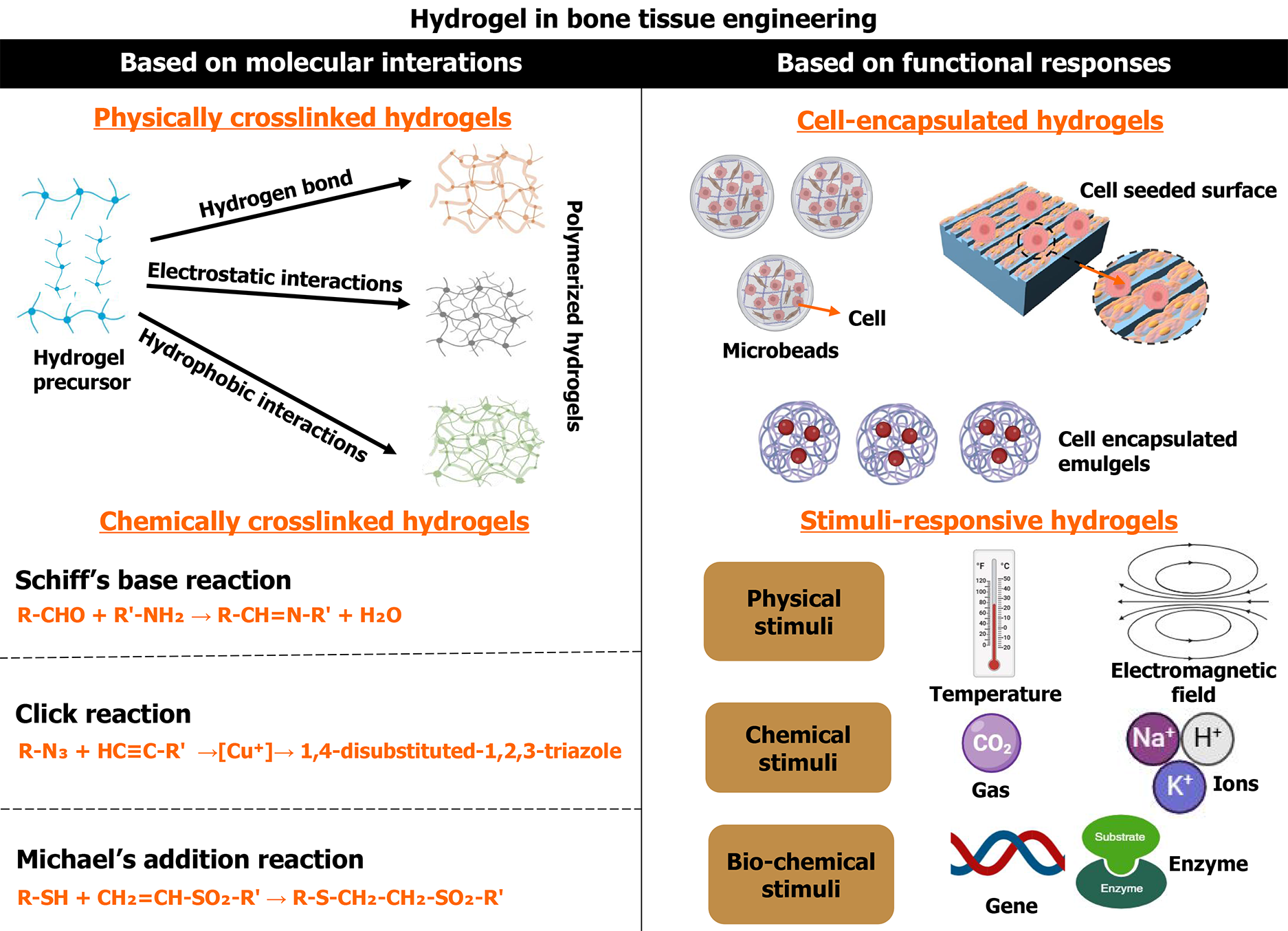
Figure 2 Classification of hydrogels in bone tissue engineering based on molecular bonding and function.
Physically crosslinked hydrogels rely on non-covalent interactions, while chemically crosslinked hydrogels form stable covalent bonds via Schiff base formation, click chemistry, or Michael’s addition. Functional categorization includes cell-encapsulated hydrogels, which provide biomimetic microenvironments for bone regeneration, and stimuli-responsive hydrogels, which dynamically adapt to external physical, chemical, and biochemical cues, enhancing regenerative capabilities.
- Citation: Suresh N, Lekhavadhani S, Selvamurugan N. Advances in polymer-based hydrogel systems for adipose-derived mesenchymal stem cells toward bone regeneration. World J Orthop 2026; 17(1): 113228
- URL: https://www.wjgnet.com/2218-5836/full/v17/i1/113228.htm
- DOI: https://dx.doi.org/10.5312/wjo.v17.i1.113228