
















©The Author(s) 2025.
World J Orthop. Sep 18, 2025; 16(9): 109147
Published online Sep 18, 2025. doi: 10.5312/wjo.v16.i9.109147
Published online Sep 18, 2025. doi: 10.5312/wjo.v16.i9.109147
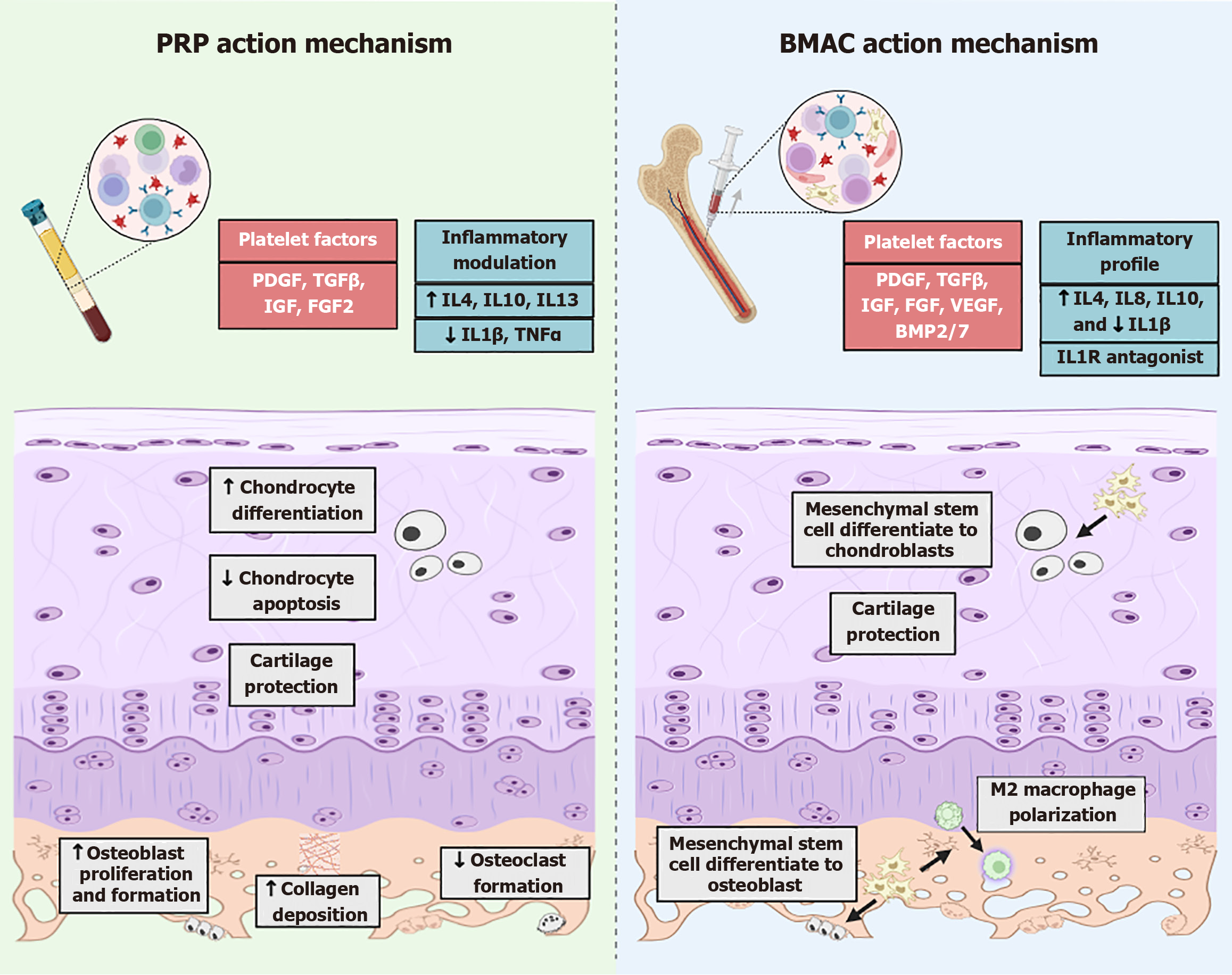
Figure 2 Mechanisms of action of platelet-rich plasma and bone marrow aspirate concentrate in joints.
The left panel illustrates the mechanism of action of platelet-rich plasma (PRP), highlighting its rich content of platelet-derived growth factors (PDGF, TGF-β, IGF, FGF2) and its role in inflammatory modulation, characterized by increased IL-4, IL-10, and IL-13, and decreased IL-1β and TNF-α. PRP promotes chondrocyte differentiation, reduces chondrocyte apoptosis, and contributes to cartilage protection. Additionally, it enhances osteoblast proliferation and formation, collagen deposition, and inhibits osteoclast formation. The right panel depicts bone marrow aspirate concentrate (BMAC) action, which contains a broader range of bioactive molecules compared with PRP, including PDGF, TGF-β, IGF, FGF, VEGF, and BMP2/7. BMAC exerts anti-inflammatory effects through upregulation of IL-4, IL-8, IL-10, and downregulation of IL-1β, supported by IL-1 receptor antagonism. Mesenchymal stem cells, present in BMAC, differentiate into chondroblasts and osteoblasts, aiding cartilage protection and bone regeneration. Furthermore, BMAC promotes M2 macrophage polarization, contributing to a regenerative microenvironment. PRP: Platelet-rich plasma; BMAC: Bone marrow aspirate concentrate.
- Citation: Gomes FF, de Castro Junior IM, Matheus Guimaraes JA, Rosa IM, de Sousa EB, Cordeiro A. Intra-articular treatments for hindfoot osteoarthritis. World J Orthop 2025; 16(9): 109147
- URL: https://www.wjgnet.com/2218-5836/full/v16/i9/109147.htm
- DOI: https://dx.doi.org/10.5312/wjo.v16.i9.109147