
















©The Author(s) 2025.
World J Orthop. Sep 18, 2025; 16(9): 109147
Published online Sep 18, 2025. doi: 10.5312/wjo.v16.i9.109147
Published online Sep 18, 2025. doi: 10.5312/wjo.v16.i9.109147
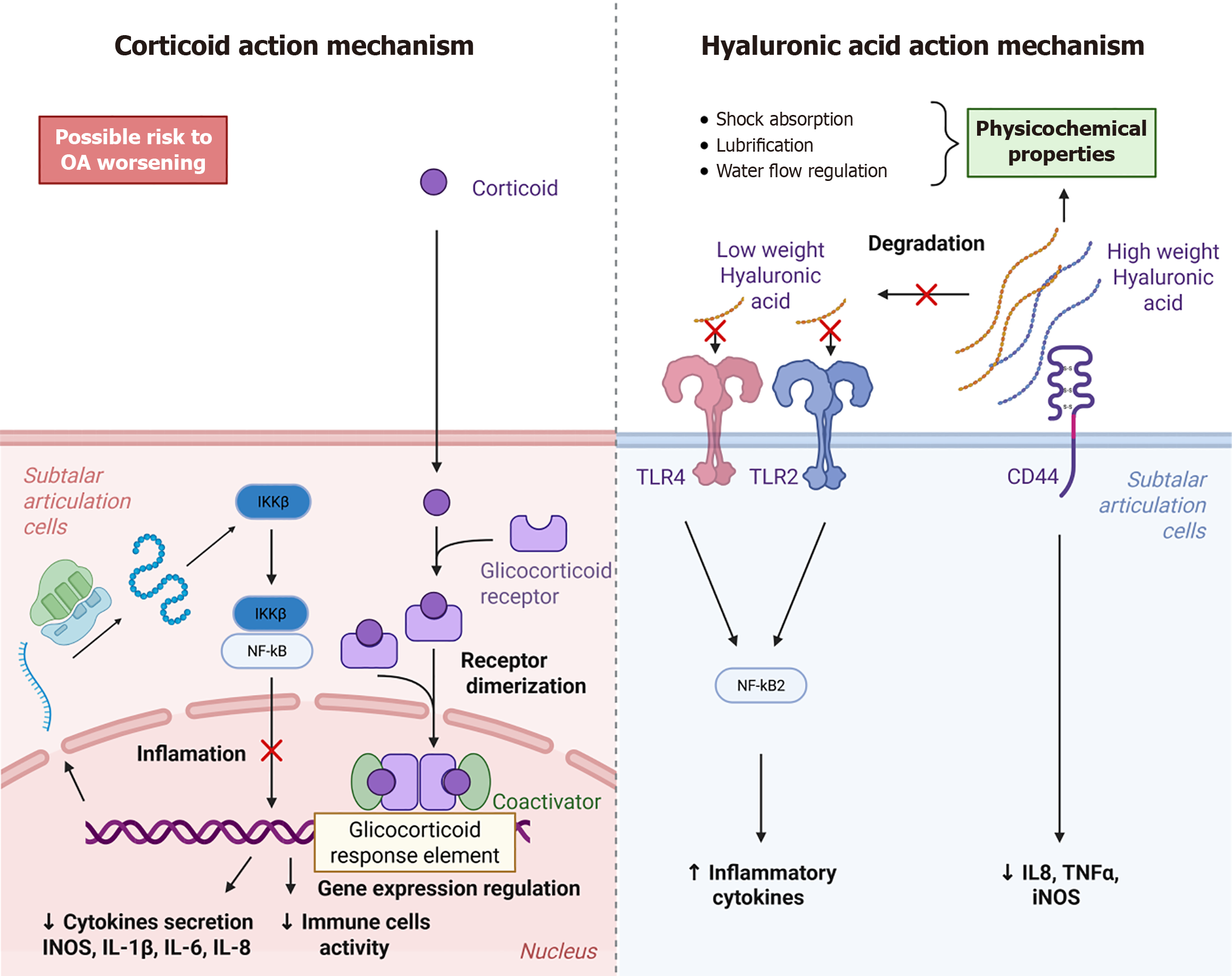
Figure 1 Mechanisms of action of corticosteroids and hyaluronic acid in joints.
In the left panel, corticosteroids bind to glucocorticoid receptors, leading to receptor dimerization and translocation to the nucleus, where they regulate gene expression via glucocorticoid response elements. This results in reduced cytokine secretion, via IKKβ-inhibition of NF-kB, and decreased immune cell activity, potentially providing short-term symptomatic relief. In the right panel, high molecular weight hyaluronic acid interacts with CD44 receptors, contributing to anti-inflammatory effects by reducing IL-8, TNF-α, and iNOS expression. Hyaluronic acid also plays a biomechanical role in shock absorption, lubrication, and regulation of interstitial fluid dynamics within the joint. Conversely, degraded low molecular weight hyaluronic acid activates Toll-like receptors TLR2 and TLR4, promoting NF-κB-mediated pro-inflammatory signaling.
- Citation: Gomes FF, de Castro Junior IM, Matheus Guimaraes JA, Rosa IM, de Sousa EB, Cordeiro A. Intra-articular treatments for hindfoot osteoarthritis. World J Orthop 2025; 16(9): 109147
- URL: https://www.wjgnet.com/2218-5836/full/v16/i9/109147.htm
- DOI: https://dx.doi.org/10.5312/wjo.v16.i9.109147