
















©The Author(s) 2025.
World J Orthop. Dec 18, 2025; 16(12): 110992
Published online Dec 18, 2025. doi: 10.5312/wjo.v16.i12.110992
Published online Dec 18, 2025. doi: 10.5312/wjo.v16.i12.110992
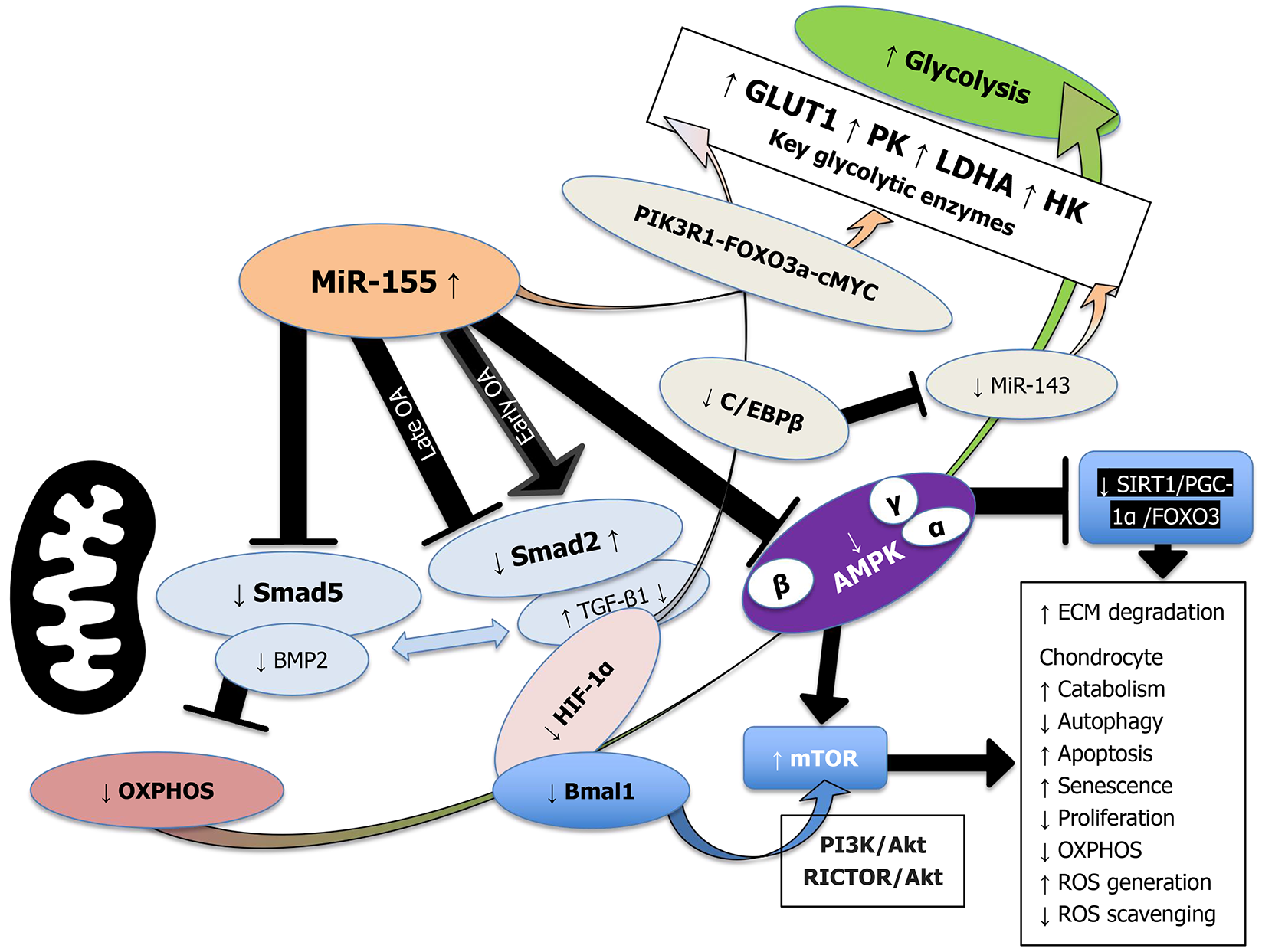
Figure 4 Elevated microRNA-155 in osteoarthritis orchestrates the transition in energy production from anti-inflammatory oxidative phosphorylation generation to pro-inflammatory glycolysis-dependence.
Early in osteoarthritis (OA), microRNA-155 (miR-155) upregulates glucose transporter and key glycolytic enzymes through CCAAT/enhancer binding protein β and transforming growth factor β1 (TGF-β1)/bone morphogenetic proteins 2 signalling modulations favouring TGF-β1, to counteract OA progression. Later in OA, through brain and muscle Arnt-like protein 1 and hypoxia-inducible factor 1 alpha repressions, miR-155 reduces TGF-β1/adenosine monophosphate-activated protein kinase/sirtuin 1/peroxisome proliferator-activated receptor γ coactivator 1 alpha/FOXO3 signalling in favor of mammalian target of rapamycin resulting in cartilage catabolism and inflammation. Gene functions and gene abbreviations can be found in Table 2. Akt: Protein kinase B; AMPK: Adenosine monophosphate-activated protein kinase; Bmal1: Brain and muscle Arnt-like protein 1; BMP2: Bone morphogenetic protein 2; C/EBPβ: CCAAT/enhancer-binding protein beta; ECM: Extracellular matrix; GLUT1: Glucose transporter; HK: Hexokinase; HIF-1α: Hypoxia-inducible factor 1 alpha; LDHA: Lactate dehydrogenase; MiR-155: MicroRNA-155; OA: Osteoarthritis; OXPHOS: Oxidative phosphorylation; PGC-1α: Peroxisome proliferator-activated receptor γ coactivator 1 alpha; PI3K/Akt: Phosphoinositide 3-kinase/protein kinase B; PK: Pyruvate kinase; ROS: Reactive oxygen species; SIRT1/PGC-1α/FOXO3: Sirtuin 1/peroxisome proliferator-activated receptor γ coactivator 1 alpha/FOXO3; TGF-β1: Transforming growth factor β1; ↓: Decline; ↑: Increase.
- Citation: Paisan M, Papadopoulos KI, Papadopoulou A, Prasongchean W, Wattanaarsakit P. Intertwined roles of microRNA-155 and metformin in osteoarthritis: Novel potential diagnostic, prognostic, and therapeutic modulators. World J Orthop 2025; 16(12): 110992
- URL: https://www.wjgnet.com/2218-5836/full/v16/i12/110992.htm
- DOI: https://dx.doi.org/10.5312/wjo.v16.i12.110992