
















Copyright: ©Author(s) 2026.
World J Clin Oncol. Sep 24, 2026; 17(9): 125511
Published online Sep 24, 2026. doi: 10.5306/wjco.125511
Published online Sep 24, 2026. doi: 10.5306/wjco.125511
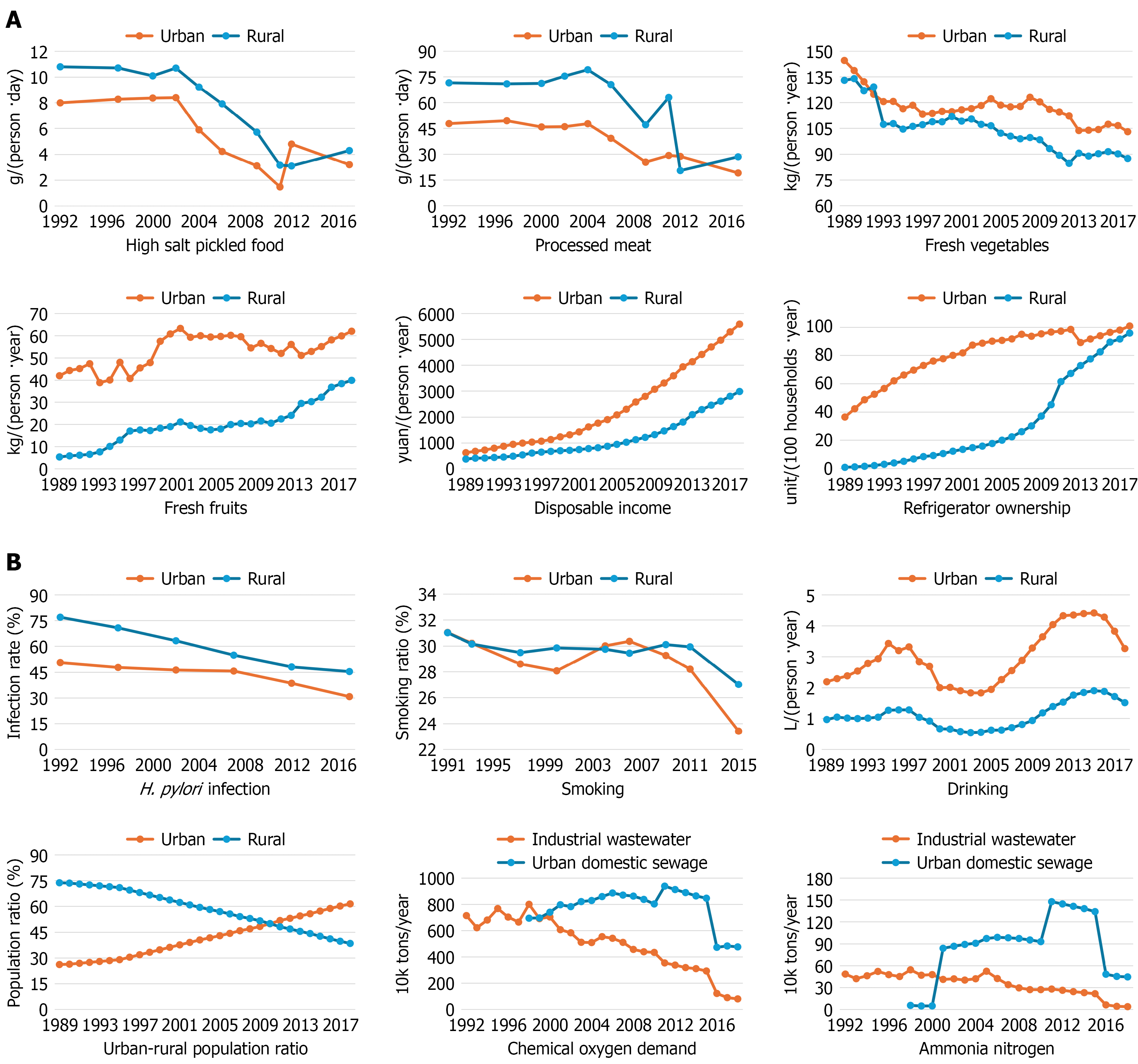
Figure 1 Trends in potential influencing factors of gastric cancer in China from 1989 to 2018.
A: Socioeconomic and dietary factors. High-salt pickled food[50]; processed meat[50]; annual per capita consumption of fresh vegetables[27]; annual per capita consumption of fresh fruits[27]; annual per capita disposable income[27] (standardized to the 1978 price level using the consumer price index); annual ownership of refrigerators per 100 households[27]; B: Lifestyle and environmental factors. Helicobacter pylori infection rate (derived from systematic literature reviews[41,42], with urban-rural calibration based on period-specific ratios; see Supplementary Table 1 for details); proportion of smokers[50]; average daily alcohol consumption per capita[49] (standardized using the urban-rural consumption expenditure ratio); proportions of urban and rural populations[27]; annual chemical oxygen demand emissions from industrial wastewater and municipal domestic sewage[52]; annual ammonia nitrogen emissions from industrial wastewater and municipal domestic sewage[52]. All trends are presented as observed; no interpolation or smoothing was applied.
- Citation: Ren L, Zhang W, Sun L, Li WW, Xiao J, Wang W, Zhao CL, Han C. Gastric cancer incidence trends in China: 1989-2018 registry data, 2022 Bayesian age-period-cohort estimates, ecological correlates. World J Clin Oncol 2026; 17(9): 125511
- URL: https://www.wjgnet.com/2218-4333/full/v17/i9/125511.htm
- DOI: https://dx.doi.org/10.5306/wjco.125511