
















©The Author(s) 2025.
World J Clin Oncol. Sep 24, 2025; 16(9): 110686
Published online Sep 24, 2025. doi: 10.5306/wjco.v16.i9.110686
Published online Sep 24, 2025. doi: 10.5306/wjco.v16.i9.110686
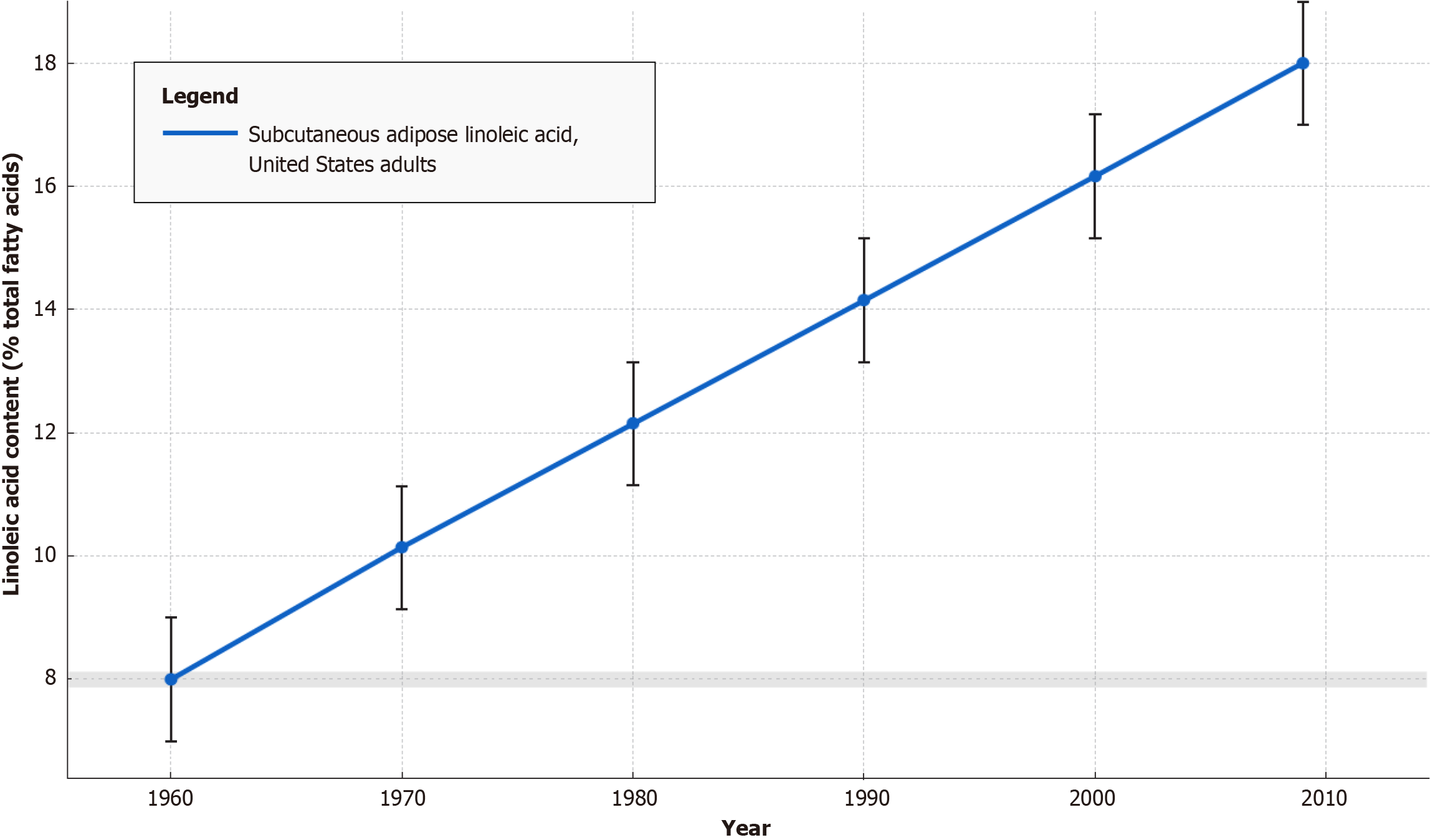
Figure 1 Dramatic four-decade rise in linoleic acid content of United States subcutaneous adipose tissue (1960-2008).
Values are mean ± SD. Data sources by decade (mean ± SD,% total fatty acids): 1960, 8.0% ± 0.9%[257], 1970, 10.1% ± 1.2%[258], 1980, 12.1% ± 1.3%[259], 1990, 14.2% ± 1.0%[260], 2000, 16.2% ± 1.1%[261], 2010, 18.0% ± 1.0%[262]. The proportion of linoleic acid in United States subcutaneous adipose tissue more than doubled, from approximately 8% in 1960 to approximately 18% by 2010, mirroring the progressive incorporation of industrial seed oils into the food supply.
- Citation: Mercola J. Historical rise of cancer and dietary linoleic acid: Mechanisms and therapeutic strategies. World J Clin Oncol 2025; 16(9): 110686
- URL: https://www.wjgnet.com/2218-4333/full/v16/i9/110686.htm
- DOI: https://dx.doi.org/10.5306/wjco.v16.i9.110686