
















©The Author(s) 2026.
World J Gastrointest Pharmacol Ther. Mar 5, 2026; 17(1): 112640
Published online Mar 5, 2026. doi: 10.4292/wjgpt.v17.i1.112640
Published online Mar 5, 2026. doi: 10.4292/wjgpt.v17.i1.112640
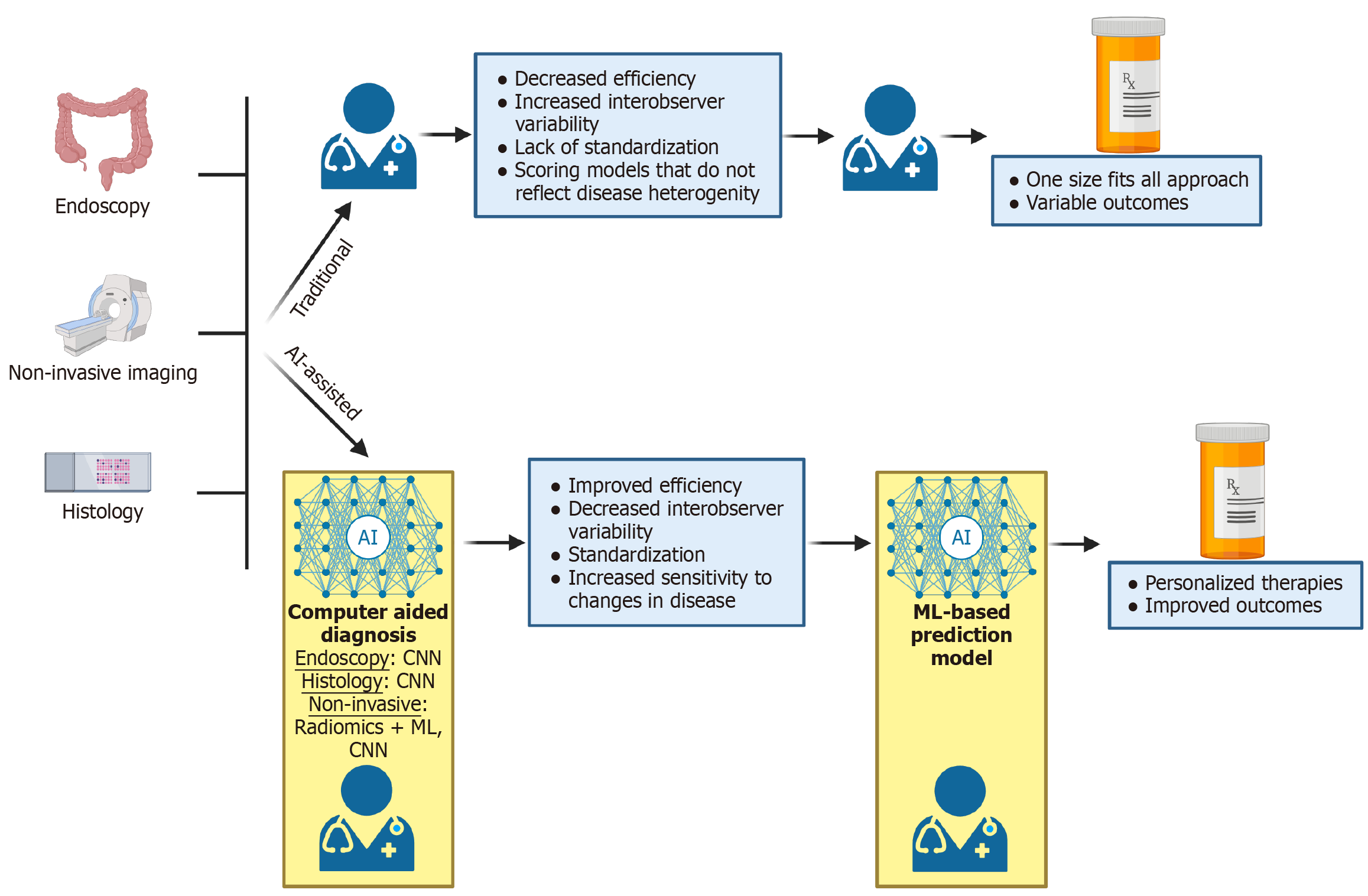
Figure 1 Limitations of traditional management of inflammatory bowel disease and potential improvements with the use of artificial intelligence.
Figure created with BioRender.com (https://BioRender.com/29up61d). The traditional management of inflammatory bowel disease relies on endoscopy, non-invasive imaging, and histology, interpreted by clinicians with variable experience in inflammatory bowel disease, who then make treatment decisions based upon these results and clinical symptoms. This often leads to a one size fits all approach. In an artificial intelligence-assisted model, clinicians are assisted by artificial intelligence, which may improve analysis in endoscopy, non-invasive imaging, and histology. With these results, clinicians may then use prediction models to determine the best therapeutic regiment tailored to the patient’s unique disease phenotype. AI: Artificial intelligence; CNN: Convolutional neural networks; ML: Machine learning.
- Citation: Bilotta AJ, Trebilcock JA, Hebda NJ, Sasan CK, Cooper KM, Rupawala AH. Artificial intelligence in the management of inflammatory bowel disease: What’s next? World J Gastrointest Pharmacol Ther 2026; 17(1): 112640
- URL: https://www.wjgnet.com/2150-5349/full/v17/i1/112640.htm
- DOI: https://dx.doi.org/10.4292/wjgpt.v17.i1.112640