
















Copyright: ©Author(s) 2026.
World J Gastrointest Pathophysiol. Sep 22, 2026; 17(3): 122786
Published online Sep 22, 2026. doi: 10.4291/wjgp.122786
Published online Sep 22, 2026. doi: 10.4291/wjgp.122786
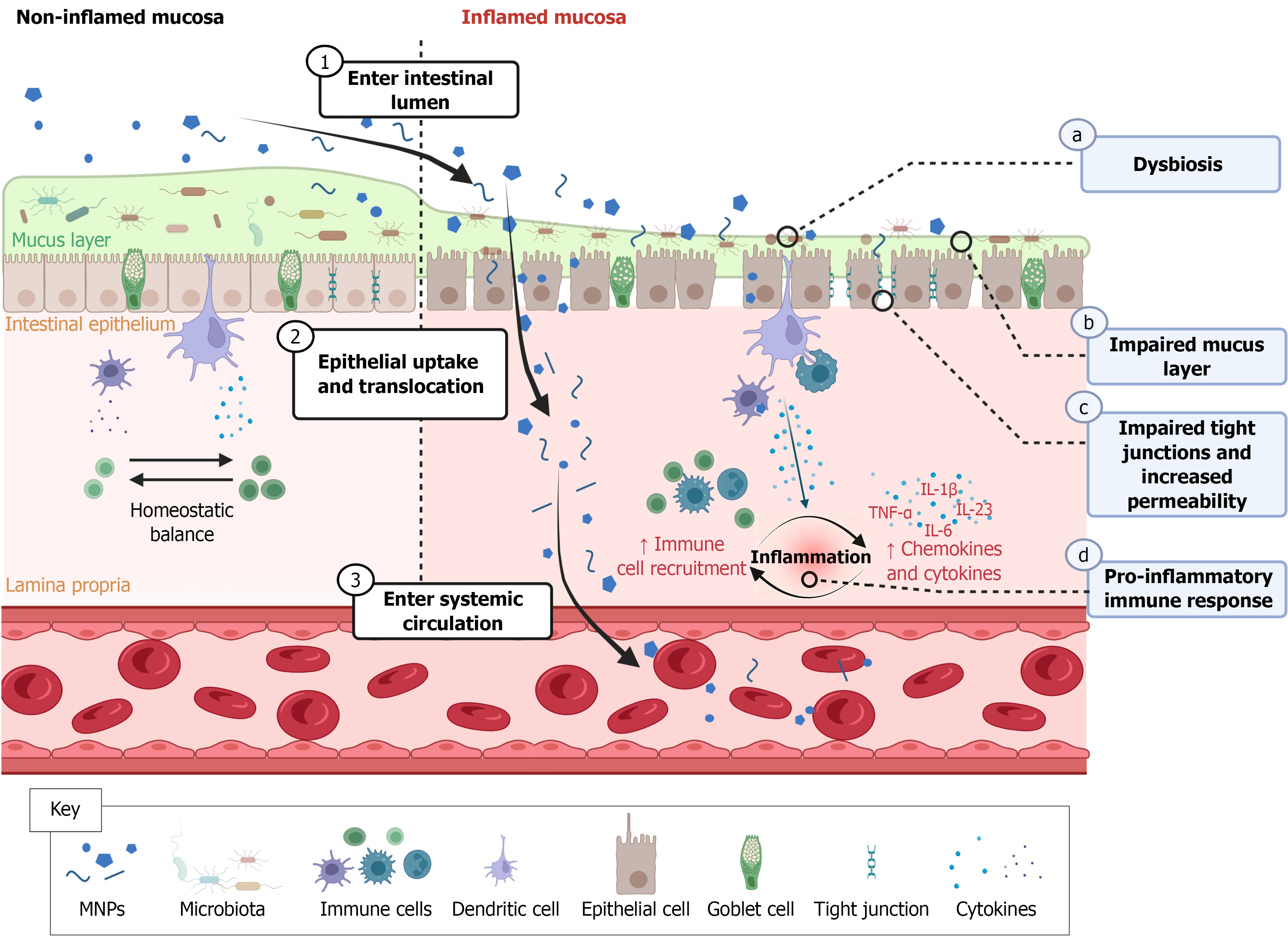
Figure 2 Proposed intestinal mechanisms through which micro- and nanoplastics may influence inflammation relevant to inflammatory bowel disease.
Schematic illustration of how microplastics and nanoplastics (MNPs) may interact with the intestinal mucosa and contribute to pathways relevant to intestinal inflammation. In inflamed mucosa, disruption of protective barriers may increase mucosal exposure to MNPs, facilitate uptake, permit passage into the lamina propria and subsequently systemic circulation. MNPs exposure may contribute to intestinal inflammation through multiple pathways including dysbiosis, impairment of the mucus layer, increased epithelial permeability, and activation of mucosal immune pathways. Numbered labels indicate the proposed sequence of MNPs uptake. Lettered labels indicate key mechanisms linking MNP exposure to intestinal inflammation. These pathways are based predominantly on in vitro and animal-model evidence. MNPs: Microplastics and nanoplastics; IL: Interleukin; TNF: Tumour necrosis factor. The image created in BioRender (Supplementary material).
- Citation: Hall R, Colwill M, Patel K, Honap S, Poullis A. Microplastics and nanoplastics in inflammatory bowel disease: Mechanistic plausibility, human evidence and future research priorities. World J Gastrointest Pathophysiol 2026; 17(3): 122786
- URL: https://www.wjgnet.com/2150-5330/full/v17/i3/122786.htm
- DOI: https://dx.doi.org/10.4291/wjgp.122786