
















Copyright: ©Author(s) 2026.
World J Gastrointest Pathophysiol. Sep 22, 2026; 17(3): 122786
Published online Sep 22, 2026. doi: 10.4291/wjgp.122786
Published online Sep 22, 2026. doi: 10.4291/wjgp.122786
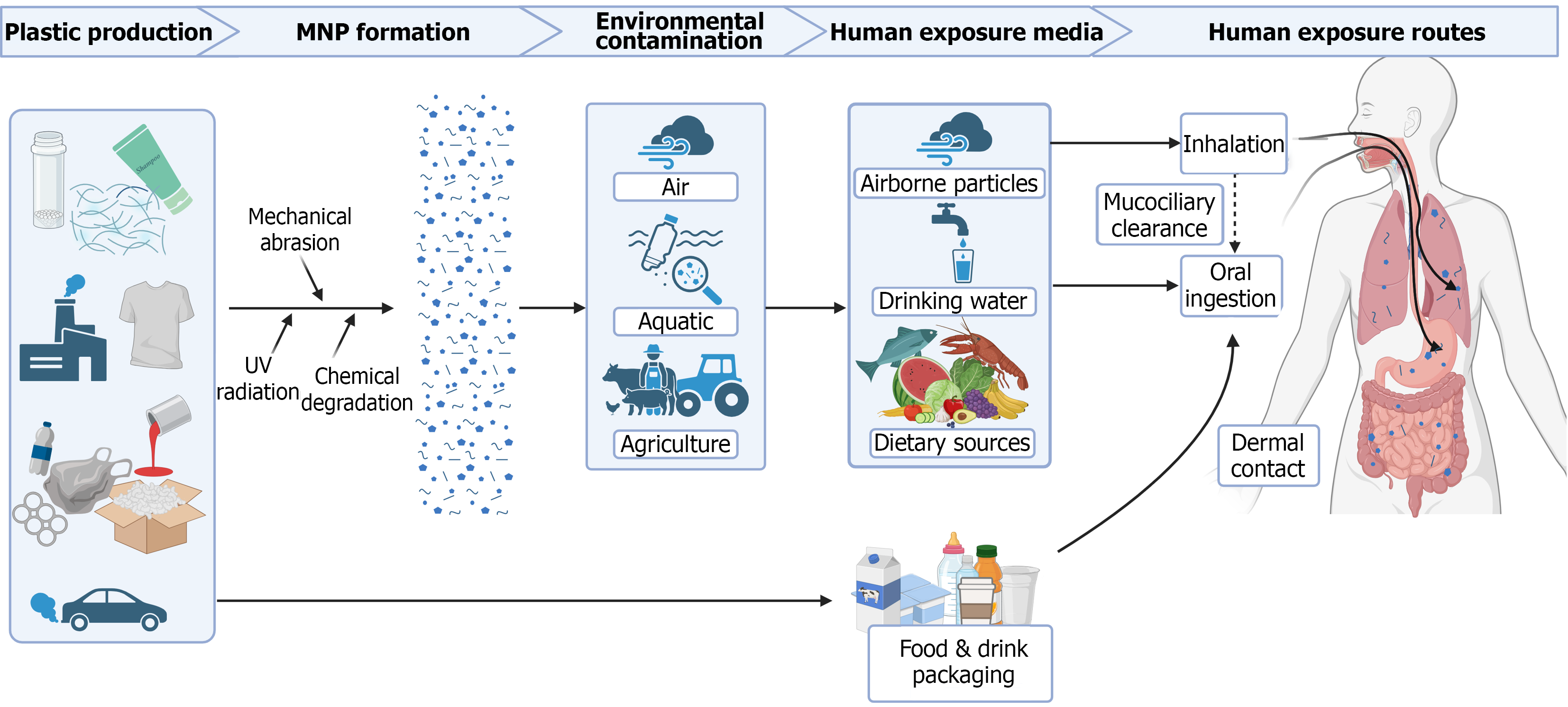
Figure 1 Overview of the main pathways contributing to human exposure to microplastics and nanoplastics.
Plastic products from a wide range of industrial and domestic uses undergo fragmentation to generate microplastics and nanoplastics (MNPs). These particles, along with primary MNPs, contaminate air, aquatic systems and agricultural environments, which may subsequently be ingested by human via airborne particles, drinking water and dietary sources. Once the MNPs enter the human body they can pass through the gastrointestinal tract where they can interact with the intestinal immune system. MNPs: Microplastics and nanoplastics; UV: Ultraviolet. The image created in BioRender (Supplementary material).
- Citation: Hall R, Colwill M, Patel K, Honap S, Poullis A. Microplastics and nanoplastics in inflammatory bowel disease: Mechanistic plausibility, human evidence and future research priorities. World J Gastrointest Pathophysiol 2026; 17(3): 122786
- URL: https://www.wjgnet.com/2150-5330/full/v17/i3/122786.htm
- DOI: https://dx.doi.org/10.4291/wjgp.122786