
















Copyright: ©Author(s) 2026.
World J Gastrointest Pathophysiol. Sep 22, 2026; 17(3): 122115
Published online Sep 22, 2026. doi: 10.4291/wjgp.122115
Published online Sep 22, 2026. doi: 10.4291/wjgp.122115
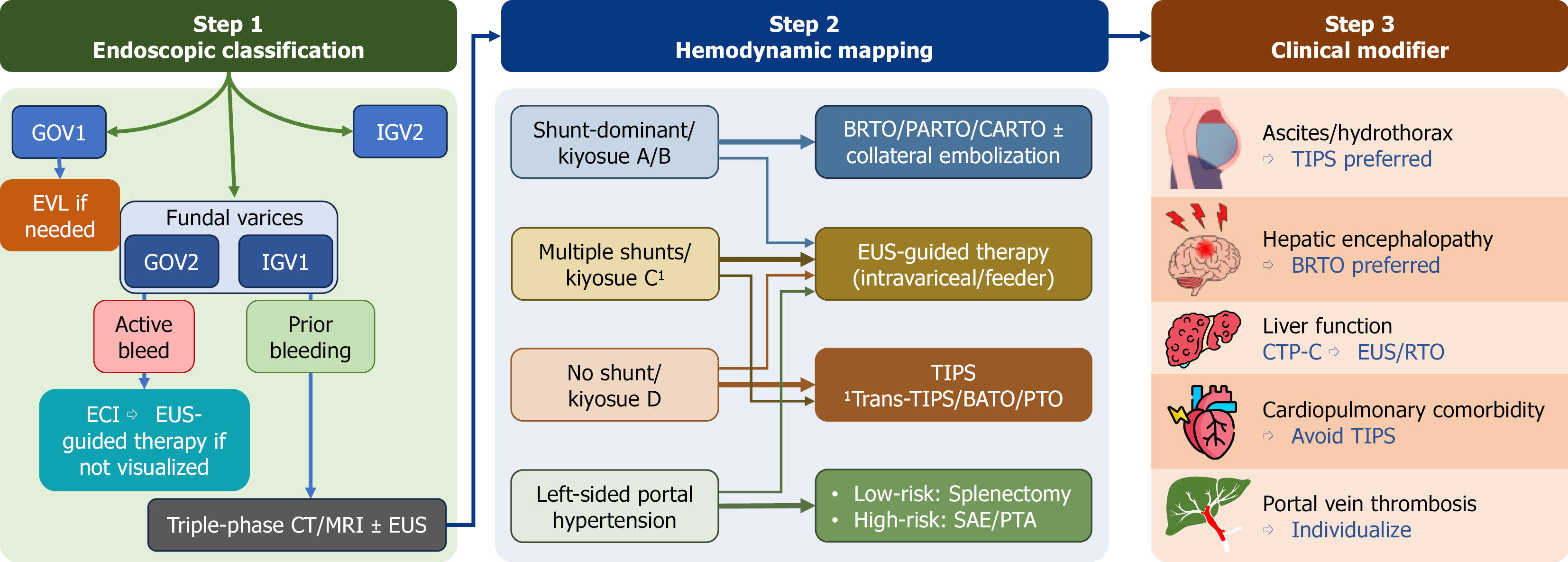
Figure 4 Approach to the management of gastric fundal varices based on the hemodynamics, along with clinical modifiers.
1Trans-transjugular intrahepatic portosystemic shunt (TIPS)/balloon-occluded antegrade transvenous obliteration/percutaneous transhepatic obliteration preferred over TIPS for Kiyosue C. GOV1: Gastroesophageal varices type 1; GOV2: Gastroesophageal varices type 2; IGV1: Isolated gastric varices type 1; IGV2: Isolated gastric varices type 2; EVL: Endoscopic variceal ligation; EUS: Endoscopic ultrasound; ECI: Endoscopic cyanoacrylate injection; BRTO: Balloon-occluded retrograde transvenous obliteration; PARTO: Plug-assisted retrograde transvenous obliteration; CARTO: Coil-assisted retrograde transvenous obliteration; RTO: Retrograde transvenous obliteration; BATO: Balloon-occluded antegrade transvenous obliteration; PTO: Percutaneous transhepatic obliteration; SAE: Splenic artery embolization; PTA: Percutaneous transluminal angioplasty; CT: Computed tomography; MRI: Magnetic resonance imaging; TIPS: Transjugular intrahepatic portosystemic shunt.
- Citation: Giri S, Patel RK, Tripathy TP, Praharaj DL, Chavan R. Pathophysiological management of gastric varices: From hemodynamics to targeted therapies. World J Gastrointest Pathophysiol 2026; 17(3): 122115
- URL: https://www.wjgnet.com/2150-5330/full/v17/i3/122115.htm
- DOI: https://dx.doi.org/10.4291/wjgp.122115