
















Copyright: ©Author(s) 2026.
World J Gastrointest Pathophysiol. Jun 22, 2026; 17(2): 120474
Published online Jun 22, 2026. doi: 10.4291/wjgp.120474
Published online Jun 22, 2026. doi: 10.4291/wjgp.120474
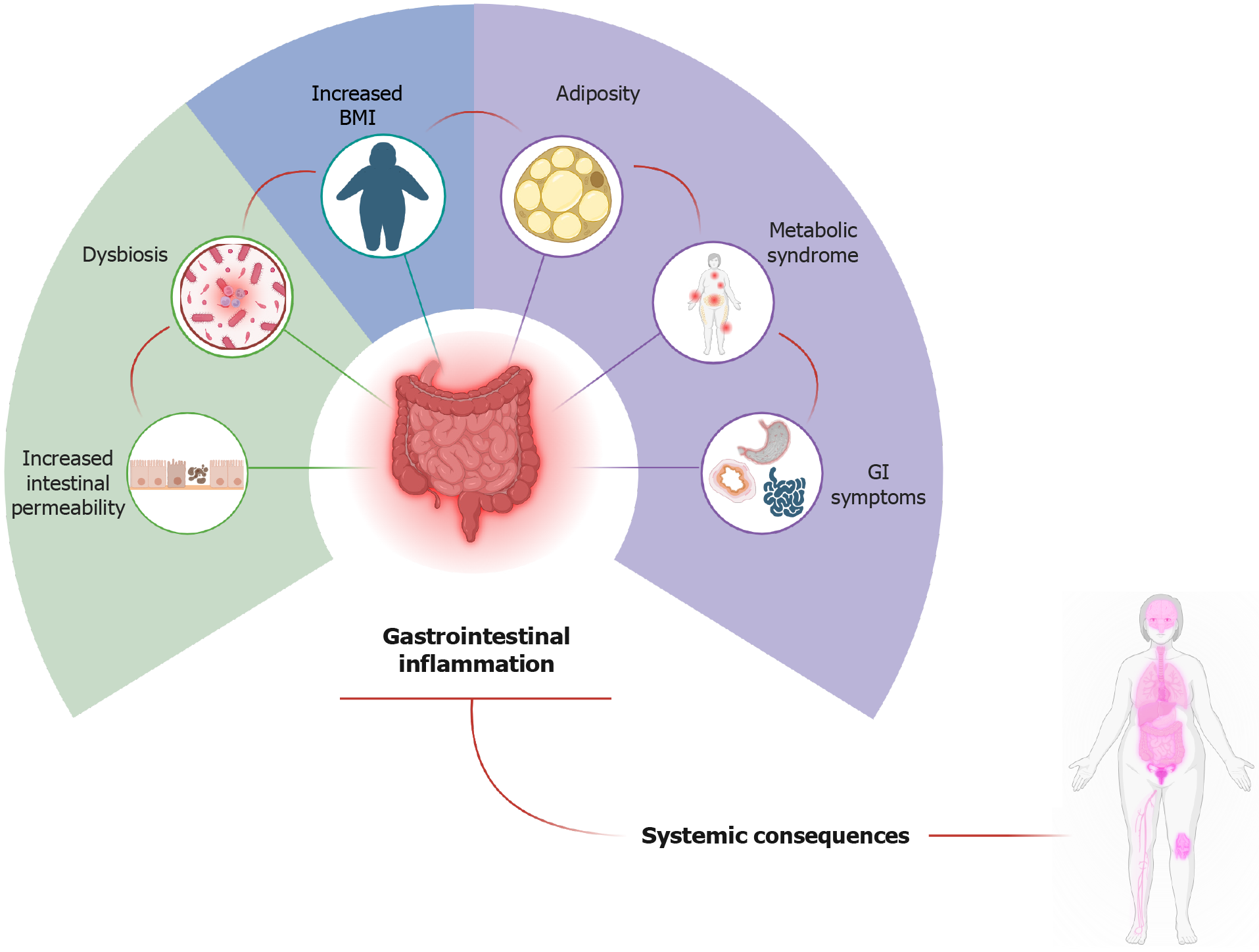
Figure 1 Schematic representation of gastrointestinal inflammation as a central correlation in obesity-associated metabolic dys
- Citation: Anaya-Prado R, Murrieta-Verduzco AM, Peña-Mascorro IR, Portillo-Valles AC, Calderon-Velazquez A, Lopez-Hernandez H, Monge-Rosales DG, Montes de Oca-Martinez JL, Castellanos-Garcia CE, Servin-Romero G, Anaya-Fernández R, Cardenas-Fregoso AP, Anaya-Fernández MM, Azcona-Ramirez CC, Heredia-Garcia CN. Body mass index and gastrointestinal inflammation: Bio-molecular pathophysiology. World J Gastrointest Pathophysiol 2026; 17(2): 120474
- URL: https://www.wjgnet.com/2150-5330/full/v17/i2/120474.htm
- DOI: https://dx.doi.org/10.4291/wjgp.120474