
















©The Author(s) 2026.
World J Radiol. Jan 28, 2026; 18(1): 115504
Published online Jan 28, 2026. doi: 10.4329/wjr.v18.i1.115504
Published online Jan 28, 2026. doi: 10.4329/wjr.v18.i1.115504
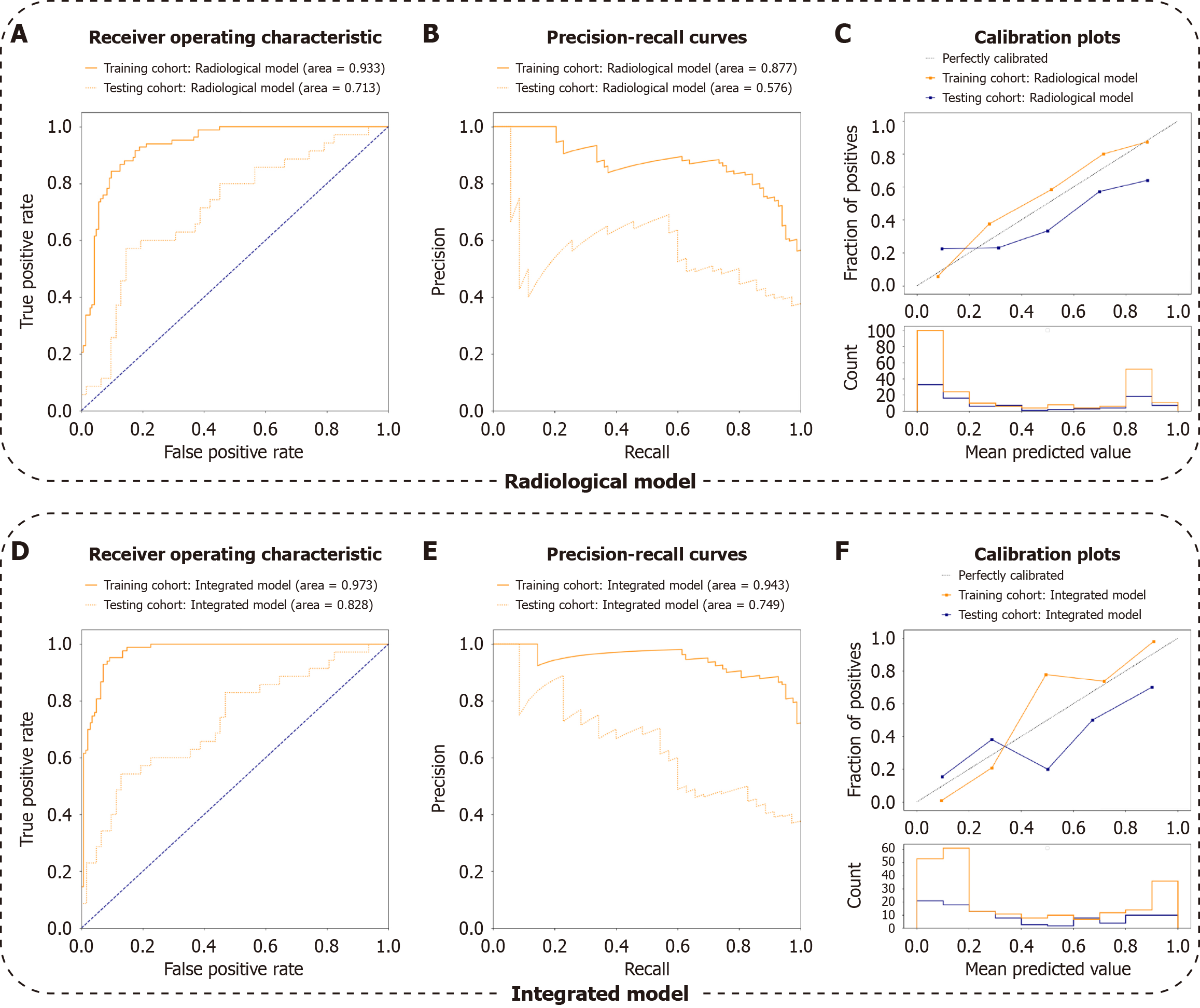
Figure 3 Evaluation of predictive performances for the radiological and clinical-radiological models in prediction of early enlargement of spontaneous intracerebral hemorrhage.
A: Receiver operating characteristic curves for the predictive performance of the radiological model in the training and testing cohorts, respectively; B: Precision-recall plots for the predictive performance of the radiological model in the training and testing cohorts, respectively; C: Curves of the calibration analysis for the radiological model in the training and testing cohorts, respectively; D: Receiver operating characteristic curves for the predictive performance of the clinical-radiological model in the training and testing cohorts, respectively; E: Precision-recall plots for the predictive performance of the clinical-radiological model in the training and testing cohorts, respectively; F: Curves of the calibration analysis for the clinical-radiological model in the training and testing cohorts, respectively.
- Citation: Yang YH, Li Y. Deep learning-based imaging model to predict early hematoma enlargement and hospital mortality in spontaneous intracerebral hemorrhage. World J Radiol 2026; 18(1): 115504
- URL: https://www.wjgnet.com/1949-8470/full/v18/i1/115504.htm
- DOI: https://dx.doi.org/10.4329/wjr.v18.i1.115504