











©The Author(s) 2026.
World J Radiol. Jan 28, 2026; 18(1): 115503
Published online Jan 28, 2026. doi: 10.4329/wjr.v18.i1.115503
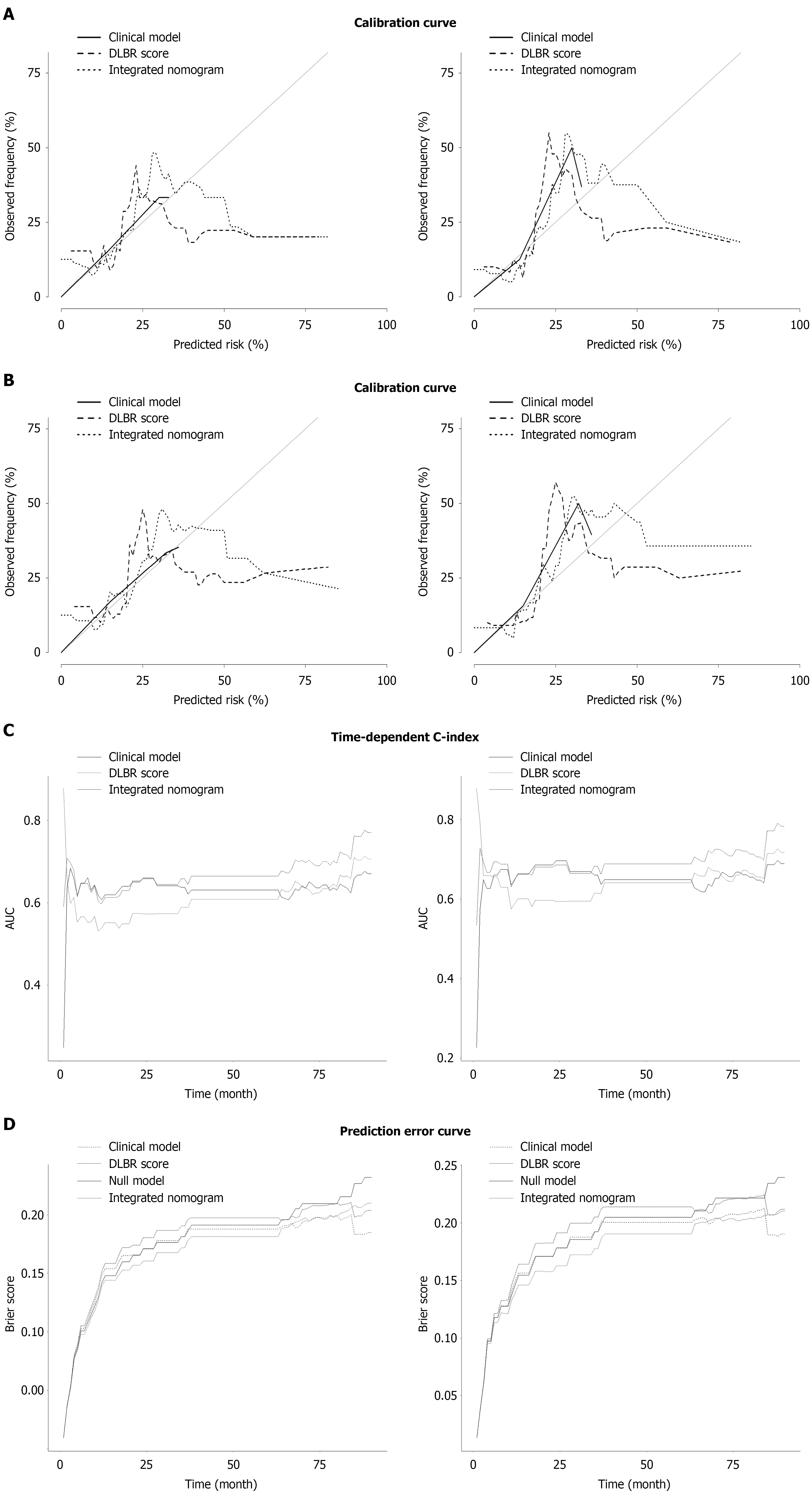
Figure 3 The calibration and discrimination performance of deep learning-based radiomics score for event-free survival in hepato blastoma patients receiving surgical resection.
A and B: Calibration curves for deep learning-based radiomics (DLBR) score, the clinical model, and the integrated nomogram model yielding agreement degrees between predicted and observational survival probabilities of event-free survival (EFS) for patients in the training (left) and testing (right) databases at the time of 36 months (A) and 60 months (B). The gray line of y = x represents a perfect predictive power by an ideal model. The fit goodness with this diagonal line coincided with the model’s predictive performance; C: Time-dependent Harrell’s C-indexes for DLBR score, the clinical model, and the integrated nomogram model on EFS for the training (left) and testing (right) cohorts; D: Time-dependent Brier scores in estimation of prediction errors for DLBR score, the clinical model, and the integrated nomogram model on EFS for the training (left) and testing (right) cohorts. DLBR: Deep learning-based radiomics; AUC: Area under the receiver operating characteristic curve.
- Citation: Yang YH, Li Y. Magnetic resonance imaging-based deep-learning radiomics score for survival prediction and risk stratification in pediatric hepatoblastoma receiving surgical resection. World J Radiol 2026; 18(1): 115503
- URL: https://www.wjgnet.com/1949-8470/full/v18/i1/115503.htm
- DOI: https://dx.doi.org/10.4329/wjr.v18.i1.115503