
















©The Author(s) 2025.
World J Radiol. Dec 28, 2025; 17(12): 114595
Published online Dec 28, 2025. doi: 10.4329/wjr.v17.i12.114595
Published online Dec 28, 2025. doi: 10.4329/wjr.v17.i12.114595
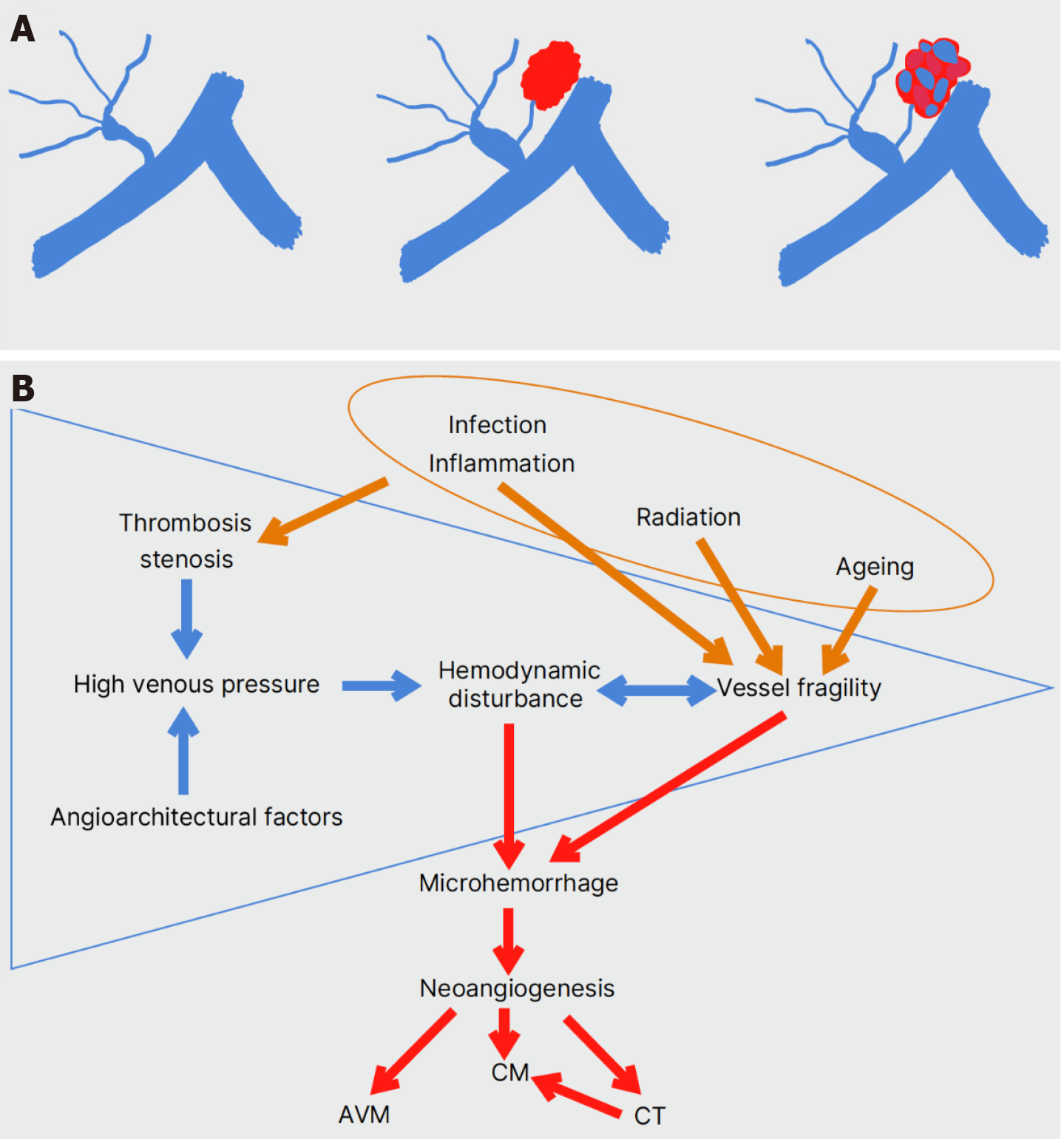
Figure 7 De novo formation of a developmental venous anomaly-associated sporadic cavernous malformation.
A: Events of temporary or permanent high venous pressure in a developmental venous anomaly (DVA) may induce hemodynamic instability and vessel fragility, leading to microhemorrhage in the adjacent parenchyma. The attraction of proliferative angiogenic factors can eventually lead to the formation of a sporadic cavernous malformation sharing the DVA’s venous drainage system; B: Thrombosis and stenosis or/and the presence of favoring angioarchitectural factors raise venous pressure within the DVA (blue arrows). The resulting hemodynamic disturbance and turbulent flow may affect the rigidity of venous walls, leading to microhemorrhage. Neoangiogenesis in the vicinity of the DVA produces new vascular malformations of a broad histologic spectrum, mainly cavernous malformations (red arrows). Environmental factors such as radiation therapy, inflammatory and infectious agents, and aging may also be associated with DVA thrombosis and increased vessel fragility (brown arrows).
- Citation: Arkoudis NA, Siderakis M, Tsetsou I, Efthymiou E, Triantafyllou G, Chalmoukis D, Karachaliou A, Papadopoulos A, Prountzos S, Moschovaki-Zeiger O, Gouliopoulos N, Papakonstantinou O, Filippiadis D, Velonakis G. Developmental venous anomalies and cerebral cavernous malformations: Partners in crime. World J Radiol 2025; 17(12): 114595
- URL: https://www.wjgnet.com/1949-8470/full/v17/i12/114595.htm
- DOI: https://dx.doi.org/10.4329/wjr.v17.i12.114595