
















©The Author(s) 2026.
World J Cardiol. Feb 26, 2026; 18(2): 113358
Published online Feb 26, 2026. doi: 10.4330/wjc.v18.i2.113358
Published online Feb 26, 2026. doi: 10.4330/wjc.v18.i2.113358
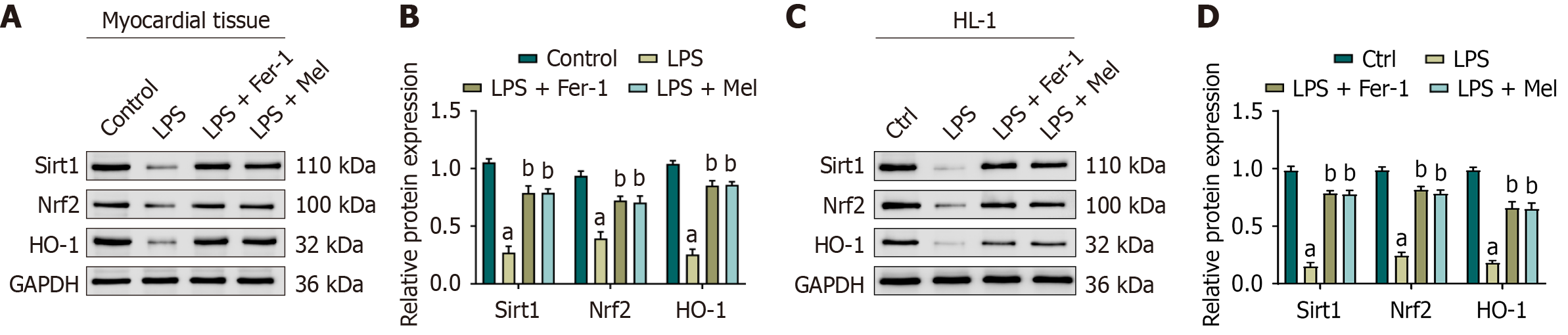
Figure 5 Melatonin activates the sirtuin 1/nuclear factor erythroid 2-related factor 2 axis in vivo and in vitro.
A: Representative immunoblots of sirtuin 1, nuclear factor erythroid 2-related factor 2, and heme oxygenase-1 in mouse myocardial tissue (glyceraldehyde-3-phosphate dehydrogenase as control); B: Densitometric quantification normalized to glyceraldehyde-3-phosphate dehydrogenase (in vivo); C: Representative immunoblots of sirtuin 1, nuclear factor erythroid 2-related factor 2, and heme oxygenase-1 in HL-1 cells; D: Densitometric quantification (in vitro). Data are expressed as mean ± SD; in vivo n = 6 mice per group; in vitro n = 3 independent experiments. One-way analysis of variance with Bonferroni post-hoc testing. aP < 0.01 vs control; bP < 0.01 vs lipopolysaccharide. Ctrl: Control; GAPDH: Glyceraldehyde-3-phosphate dehydrogenase; HO-1: Heme oxygenase-1; LPS: Lipopolysaccharide; LPS + Mel: Lipopolysaccharide plus melatonin; LPS + Fer-1: Lipopolysaccharide plus ferrostatin-1; Nrf2: Nuclear factor erythroid 2-related factor 2; Sirt1: Sirtuin 1.
- Citation: Zeng M, Li Q, Li L, Xiang CF, Wang YJ. Melatonin regulates Sirt1/Nrf2/GPX4 pathway to inhibit ferroptosis and alleviate myocardial injury caused by sepsis. World J Cardiol 2026; 18(2): 113358
- URL: https://www.wjgnet.com/1949-8462/full/v18/i2/113358.htm
- DOI: https://dx.doi.org/10.4330/wjc.v18.i2.113358