
















©The Author(s) 2026.
World J Cardiol. Jan 26, 2026; 18(1): 114108
Published online Jan 26, 2026. doi: 10.4330/wjc.v18.i1.114108
Published online Jan 26, 2026. doi: 10.4330/wjc.v18.i1.114108
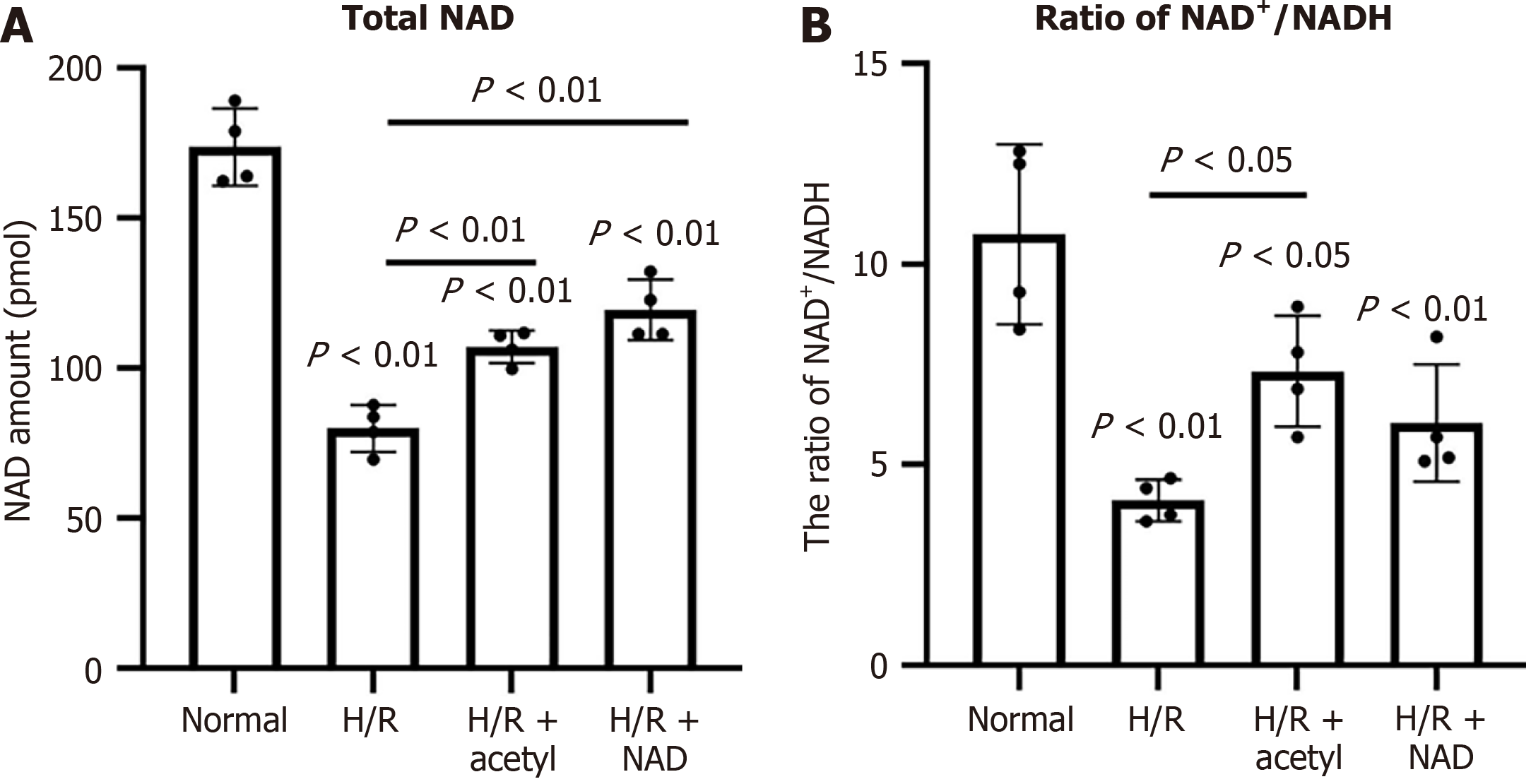
Figure 3 Measurement of total cellular nicotinamide adenine dinucleotide levels and the nicotinamide adenine dinucleotide oxidized form/nicotinamide adenine dinucleotide reduced form ratio in H9c2 cells after hypoxia/re-oxygenation treatment, with or without ace
- Citation: Dong S, Liu YQ, Tu YJ, Gao S, Liu YJ, Liu C, Pei ZW. Nicotinamide adenine dinucleotide inhibits the production of reactive oxygen species and myocardial cell pyroptosis caused by hypoxia/re-oxygenation injury. World J Cardiol 2026; 18(1): 114108
- URL: https://www.wjgnet.com/1949-8462/full/v18/i1/114108.htm
- DOI: https://dx.doi.org/10.4330/wjc.v18.i1.114108