
















Copyright: ©Author(s) 2026.
World J Gastrointest Oncol. Aug 15, 2026; 18(8): 121799
Published online Aug 15, 2026. doi: 10.4251/wjgo.v18.i8.121799
Published online Aug 15, 2026. doi: 10.4251/wjgo.v18.i8.121799
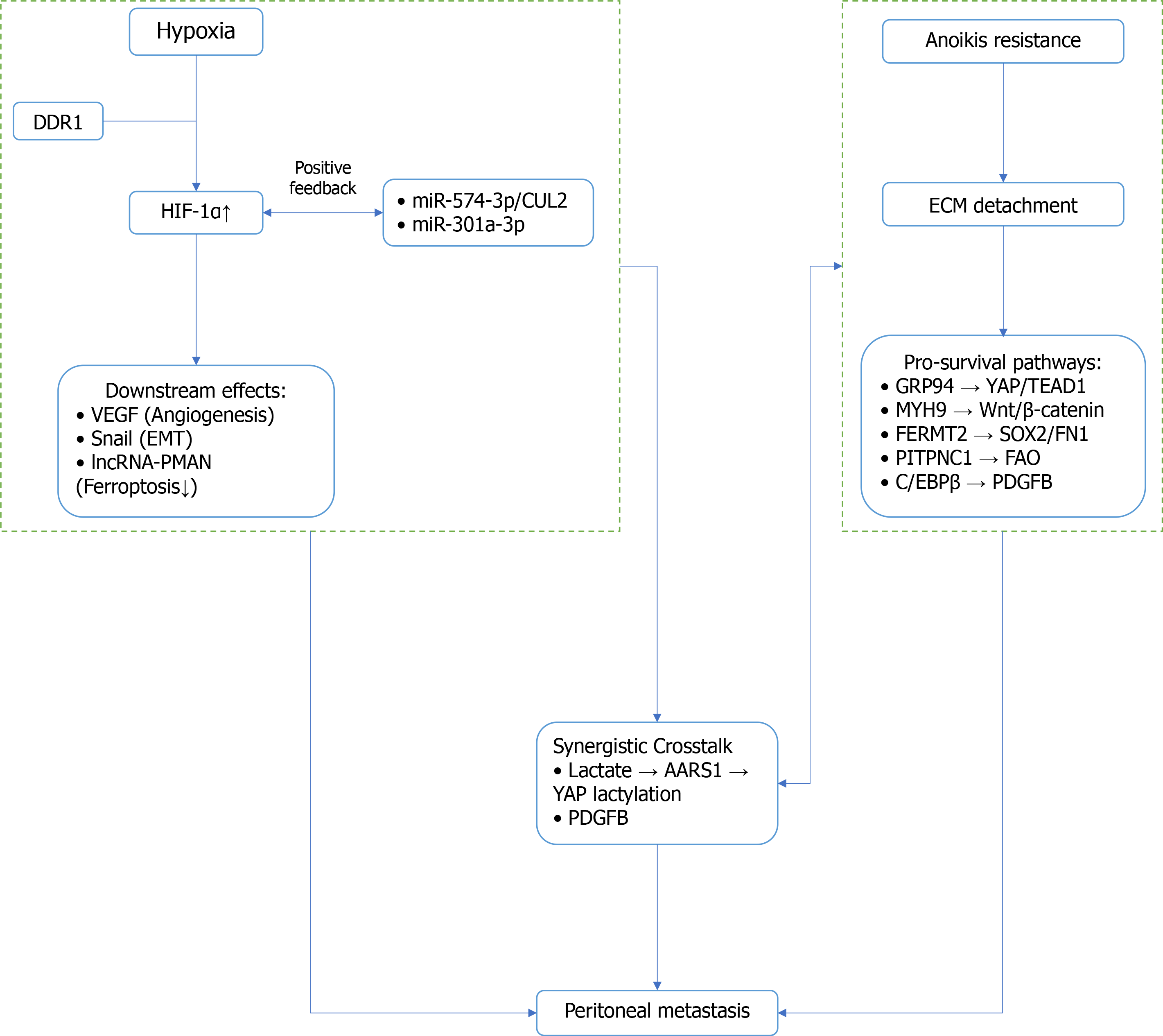
Figure 2 Schematic diagram of the synergistic interplay between hypoxia and anoikis resistance in gastric cancer peritoneal metastasis.
Under hypoxic conditions, Hypoxia-inducible factor 1alpha (HIF-1α) is stabilized and activated. It promotes angiogenesis, epithelial-mesenchymal transition, and inhibits ferroptosis. Positive feedback loops involving miR-574-3p/CUL2 and miR-301a-3p sustain HIF-1α activation. Following detachment from the extracellular matrix, gastric cancer cells activate multiple pro-survival pathways. Hypoxia and anoikis resistance are connected through shared nodes. YAP/TEA domain transcription factor 1 is activated by both hypoxia and Glucose-regulated protein 94. PDGFB is co-regulated by HIF-1α and C/EBPβ. Extracellular matrix detachment: Loss of contact between tumor cells and the extracellular matrix. DDR1: Discoidin domain receptor 1; HIF-1α: Hypoxia-inducible factor 1alpha; VEGF: Vascular endothelial growth factor; EMT: Epithelial-mesenchymal transition; lncRNA: Long non-coding RNA; ECM: Extracellular matrix; GRP94: Glucose-regulated protein 94; TEAD1: TEA domain transcription factor 1; MYH9: Myosin-9; SOX2: SRY box 2; FN1: Fibronectin 1.
- Citation: Yan HQ, Lai QQ, Huang MW, Wang TA, Wu LC, Qin YZ. Advances in molecular mechanism of gastric cancer peritoneal metastasis. World J Gastrointest Oncol 2026; 18(8): 121799
- URL: https://www.wjgnet.com/1948-5204/full/v18/i8/121799.htm
- DOI: https://dx.doi.org/10.4251/wjgo.v18.i8.121799