
















Copyright: ©Author(s) 2026.
World J Gastrointest Oncol. Jul 15, 2026; 18(7): 119003
Published online Jul 15, 2026. doi: 10.4251/wjgo.v18.i7.119003
Published online Jul 15, 2026. doi: 10.4251/wjgo.v18.i7.119003
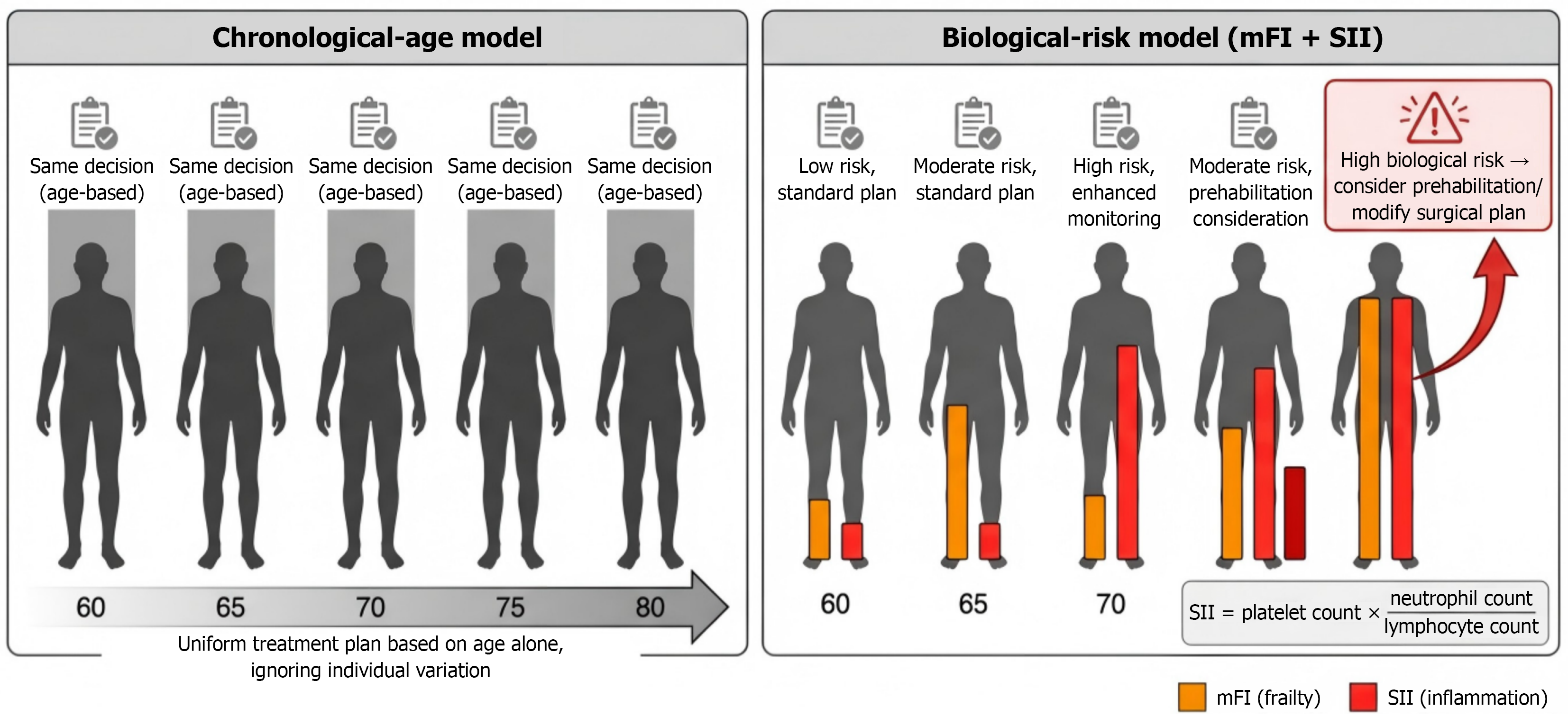
Figure 1 Chronological-age-based decision-making vs biological-risk stratification integrating frailty and systemic inflammation.
The left panel illustrates a conventional chronological-age model, in which patients of different ages receive similar treatment decisions based solely on age, thereby overlooking substantial inter-individual heterogeneity. In contrast, the right panel depicts a biological-risk model that incorporates frailty, assessed by the modified frailty index, and systemic inflammation, assessed by the systemic immune-inflammation index. By capturing variations in physiological reserve and inflammatory status among patients of the same chronological age, this integrated approach enables refined risk stratification and supports personalized perioperative strategies, including tailored monitoring, prehabilitation, and modification of surgical plans. mFI: Modified frailty index; SII: Systemic immune-inflammation index (platelet count × neutrophil count/Lymphocyte count).
- Citation: Xu KZ, Hu WJ, Shang YH, Miao YD, Wang LN. Modified frailty index and systemic immune-inflammation enable biological risk stratification in geriatric colorectal cancer surgery. World J Gastrointest Oncol 2026; 18(7): 119003
- URL: https://www.wjgnet.com/1948-5204/full/v18/i7/119003.htm
- DOI: https://dx.doi.org/10.4251/wjgo.v18.i7.119003