
















Copyright: ©Author(s) 2026.
World J Gastrointest Oncol. Jul 15, 2026; 18(7): 118867
Published online Jul 15, 2026. doi: 10.4251/wjgo.v18.i7.118867
Published online Jul 15, 2026. doi: 10.4251/wjgo.v18.i7.118867
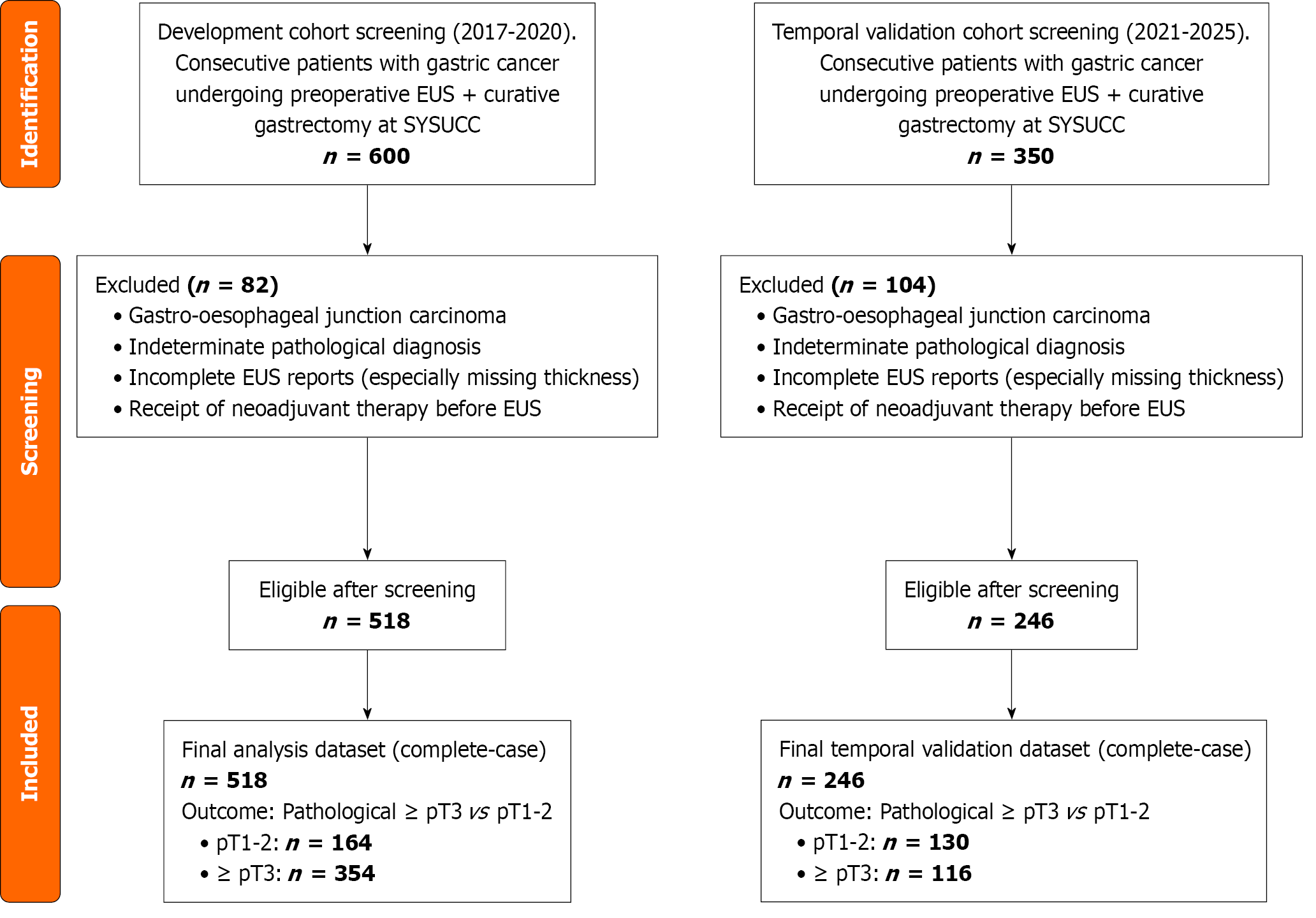
Figure 1 Study flowchart of patient selection, cohort construction, and temporal validation.
The development cohort included consecutive patients with biopsy-proven gastric adenocarcinoma who underwent preoperative endoscopic ultrasonography (EUS) and curative-intent gastrectomy at Sun Yat-sen University Cancer Center between January 2017 and December 2020 (screened, n = 600). After exclusion of patients with gastro-oesophageal junction carcinoma, indeterminate pathological diagnosis, incomplete EUS reports (especially missing lesion thickness), or receipt of neoadjuvant therapy before EUS, the final derivation cohort comprised 518 patients. The temporal validation cohort consisted of consecutive eligible patients from a later, non-overlapping calendar period (2021-2025) at the same institution, assembled using the same eligibility criteria; the final temporal validation cohort included 246 patients. The primary outcome in both cohorts was pathological stage dichotomised as pT1-2 vs ≥ pT3 on the resection specimen. The pre-specified uniformly shrunk model developed in the derivation cohort was applied to the temporal validation cohort without refitting. EUS: Endoscopic ultrasonography; SYSUCC: Sun Yat-sen University Cancer Center.
- Citation: Cao MY, Chen YF, Liao YX, Yang Q, Lin SY, Li Y, Weng J, Huang XX, Gao XY, Wang GB, Shan HB, Li JJ. Endoscopic ultrasonography lesion thickness predicts deep invasion in gastric cancer: Development and temporal validation of a preoperative model. World J Gastrointest Oncol 2026; 18(7): 118867
- URL: https://www.wjgnet.com/1948-5204/full/v18/i7/118867.htm
- DOI: https://dx.doi.org/10.4251/wjgo.v18.i7.118867