
















Copyright: ©Author(s) 2026.
World J Gastrointest Oncol. Jun 15, 2026; 18(6): 117308
Published online Jun 15, 2026. doi: 10.4251/wjgo.v18.i6.117308
Published online Jun 15, 2026. doi: 10.4251/wjgo.v18.i6.117308
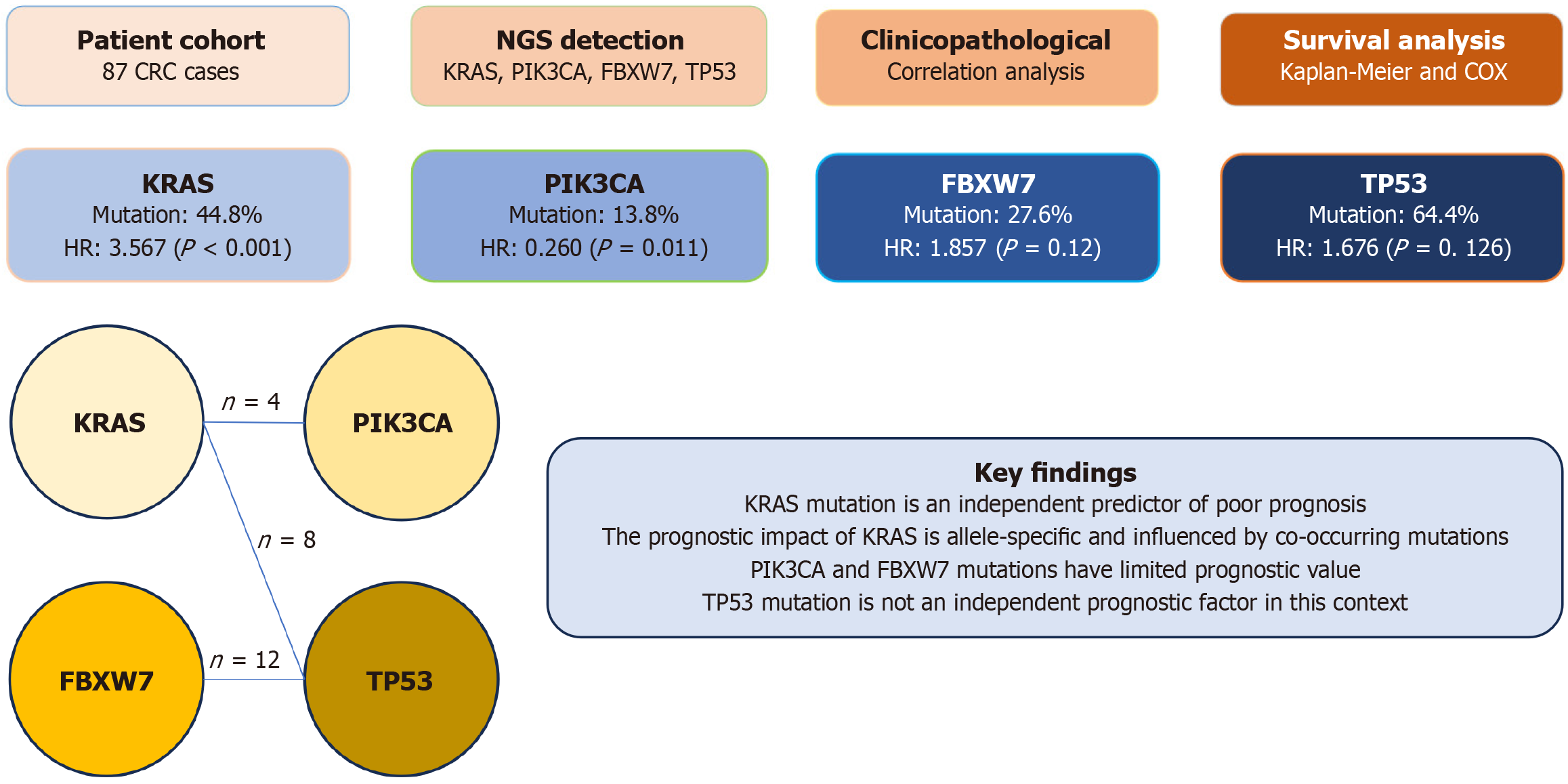
Figure 1 Prognostic analysis of genetic mutations in colorectal cancer.
This flowchart outlines the study design for the prognostic analysis of genetic mutations in 87 colorectal cancer cases. The process begins with patient cohort selection, followed by next-generation sequencing detection of mutations in the KRAS, PIK3CA, FBXW7, and TP53 genes. Subsequent steps include clinicopathological correlation analysis and survival analysis using Kaplan-Meier and Cox regression methods. The main findings demonstrate that KRAS mutation is an independent predictor of poor prognosis with an allele-specific impact, while PIK3CA, FBXW7, and TP53 mutations show limited or no independent prognostic value in this cohort. CRC: Colorectal cancer; HR: Hazard ratio; NGS: Next-generation sequencing.
- Citation: Zhao SQ, Luo ZF, Yang ZF, Zhang WS, Fu YM. Independent prognostic value of KRAS mutation in resected colorectal cancer based on multi-gene sequencing. World J Gastrointest Oncol 2026; 18(6): 117308
- URL: https://www.wjgnet.com/1948-5204/full/v18/i6/117308.htm
- DOI: https://dx.doi.org/10.4251/wjgo.v18.i6.117308