
















Copyright: ©Author(s) 2026.
World J Gastrointest Oncol. May 15, 2026; 18(5): 118319
Published online May 15, 2026. doi: 10.4251/wjgo.v18.i5.118319
Published online May 15, 2026. doi: 10.4251/wjgo.v18.i5.118319
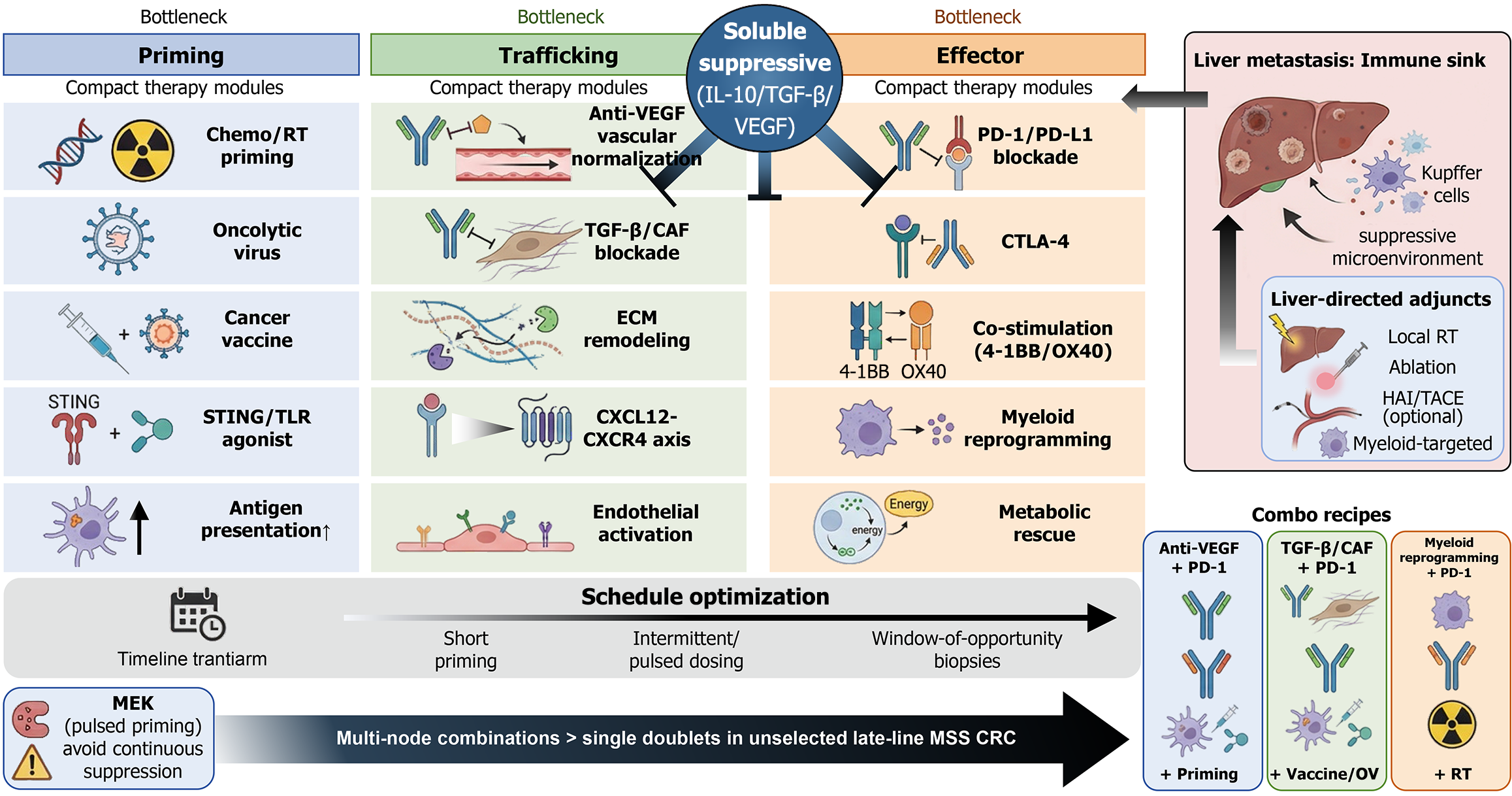
Figure 3 Bottleneck-guided “cold-to-hot” combination design for microsatellite-stable/proficient mismatch repair colorectal cancer.
Schematic framework that maps rational combination immunotherapy to the dominant rate-limiting step (“bottleneck”) along the cancer-immunity cycle in microsatellite-stable (MSS)/proficient mismatch repair colorectal cancer (CRC): Priming, trafficking, and effector function. For each bottleneck, “compact therapy modules” are shown that are intended to restore productive antitumor immunity rather than simply add a second agent to programmed death ligand-1 (PD-L1) blockade. Priming modules aim to increase immunogenic antigen availability and innate sensing (chemo/radiotherapy-mediated priming, oncolytic viruses, cancer vaccines, stimulator of interferon genes/Toll like receptor agonists, and strategies that enhance antigen presentation). Trafficking modules target stromal/vascular exclusion and immune cell access [anti-vascular endothelial growth factor (VEGF)-mediated vascular normalization, transforming growth factor-β (TGF-β)/cancer-associated fibroblast (CAF) blockade, extracellular matrix remodeling, disruption of the CXCL12-CXCR4 retention axis, and endothelial activation to support adhesion/extravasation]. Effector modules focus on reversing intratumoral dysfunction and exhaustion [programmed cell death protein-1 (PD-1)/PD-L1 blockade, cytotoxic T-lymphocyte-associated protein-4 blockade, co-stimulatory agonism such as 4-1BB/OX40, myeloid reprogramming, and metabolic rescue]. These interventions are coordinated against a shared soluble suppressive hub (interleukin-10/TGF-β/VEGF) that can concurrently dampen priming, trafficking, and effector cytotoxicity. The right panel highlights liver metastasis as an immune sink, where a suppressive hepatic microenvironment (e.g., Kupffer cell-driven tolerogenicity) can systemically blunt immune checkpoint inhibitor efficacy; “liver-directed adjuncts” (local radiotherapy, ablation, optional hepatic arterial infusion/transarterial chemoembolization approaches, and myeloid-targeted strategies) are positioned as context-specific intensifiers to overcome hepatic immune resistance. The bottom timeline emphasizes schedule optimization short immune priming, intermittent/pulsed dosing (illustrated by pulsed mitogen-activated protein kinase kinase priming to avoid continuous immune suppression), and window-of-opportunity biopsies to mechanistically validate target engagement and refine sequencing. Overall, the model underscores that multi-node combinations (addressing more than one bottleneck) are more likely to outperform single doublets in unselected, late-line MSS CRC, with example “combo recipes” illustrated (anti-VEGF + PD-1 with priming; TGF-β/CAF + PD-1 with vaccine/oncolytic priming; myeloid reprogramming + PD-1 with radiotherapy). IL: Interleukin; TGF-β: Transforming growth factor-β; VEGF: Vascular endothelial growth factor; RT: Radiotherapy; STING: Stimulator of interferon genes; TLR: Toll like receptor; MEK: Mitogen-activated protein kinase kinase; ECM: Extracellular matrix; CAF: Cancer-associated fibroblast; PD-1: Programmed cell death protein 1; PD-L1: Programmed death-ligand 1; CTLA-4: Cytotoxic T-lymphocyte-associated protein-4; MSS: Microsatellite stable; CRC: Colorectal cancer; HAI: Hepatic arterial infusion; TACE: Transarterial chemoembolization; OV: Oncolytic viruses.
- Citation: Chi F, Liu CB, Li J, Xia XW, Hua QJ, Wang W. Converting cold to hot: Strategies to sensitize microsatellite-stable colorectal cancer to immunotherapy. World J Gastrointest Oncol 2026; 18(5): 118319
- URL: https://www.wjgnet.com/1948-5204/full/v18/i5/118319.htm
- DOI: https://dx.doi.org/10.4251/wjgo.v18.i5.118319