
















Copyright: ©Author(s) 2026.
World J Gastrointest Oncol. May 15, 2026; 18(5): 118319
Published online May 15, 2026. doi: 10.4251/wjgo.v18.i5.118319
Published online May 15, 2026. doi: 10.4251/wjgo.v18.i5.118319
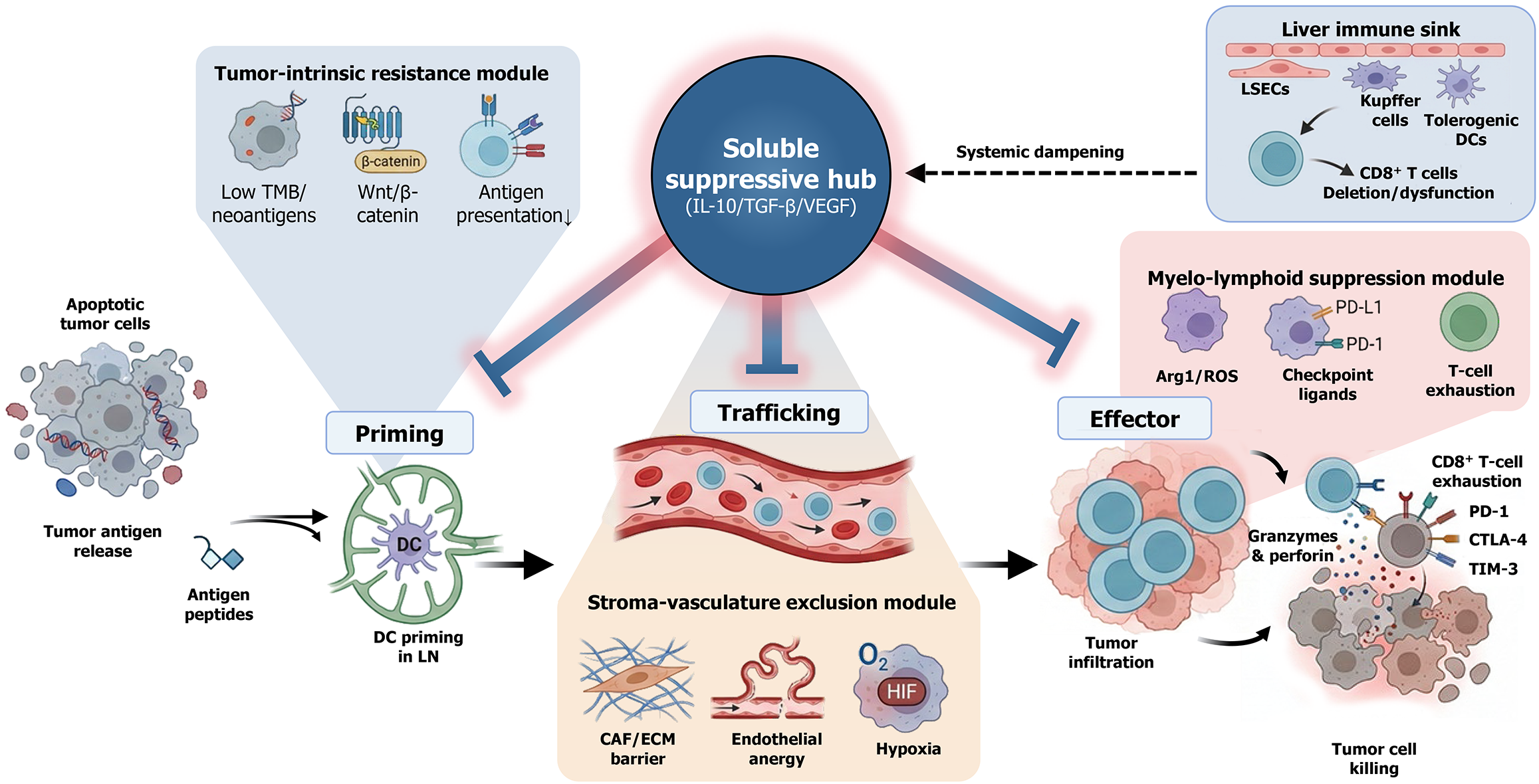
Figure 2 Multi-scale immunobiological barriers to immune checkpoint inhibitor response in microsatellite-stable/proficient mismatch repair colorectal cancer.
This schematic summarizes how microsatellite-stable/proficient mismatch repair (MSS/pMMR) colorectal cancer (CRC) resists immune checkpoint inhibitors (ICIs) across the major phases of antitumor immunity priming, trafficking, and effector function. Following tumor cell death, released antigenic peptides are captured by dendritic cells (DCs) and presented in draining lymph nodes to initiate T-cell priming. In MSS/pMMR CRC, tumor-intrinsic resistance (low tumor mutational burden/neoantigen scarcity, oncogenic Wnt/β-catenin signaling, and impaired antigen processing/presentation) limits productive priming and T-cell generation. Even when primed, T cells frequently fail to reach or penetrate tumor nests due to a stroma-vasculature exclusion module, characterized by cancer-associated fibroblast/extracellular matrix physical barriers, dysfunctional/endothelial anergy that reduces adhesion and transmigration, and hypoxia/hypoxia-inducible factor-driven vascular and metabolic constraints. Within tumors, a myelo-lymphoid suppression module (e.g., myeloid-derived suppressor cells/tumor-associated macrophages/regulatory T cell) further suppresses immunity through arginase-1/reactive oxygen species and upregulation of inhibitory checkpoint ligands, fostering cluster of differentiation (CD) 8+ T-cell exhaustion marked by programmed cell death protein 1, cytotoxic T-lymphocyte-associated protein-4, and T cell im
- Citation: Chi F, Liu CB, Li J, Xia XW, Hua QJ, Wang W. Converting cold to hot: Strategies to sensitize microsatellite-stable colorectal cancer to immunotherapy. World J Gastrointest Oncol 2026; 18(5): 118319
- URL: https://www.wjgnet.com/1948-5204/full/v18/i5/118319.htm
- DOI: https://dx.doi.org/10.4251/wjgo.v18.i5.118319