
















Copyright: ©Author(s) 2026.
World J Gastrointest Oncol. May 15, 2026; 18(5): 118319
Published online May 15, 2026. doi: 10.4251/wjgo.v18.i5.118319
Published online May 15, 2026. doi: 10.4251/wjgo.v18.i5.118319
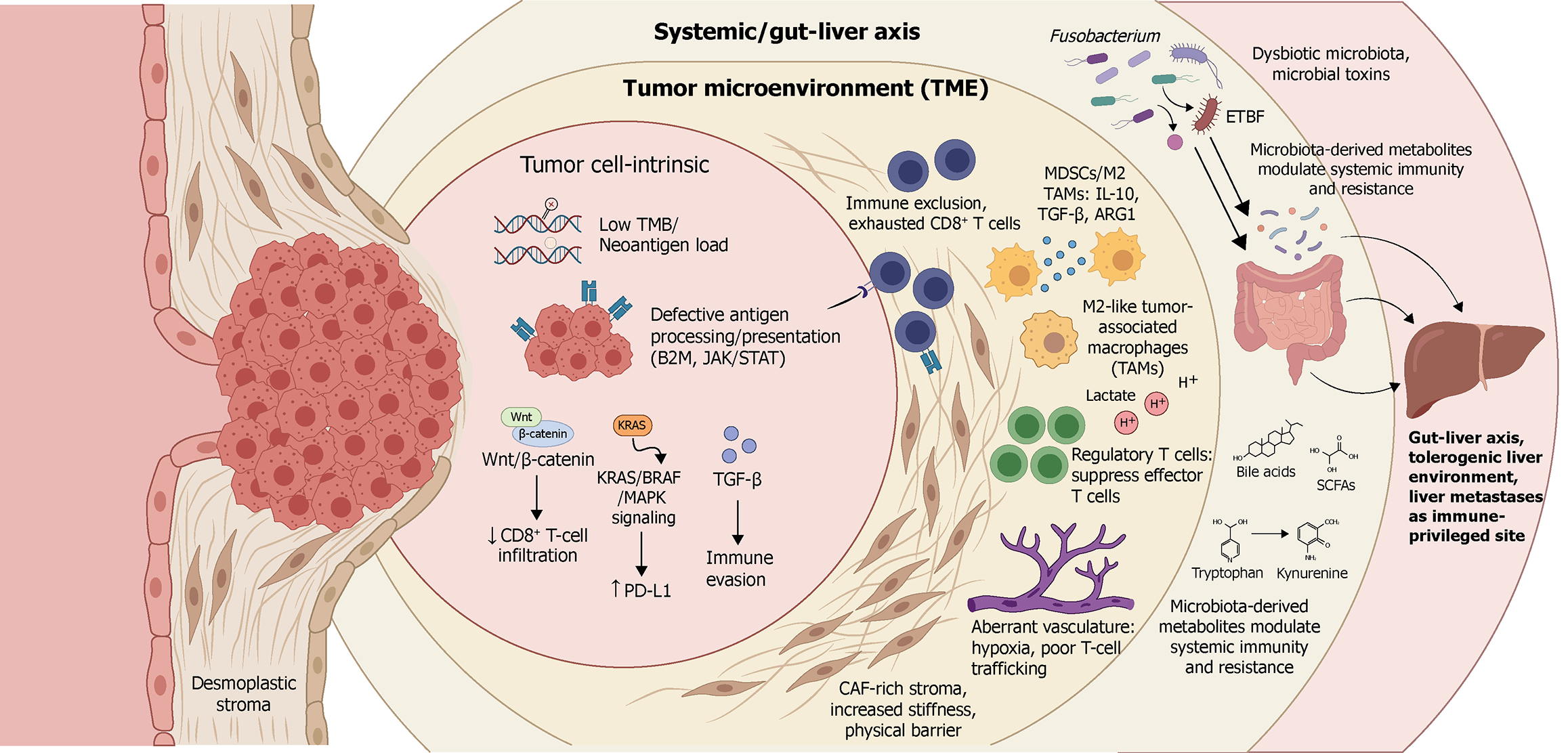
Figure 1 Immunobiology of “cold” microsatellite-stable/mismatch repair-proficient colorectal cancer and multilevel barriers to immune checkpoint blockade.
Concentric layers summarize how tumor cell-intrinsic programs, the local tumor microenvironment (TME), and systemic gut-liver crosstalk converges to generate an immune-excluded, immune checkpoint inhibitor (ICI)-refractory phenotype in microsatellite-stable (MSS) colorectal cancer (CRC). Tumor cell-intrinsic mechanisms include low tumor mutational burden and limited neoantigenicity, impaired antigen processing/presentation (e.g., β2-microglobulin or Janus kinase/signal transducer and activator of transcription pathway alterations), and oncogenic signaling (Wnt/β-catenin and KRAS/BRAF/mitogen-activated protein kinase) that reduces cluster of differentiation 8+ T-cell infiltration and promotes programmed death ligand-1 upregulation and immune evasion; tumor- and stroma-derived transforming growth factor-β (TGF-β) further reinforces immune suppression and exclusion. In the TME, dense cancer-associated fibroblast-rich desmoplastic stroma increases tissue stiffness and forms a physical barrier, while aberrant vasculature and hypoxia impair T-cell trafficking. Immunosuppressive populations including myeloid-derived suppressor cells and M2-like tumor-associated macrophages producing interleukin-10, TGF-β, and arginase-1, along with regulatory T cells blunt effector function. Metabolic stress (glycolysis-driven lactate accumulation and acidic potential of hydrogen) further suppresses T-cell activity. At the sys
- Citation: Chi F, Liu CB, Li J, Xia XW, Hua QJ, Wang W. Converting cold to hot: Strategies to sensitize microsatellite-stable colorectal cancer to immunotherapy. World J Gastrointest Oncol 2026; 18(5): 118319
- URL: https://www.wjgnet.com/1948-5204/full/v18/i5/118319.htm
- DOI: https://dx.doi.org/10.4251/wjgo.v18.i5.118319