
















Copyright: ©Author(s) 2026.
World J Gastrointest Oncol. May 15, 2026; 18(5): 115697
Published online May 15, 2026. doi: 10.4251/wjgo.v18.i5.115697
Published online May 15, 2026. doi: 10.4251/wjgo.v18.i5.115697
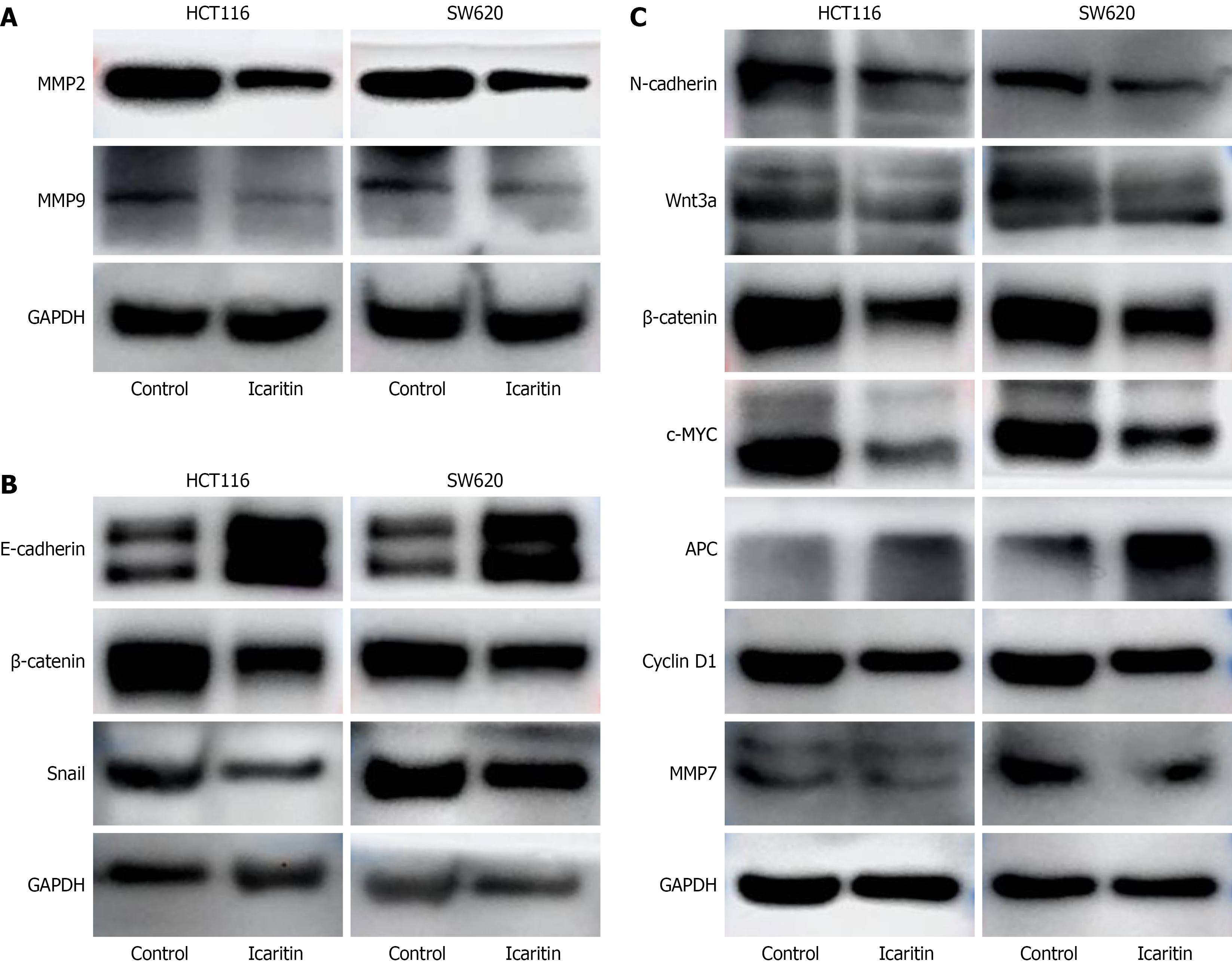
Figure 4 Effects of icaritin on epithelial-mesenchymal transition and the Wnt/β-catenin signaling pathway.
A: Matrix metalloproteinase 2 (MMP2) and MMP9, associated with migration and invasion, showed decreased expression following icaritin treatment; B: Epithelial-mesenchymal transition-related gene expression of E-cadherin showed an increase and decrease in N-cadherin, Snail, and β-catenin; C: Expression of all the Wnt/β-catenin signaling-related genes, except adenomatous polyposis coli, decreased after icaritin treatment, including Wnt3a, β-catenin, c-MYC, cyclin D1, and MMP7. All data are displayed as mean ± SD (n = 3). P < 0.05 compared with the control group. MMP: Matrix metalloproteinase.
- Citation: Li X, Li YJ, Ren DD, Yuan M, Qi YR, Li HW, Zhang Y, Wang RY. Icaritin suppresses colorectal cancer invasion and metastasis through regulation of epithelial-mesenchymal transition and the Wnt/β-catenin signaling pathway. World J Gastrointest Oncol 2026; 18(5): 115697
- URL: https://www.wjgnet.com/1948-5204/full/v18/i5/115697.htm
- DOI: https://dx.doi.org/10.4251/wjgo.v18.i5.115697